President Trump has ordered the U.S. Navy to triple its mine-clearing efforts in the Strait of Hormuz, a critical oil shipping lane, citing Iranian mine threats and their impact on the global economy. Experts warn that minelaying is easier than sweeping, with potential clearance taking months, and that the psychological impact of the threat alone can disrupt shipping.
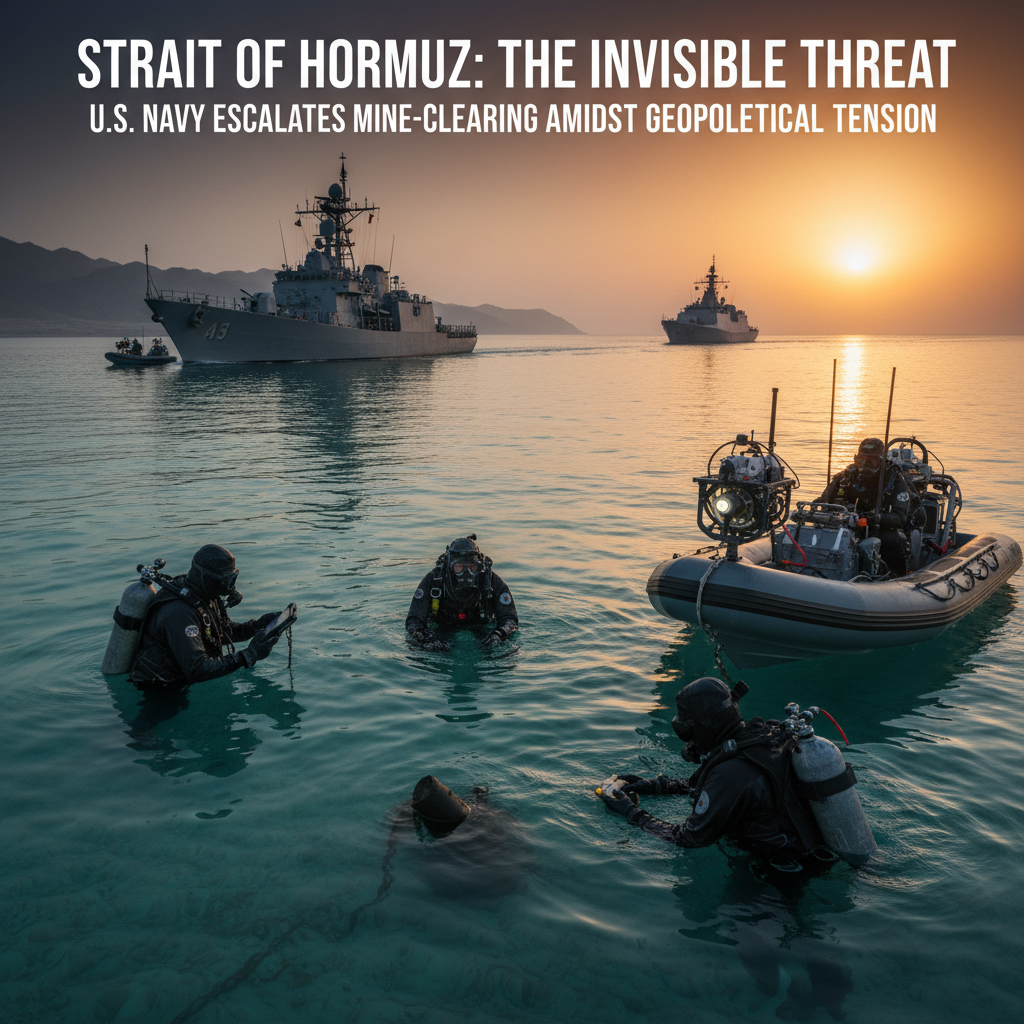
President Donald Trump has escalated U.S. operations in the Strait of Hormuz, ordering the Navy to triple its mine-clearing efforts and to attack any vessels laying mines in the vital oil shipping route. This move comes amid concerns that Iranian mines could disrupt global oil shipments, posing significant economic and political risks. Trump also recently instructed envoys to skip ceasefire talks after Iran's top diplomat departed Islamabad. Pentagon officials have indicated that clearing the mines could take up to six months, an estimate Defense Secretary Pete Hegseth did not deny, though he expressed confidence in the military's capabilities. Experts, such as Salisbury from the Royal Navy Strategic Studies Centre, emphasize that minelaying is far simpler than minesweeping, and Iran could easily undermine confidence by claiming not all mines have been found. Iran is believed to possess thousands of mines, ranging from older Soviet models to newer Chinese or domestically produced ones, which can be deployed by speedboats or difficult-to-detect small submarines. These mines are typically seabed or moored, triggered by pressure or sound, not visible on the surface. The U.S. Navy is deploying littoral combat ships and Avenger-class minesweepers, along with explosive ordnance disposal teams and divers, capable of using remotely operated vehicles, sonar, and lasers for detection and destruction. While no visible warships are currently engaged, these specialized units are active. Experts note that fully clearing every mine is a monumental task, often taking decades, and may not be entirely necessary to restore safe passage. Despite the lack of confirmation that any mines have actually been deployed—Iran has only mentioned their 'likelihood'—the 'specter of threat' significantly impacts shipping. Insurers now require vessels to contact Iranian authorities for safe passage, a measure reflecting broader concerns beyond just mines. This pervasive fear could delay the restoration of full confidence in the strait's safety, even after any potential conflict.