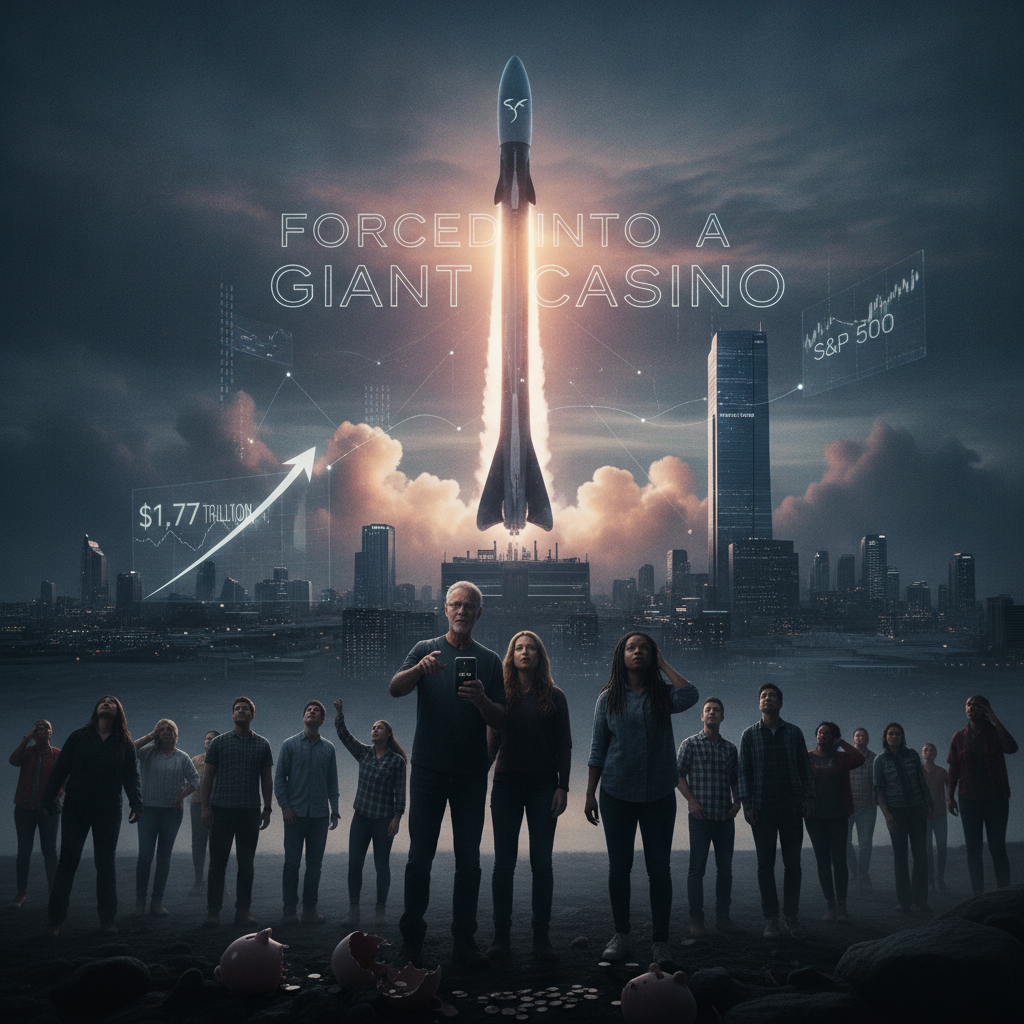
Elon Musk's new trillionaire status, following SpaceX's $1.77tn IPO, has sparked widespread concern among Americans whose retirement savings are increasingly and involuntarily tied to tech and AI companies through index funds, raising fears about inequality and market instability.
Elon Musk recently became the world’s first trillionaire after SpaceX debuted on the stock market with a valuation of $1.77tn. This event has ignited significant concern among millions of Americans, whose retirement savings, particularly through 401(k) plans and index funds, are becoming increasingly tied to emerging AI-focused companies and tech giants like SpaceX. A rule change, reportedly pushed by Musk, allows SpaceX shares into index funds earlier than typical, meaning many indirect investors are now linked to the company without direct choice. Over 150 respondents shared their views, overwhelmingly expressing unease about having their savings tied to major technology firms. Common concerns cited include widening inequality, market instability, and the long-term sustainability of the AI boom. Many feel 'forced into a giant casino,' with individuals like Tim, a 62-year-old engineer, lamenting the lack of diversification options for average people whose entire retirement is often in the S&P 500. Stephen, a 33-year-old engineer, described the valuations as 'absolutely ridiculous and untethered to the company’s actual value' and found it 'abhorrent' that savings are tied to tech companies that 'cannot be held accountable by investors.' Similar sentiments were echoed by Matt Reynolds, a 57-year-old professor, who worried about market consolidation and the perceived lack of accountability or moral compass among tech moguls. Kendra Ford, a 54-year-old climate activist, called it a 'profound moral failing of our economic system' that Musk can enrich himself while many struggle. Some, like Mia, a 58-year-old writer, have intentionally avoided the stock market, viewing it as a 'money game for rich people,' while others, like retired businessman Pedro, have divested from index funds to 'send a message.' Jeffrey Munsie, a 57-year-old architect, is actively diversifying his assets to protect against the risks of such large, narrowly focused companies. While some, like political scientist Dimitris Eleas, admire SpaceX’s technological achievements, they still express 'very uneasy' feelings about the 'growing concentration of wealth and power' in the hands of a few tech companies and their founders. The overarching sentiment reflects a 'palpable sense of unfairness and anger' that ordinary citizens' lives and financial futures are inextricably tied to the choices and fortunes of a select few.