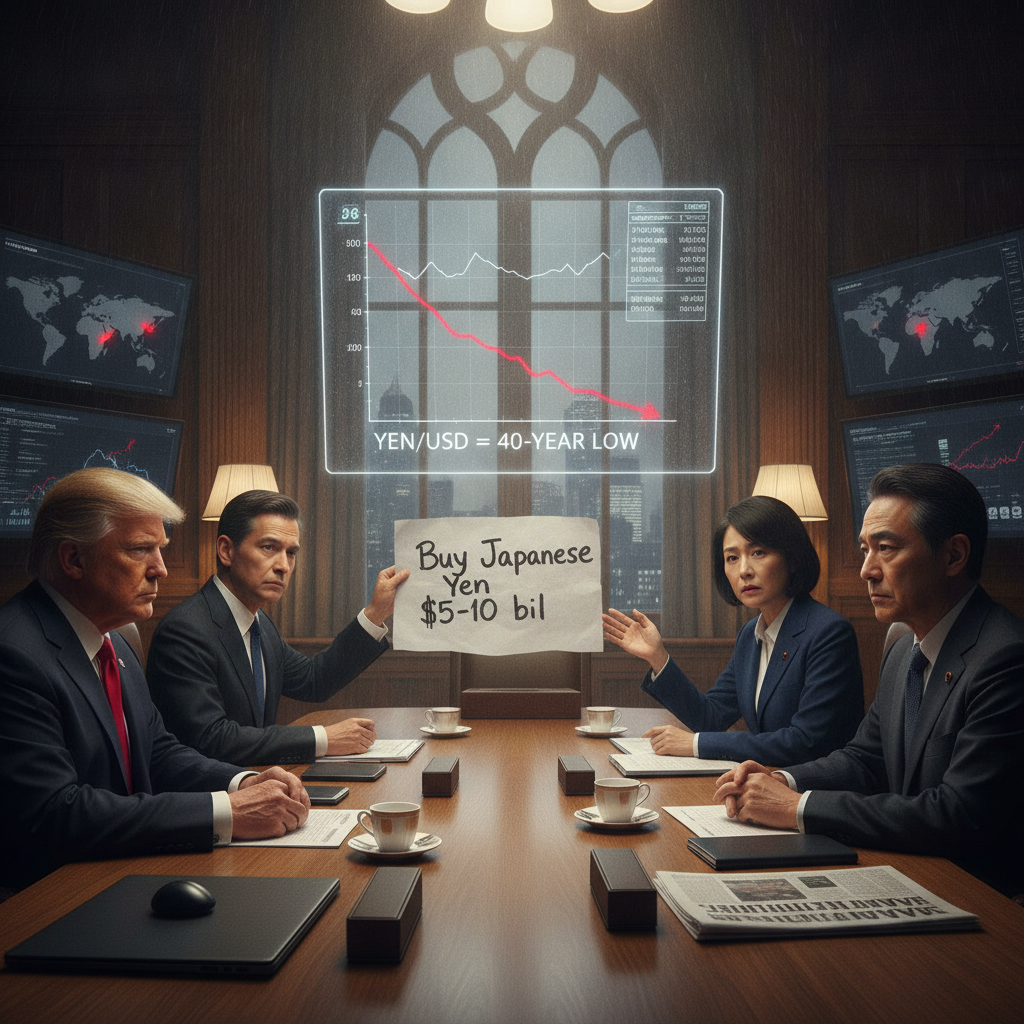
The US has launched an unprecedented coordinated effort with Japan to boost the struggling yen, which is nearing 40-year lows and severely impacting Japan's import-reliant economy. This marks a rare intervention by the Trump administration to stabilize a key ally's currency.
The United States, under the Trump administration, has initiated an extraordinary coordinated intervention with Japan to halt the yen's rapid decline, which is approaching 40-year lows. Japan's economy, heavily reliant on imports for energy and food, is struggling as a weak yen makes these essential goods more expensive, fueling inflation and putting pressure on Prime Minister Sanae Takaichi. The yen's fall is attributed to several factors: continuous investor selling, global events like the slowdown of oil and gas from the Middle East due to the US war on Iran, the Bank of Japan's persistently low interest rates making the currency less attractive, and Japan's massive government debt, exceeding 200% of its GDP. The Trump administration's intervention, confirmed by President Trump and Treasury Secretary Scott Bessent (who was seen with a note to 'Buy Japanese Yen $5-10 bil'), is the first such move in 30 years. While Trump cited benefits for the world economy, analysts suggest a key motivation is to prevent Japan from selling large quantities of US government bonds (treasuries) to fund its own yen purchases. Such sales could increase US borrowing costs, making it more expensive for the US government to fund its spending. The intervention also comes as Takaichi faces political pressure over rising costs and her pro-growth policies, which involve significant spending amid high debt, raising fears of economic instability. This move is seen as unusual, though the US previously intervened to prop up the Argentinian peso. Some analysts posit that Trump sees an ideological ally in Takaichi, similar to Javier Milei in Argentina, given Japan's recent approval of its biggest military buildup since WWII, a move welcomed by the Trump administration.