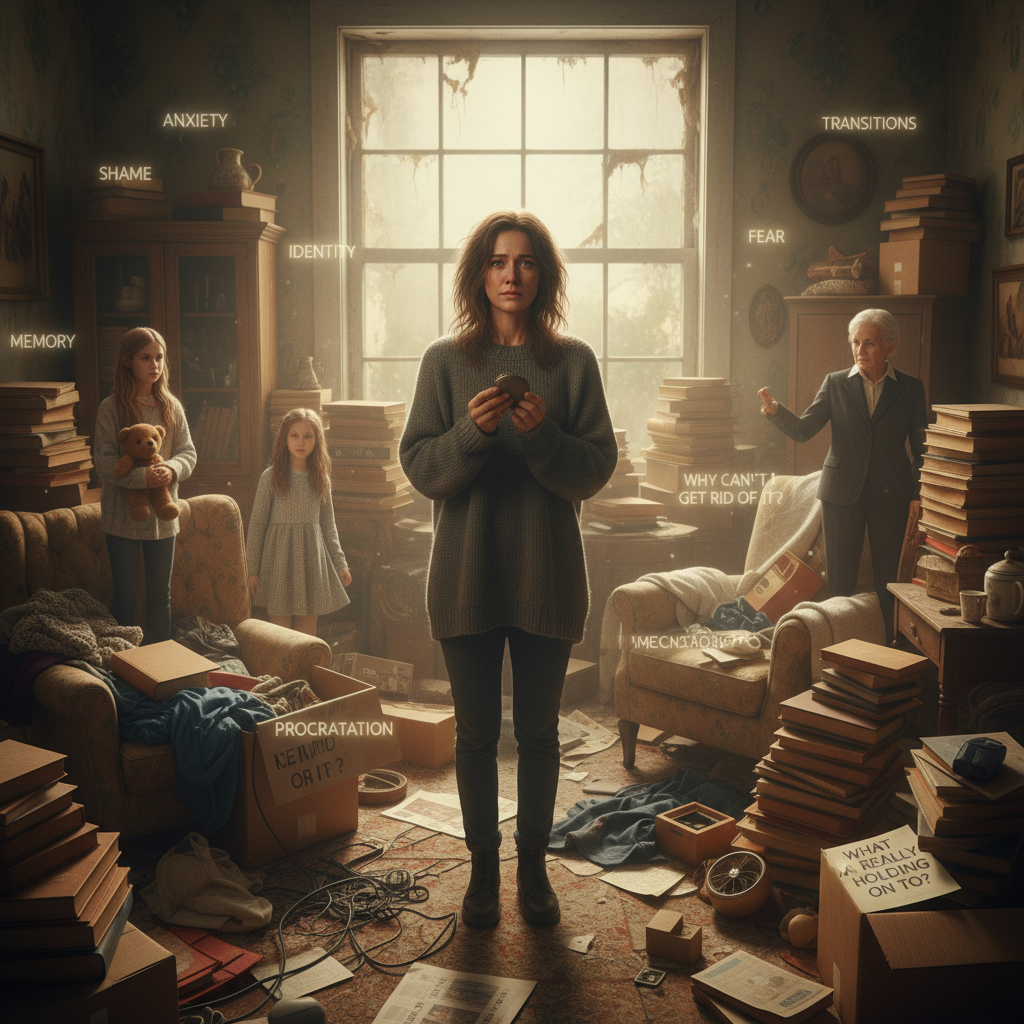
Discover why your overflowing drawers and endless collections aren't a character flaw, but a conversation your home is having with you about deeper emotional issues like grief, identity, shame, and procrastination. Learn the true reasons we hold onto stuff and how to finally break free.
This article explores the complex relationship most people have with clutter, arguing it's rarely just a tidying problem but a manifestation of deeper emotional issues such as anxiety, grief, identity, shame, and life transitions. It distinguishes ordinary clutter from clinical hoarding, defining clutter as an overabundance of possessions creating a chaotic space, which becomes problematic when it impacts livability, causes emotional distress, or strains relationships. The piece delves into the core reasons people hold onto items: grief and held memory (objects representing lost loved ones or imagined futures), sentimentality (keeping physical tokens of love), procrastination and avoidance (delaying decisions due to emotional discomfort), ancestry (inherited habits from scarcity or displacement), and identity (aspirational, sunk-cost, or nostalgic selves). It also addresses the pervasive shame associated with clutter, particularly for women, and cautions against pressuring others to declutter, as lasting change must be internal. Practical solutions include clarifying desired feelings for a space, narrating an object's story to release its meaning, using physical detachment techniques, and seeking therapy for deeper emotional roots. Ultimately, the article encourages a compassionate approach, shifting the question from 'Why can't I get rid of it?' to 'What am I really holding on to?' to foster genuine release and generosity.