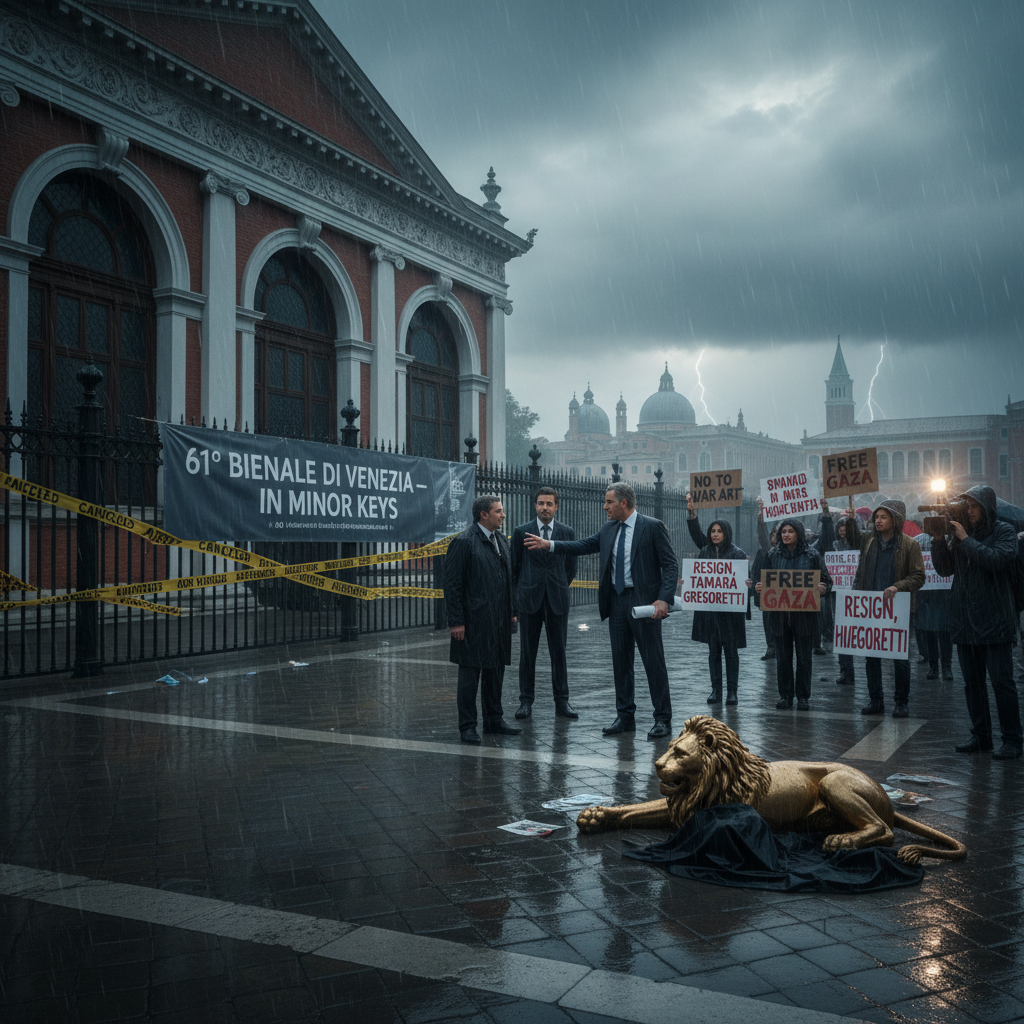
The Venice Biennale, the world's most prestigious international art exhibition, is opening amidst unprecedented crises, including widespread protests over Russia's participation during the Ukraine war, calls to exclude Israel, a mass resignation of its jury, and the Italian culture minister's boycott.
The 61st Venice Biennale, a massive global presentation of contemporary art from 99 nations, is set to open next week engulfed in multiple crises. Italy's Minister of Culture, Alessandro Giuili, will not attend the opening, protesting Russia's return to the event despite its ongoing war with Ukraine, a move he deems unacceptable and has prompted him to send inspectors to the Russian Pavilion. Giuili has also called for the resignation of Tamara Gregoretti, a culture ministry representative on the Biennale Foundation's board, for approving Russia's participation. The Biennale Foundation, however, maintains that no regulations were violated and sanctions against Russia were complied with. Adding to the turmoil, over 200 artists and curators demanded Israel's exclusion over human rights abuses in Gaza, with a subsequent letter also including the United States. Most significantly, the Biennale's five-person jury abruptly resigned, leading to the cancellation of the traditional Gold and Silver Lions awards, which will be replaced by two Visitors’ Prizes. Before resigning, the jury had issued a statement vowing not to award artists from countries whose leaders face ICC charges for crimes against humanity, a stance that would have disqualified both Russia and Israel. This year's exhibit was initially framed by late chief curator Koyo Kouoh to reflect geopolitical landscapes ("In Minor Keys"). Russia's participation, approved by Foundation president Pietrangelo Buttafuoco for 2026 after not participating in 2024, has drawn strong condemnation from Ukraine and the European Commission, with the latter threatening to pull a $2 million funding grant. Amid the growing controversy, Russia announced its pavilion would not be open to the public, though media visits are allowed. Similarly, Israel's exhibit will be shown at a smaller venue, not its national pavilion, following an artist's protest at the last Biennale. These events underscore a deep divide within the art world regarding political engagement and human rights.