Jerome Powell announced he will remain on the Federal Reserve board after his term as chair ends, citing threats to the central bank's independence from Trump administration legal attacks. This decision could complicate incoming chair Kevin Warsh's plans for rate cuts and has drawn criticism from Trump, while the Fed itself faces internal divisions over future rate policy amidst a complex economic outlook.
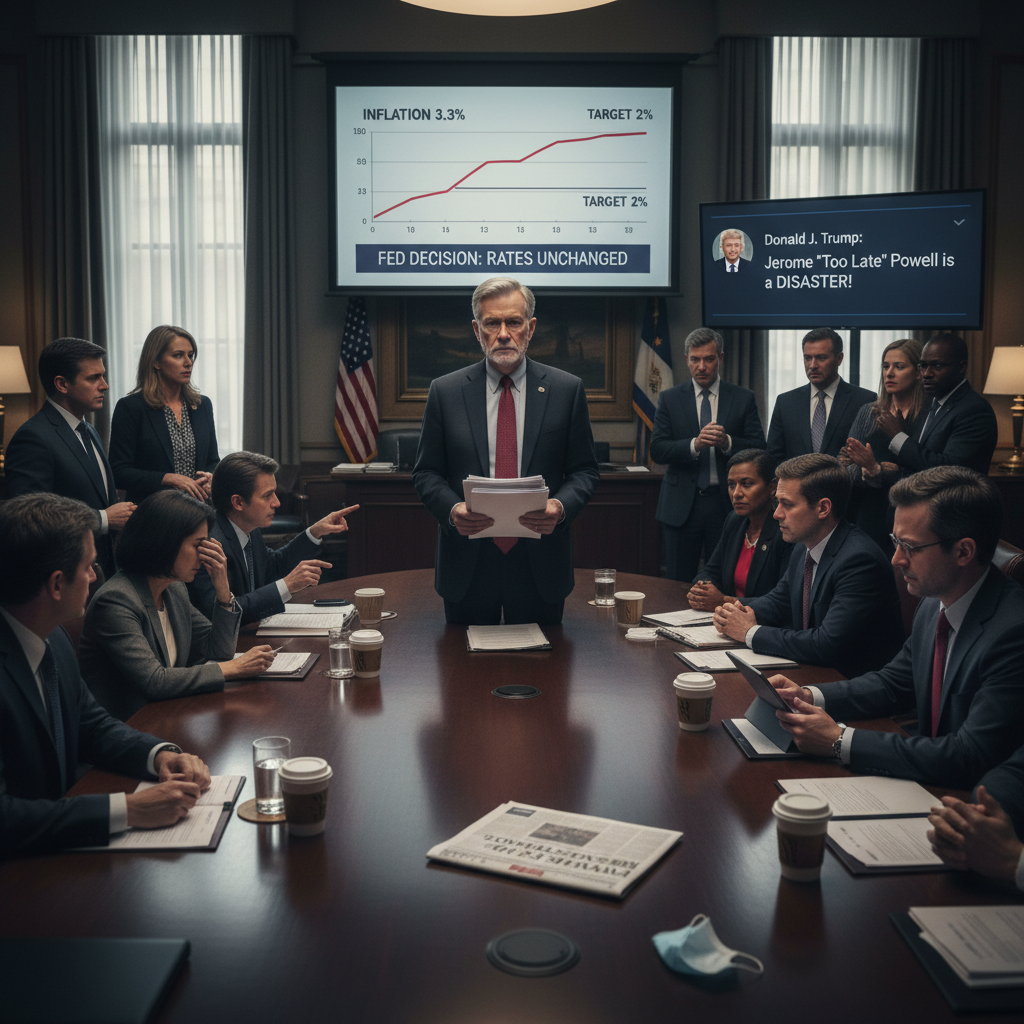
Federal Reserve Chair Jerome Powell announced his intention to remain on the Fed's board after his term as chair concludes next month, citing "unprecedented" legal attacks by the Trump administration that he believes jeopardize the central bank's independence. This decision is expected to complicate efforts by incoming chair Kevin Warsh, who has advocated for rate cuts demanded by former President Trump. Powell emphasized his need for "finality and transparency" regarding a Justice Department probe into Fed renovations, which he views as crucial before he would consider leaving. The Fed recently kept its benchmark interest rate unchanged for the third consecutive meeting but signaled potential cuts in the coming months, a move that generated the most dissents since 1992, highlighting significant internal divisions. Three regional Fed presidents dissented against hinting at future cuts, while one favored an immediate cut, underscoring the independence of policymakers. Former President Trump reacted negatively to Powell's announcement on social media, dismissing him as "Jerome 'Too Late' Powell." Warsh, who has promised "regime change" at the Fed, faces the challenge of implementing rate cuts with inflation still above the Fed's 2% target. Analysts suggest Powell's continued presence could create a "two Popes" scenario, potentially increasing tensions with the Trump administration and fostering further divisions among Fed policymakers. Despite this, Powell stated his intention not to interfere with the new chair's agenda, but reiterated his concern for the Fed's independence from political pressure, which he deems essential for effective monetary policy. The economic landscape remains uncertain, with inflation at a two-year high of 3.3% due to rising energy prices, making rate cuts difficult. Concurrently, hiring has slowed, though layoffs remain low, presenting a mixed picture for the Fed's monetary policy decisions.