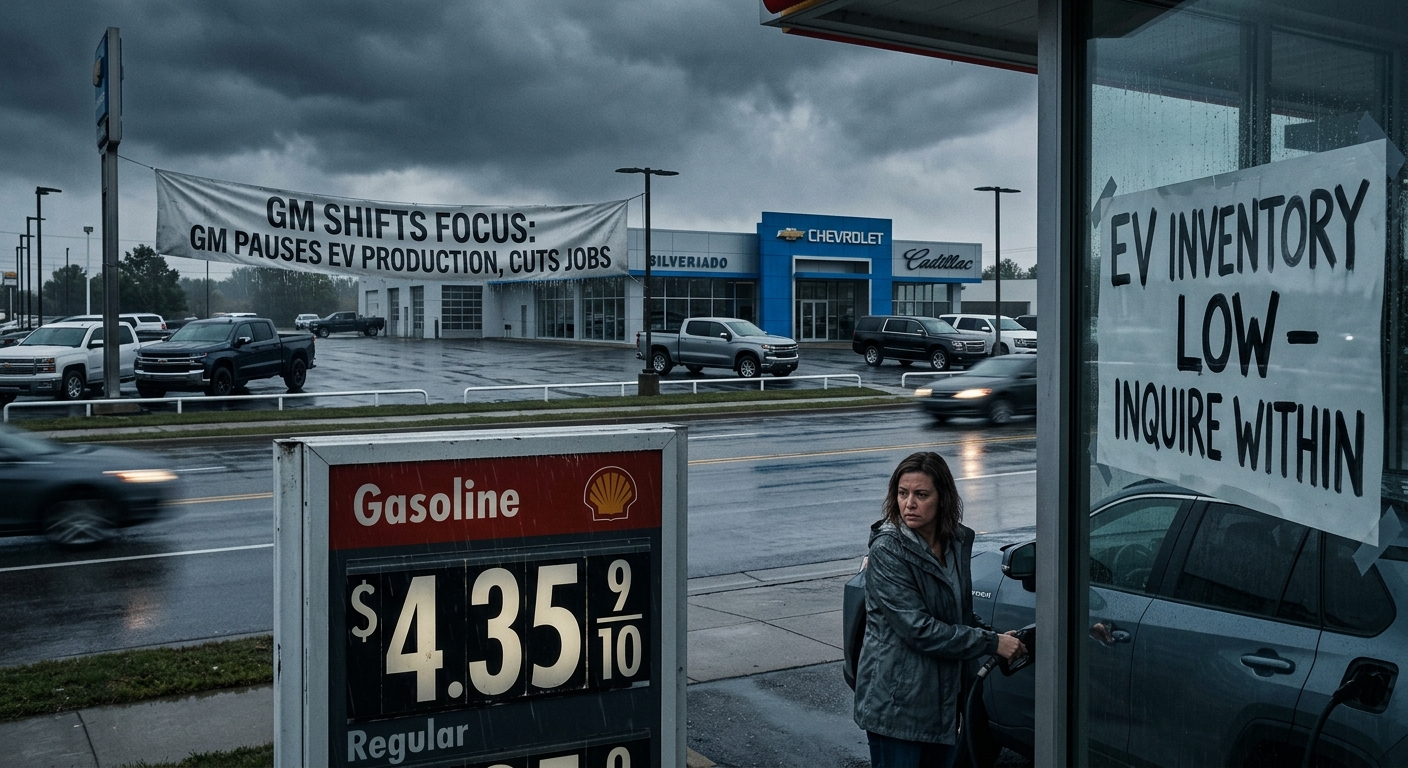
Despite soaring gas prices in early 2026, electric vehicle (EV) sales declined while hybrid sales surged. A researcher argues this wasn't due to lack of consumer demand, but a severe shortage of EVs on the market, largely caused by policy changes and subsequent production cuts by automakers.
Following U.S. and Israeli strikes on Iran in February 2026, average gasoline prices for American drivers climbed from US$2.94 to $4.35 a gallon. While hybrid electric vehicle sales increased by 18% from March to May 2026 compared to the previous year, fully electric vehicle sales decreased by 16% during the same period. A researcher contends that this isn't evidence of a lack of American interest in EVs, but rather a critical supply shortage. EV production had been in retreat since federal tax credits for EVs (up to $7,500 for new, $4,000 for used) ended on September 30, 2025, following a law signed by President Donald Trump. Automakers like General Motors and Ford responded by cutting EV production, laying off workers, and shifting focus away from electric vehicles. Consequently, despite rising demand for EVs as gas prices climbed in 2026, inventories plummeted (from approximately 130 days of supply to 78 days by August), and discounts on new EVs shrank significantly. Used EV prices also rose (e.g., a 13% increase through June 2026), and used EV inventories dropped sharply, all indicating strong demand met with insufficient supply. The article highlights that current federal policy continues to hinder the U.S. EV sector. Examples include loosening fuel economy standards for gas-powered vehicles and effectively shutting out Chinese automakers, who produce a large share of the world's affordable EVs. These decisions, such as ending tax credits, rolling back efficiency standards, and banning Chinese technology, make it harder to build and offer affordable EVs, leaving American drivers exposed to volatile oil prices with fewer electric alternatives. The researcher concludes that the stalled EV sales in 2026 were a direct consequence of insufficient supply, driven by policy choices, rather than a lack of consumer interest.