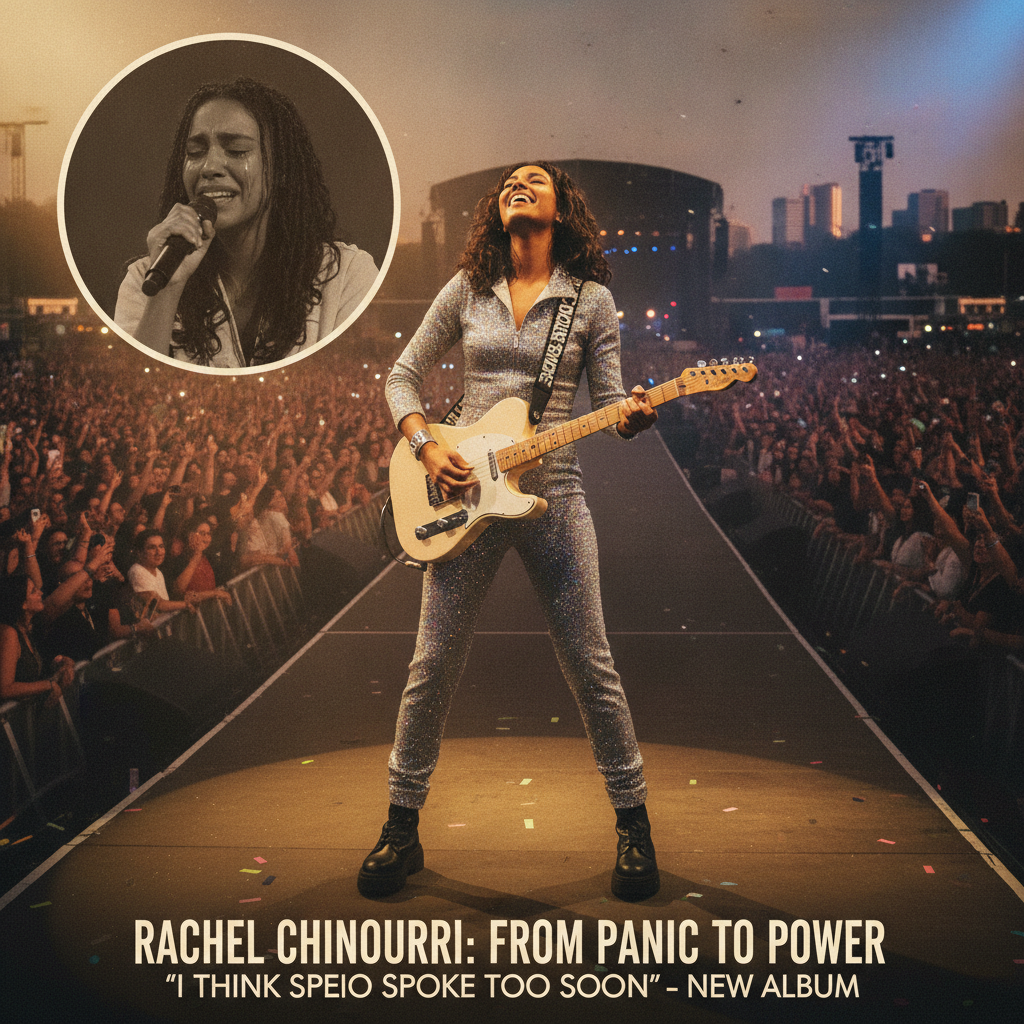
Rachel Chinouriri, the 27-year-old indie-pop sensation, opens up about her journey from crippling stage fright and childhood struggles with racism and poverty to becoming an award-winning artist. She discusses her fight against industry pigeonholing, her candid lyricism, and the evolution of her sound as she prepares to release her dance-infused second album, 'I Think I Spoke Too Soon'.
Rachel Chinouriri, 27, recounts her remarkable journey from debilitating panic attacks and performance anxiety, which began in 2017 and plagued her early career, to becoming a celebrated musician performing for tens of thousands. Having overcome the humiliation of crying on stage at the Brit school and during her first major gig supporting Celeste, she now embraces her vulnerability, understanding that her worst fears rarely materialize. Chinouriri has had an exceptional week, performing to 45,000 at Wolf Alice's Finsbury Park show and receiving her first award, the O2 Silver Clef for best new music, after nominations for the Brits and Ivor Novellos. She has supported major artists like Sabrina Carpenter, Olivia Rodrigo, and Florence + the Machine, drawn by her fearless, bare-souled lyricism in her contemporary indie sound. Her forthcoming second album, 'I Think I Spoke Too Soon,' reflects her recent self-discovery spurred by her Saturn return, questioning her identity after feeling self-assured in her early twenties. Her upbringing in Croydon, as the only UK-born child of Zimbabwean immigrant parents who were child soldiers, involved navigating poverty and a strict Christian household. She also endured extreme racist bullying at a majority-white secondary school, eventually enrolling herself in a more diverse institution. At the Brit school, Chinouriri found freedom for expression, differing from her sisters' R&B tastes by preferring Oasis and Coldplay. Her debut album, 'What a Devastating Turn of Events' (2024), was intensely personal, addressing topics like her cousin's suicide, self-worth, body dysmorphia, and self-harm, resonating with millions of streams. She also candidly tackled toxic relationships, with 'Dumb Bitch Juice' becoming a fan anthem. Chinouriri has actively challenged the music industry's tendency to miscategorize her music as R&B or soul due to her race. Her first album leaned into guitar sounds to assert her place in indie pop. While acknowledging progress, she notes the continued lack of diversity at festivals, often being one of the few Black artists on lineups. Her new album shifts focus inward, exploring her self-perception rather than how she's perceived as a Black woman in the industry. 'I Think I Spoke Too Soon' marks a significant sonic shift, embracing pop heroes like Madonna and Prince with bright synths and danceable beats, turning melancholic hooks into 'sad bangers.' The album also delves into her relationship with alcohol, leading to her decision to go sober, transforming dark moments into cathartic dance tracks. With a growing queer fanbase, Chinouriri is looking forward to upcoming concerts, including supporting Olivia Rodrigo and Gracie Abrams, and hopes to build a similar community around her music. She emphasizes the importance of self-reflection and forgiveness in her evolving identity.