Elite athletes like Katarina Johnson-Thompson, Adam Peaty, and Alex Yee reveal their sleep routines, challenges, and unique strategies for optimal recovery amidst intense training, travel, and high-stakes competitions.
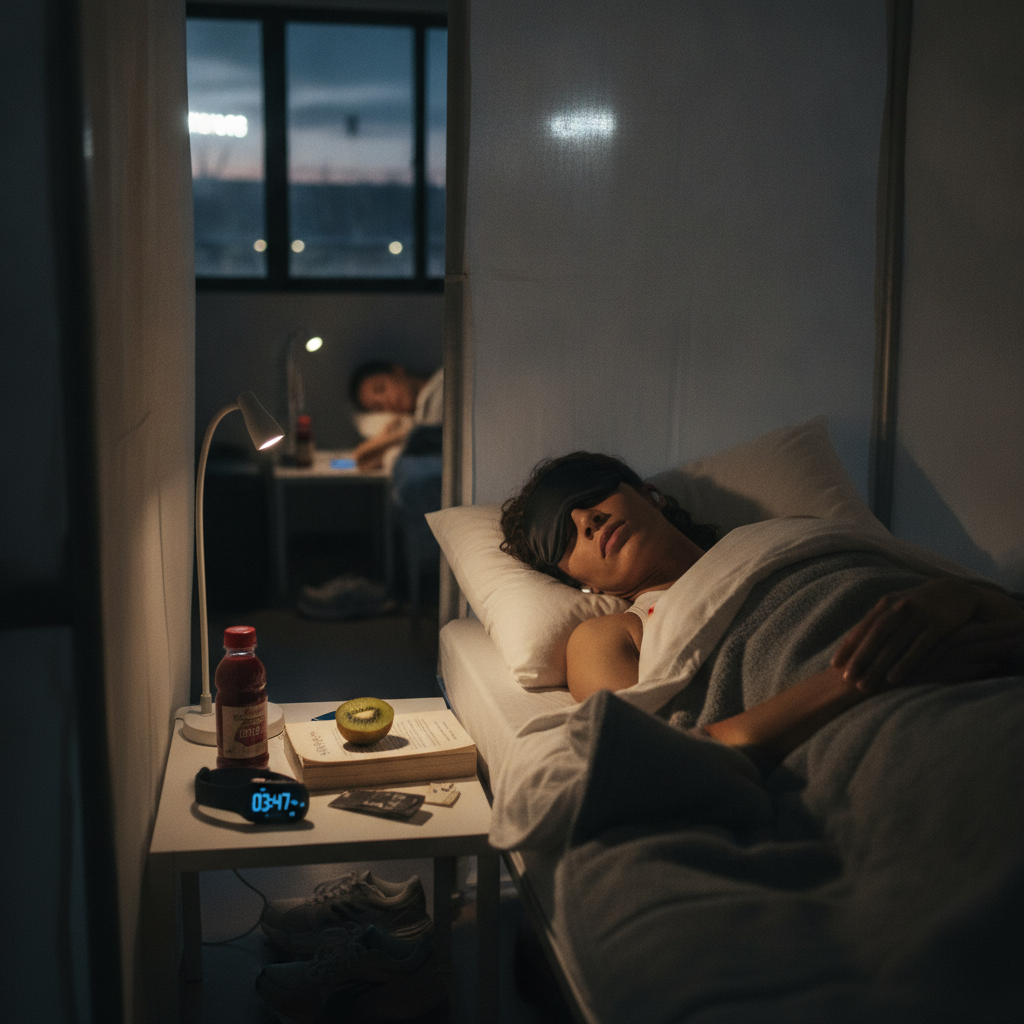
This article delves into the sleep habits of eight elite athletes, including Olympic medalists and world champions, highlighting their struggles and strategies for achieving crucial rest. Common challenges include the 'paper walls and cardboard beds' of the Olympic Village, adrenaline after late competitions, jet lag, and noisy hotel environments. Athletes employ diverse methods to optimize sleep: * **Routines & Consistency**: Many emphasize consistent bedtimes (e.g., Emily Campbell by 9:30 pm, Tom Dean by 10 pm) and 'sleep banking' before big events (Katarina Johnson-Thompson). Ezri Konsa stresses consistency as his top tip. * **Nutrition & Hydration**: Pre-bed snacks include kiwi (Katarina Johnson-Thompson), sour cherry juice/gel (Amy Jones, Tom Dean, Alex Yee) for recovery and sleep induction, peppermint and honey tea (Emily Campbell, Harriet Dart), and protein-rich meals (Henry Pollock, Tom Dean for 600+ calories). Most avoid eating too close to bedtime, caffeine after midday/3 pm, alcohol, and processed foods. Hydration is key, but some manage fluid intake before bed to avoid waking up (Alex Yee). * **Gadgets & Aids**: Eye masks (Katarina Johnson-Thompson, Adam Peaty, Henry Pollock, Harriet Dart), earplugs (Adam Peaty, Henry Pollock, Amy Jones), and weighted blankets (Katarina Johnson-Thompson) are popular. Sleep trackers like Whoop (Katarina Johnson-Thompson, Adam Peaty, Ezri Konsa), Oura ring (Tom Dean), Apple Watch (Henry Pollock), and Coros watch (Alex Yee) are used, though some find them obsessive. Specialized bedding like firm pillows (Adam Peaty) and cooling mattresses (Emily Campbell) are also important. * **Winding Down**: Strategies include baths with Epsom salts (Harriet Dart), reading (Henry Pollock, Tom Dean), listening to podcasts/audiobooks (Alex Yee), watching 'easy' TV shows (Tom Dean), and non-sport discussions. Mental techniques involve compartmentalizing worries (Harriet Dart) or setting specific 'worry times' (Katarina Johnson-Thompson). * **Travel & Competition**: Athletes adapt by opening curtains immediately for daylight (Katarina Johnson-Thompson), avoiding naps for the first few days post-travel (Tom Dean), using caffeine strategically for jet lag, and bringing personal comfort items like pillows and mattress covers (Adam Peaty). They acknowledge that perfect sleep isn't always possible before big events, relying on banked sleep, adrenaline, and mental resilience (Katarina Johnson-Thompson, Adam Peaty, Harriet Dart, Alex Yee). The ability to adapt to unexpected situations, like the Paris Olympics water pollution affecting race times, is also crucial (Alex Yee).