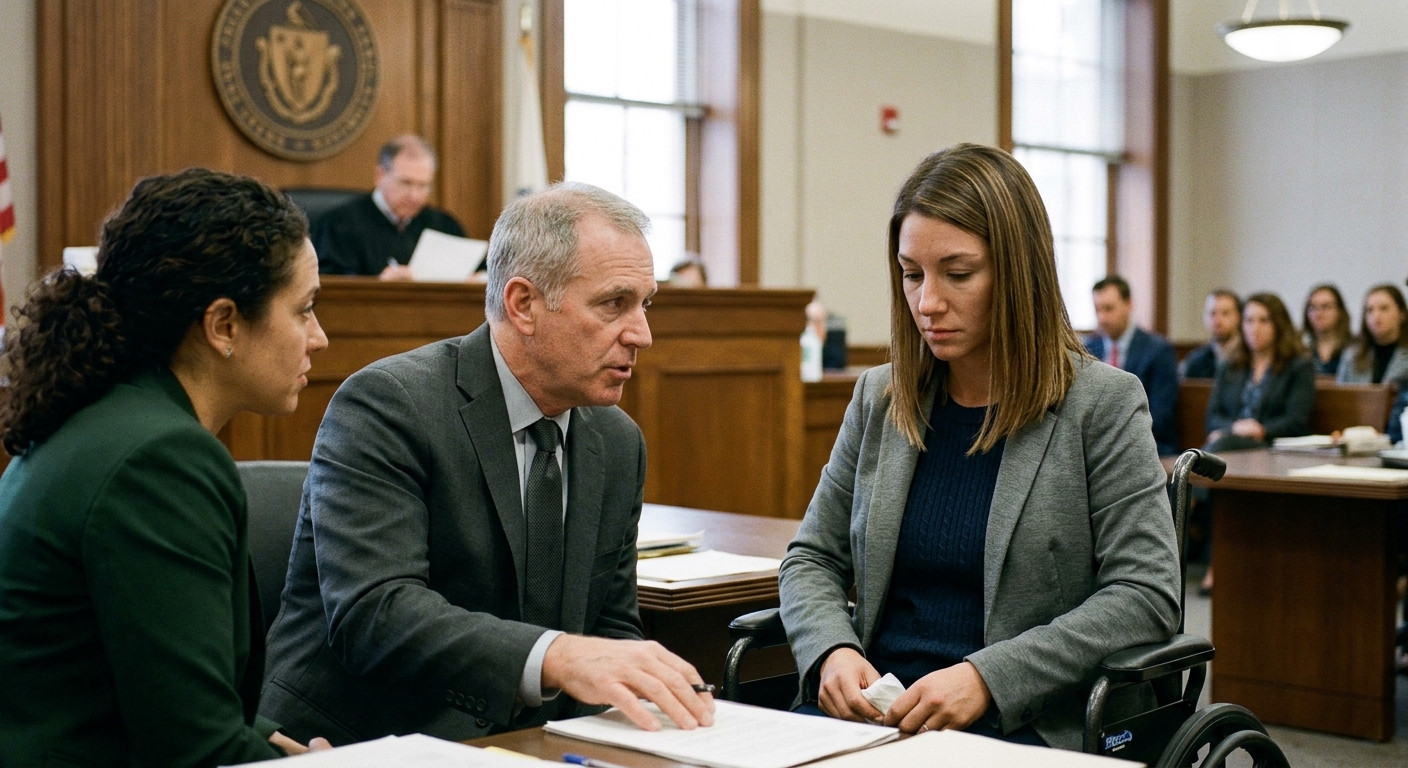
A Massachusetts judge has cleared the way for Lindsay Clancy to be retried on murder charges for the killing of her three young children, rejecting her attorneys' double jeopardy claims after her initial trial ended in a mistrial due to a holdout juror.
A Massachusetts judge, William Sullivan, has ruled that Lindsay Clancy will face a retrial on murder charges for the killing of her three young children in 2023. Sullivan rejected a bid by Clancy’s attorneys to dismiss the case, stating that a retrial would not violate her constitutional protection against double jeopardy. The judge had declared a mistrial on September 4 after the jury reported a holdout juror prevented a unanimous verdict. A hearing is scheduled for November 16 to discuss a timeline for the second trial, possibly in March. Clancy is accused of strangling her five-year-old daughter Cora, three-year-old son Dawson, and eight-month-old son Callan with exercise bands in the basement of their Duxbury home on January 24, 2023. She then attempted suicide by cutting herself and jumping from a second-story window, leaving her paralyzed. Her defense argues she was experiencing postpartum psychosis and should be found not guilty by reason of insanity, known as lack of criminal responsibility in Massachusetts. Some jurors from the initial trial later indicated they were prepared to find her not guilty by reason of insanity, which would have led to commitment in a state psychiatric hospital. First-degree murder carries a mandatory life sentence without parole in Massachusetts. Defense lawyers contended that Sullivan acted prematurely in declaring a mistrial and should have questioned or potentially removed the holdout juror, who jury notes suggested was not following legal instructions on reasonable doubt. Prosecutors, led by Plymouth County District Attorney Timothy Cruz, countered that the judge handled the jury impasse appropriately and that questioning the holdout could have risked inappropriate interference with deliberations.