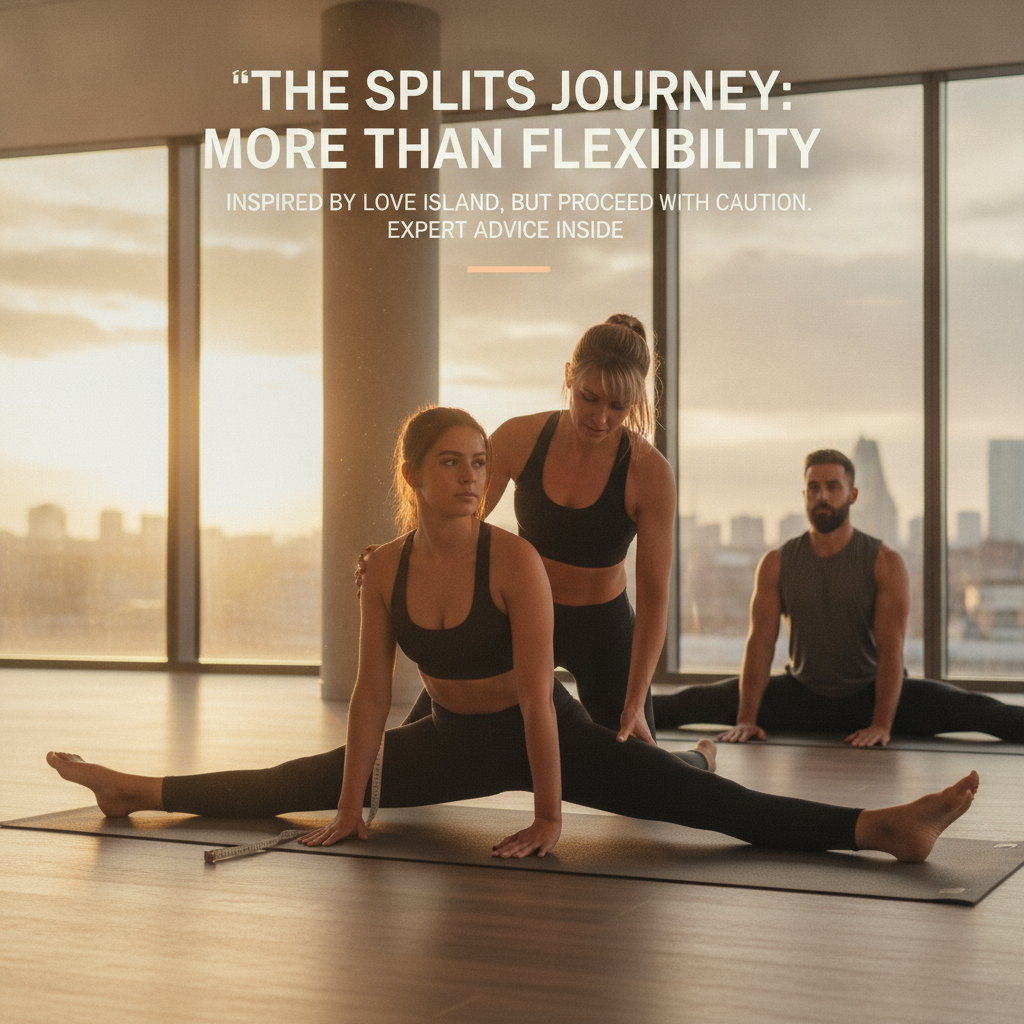
Inspired by TV shows, many aspire to do the splits, but experts caution against attempting them without proper training. This guide explains the commitment, techniques, and realistic expectations needed to safely achieve this impressive feat.
Inspired by contestants like Kenzie Annis on Love Island USA, many people are motivated to learn how to do the splits. However, yoga instructors and flexibility coaches warn that casually attempting this maneuver without practice can lead to serious injury. Achieving the splits is a significant undertaking, influenced by factors such as age, genetics, bone structure, and existing flexibility. Experts like Emmet Louis, the 'Splits Wizard,' and kinesiology researcher David Behm, note that not everyone will ultimately be able to do the splits due to inherent skeletal or ligament structures, and it generally takes much longer than people assume—often 18 months to three years of consistent effort. The article outlines two main types of splits: the middle or center split (legs out sideways, stretching adductors) and the front split (one leg forward, one back, stretching hamstrings, calves, and hip flexors). Before starting, it's crucial to assess your motivation; while impressive, splits don't offer unique health benefits beyond general flexibility, which can improve daily movement efficiency and reduce injury risk. Preparation is key, starting with a thorough warm-up suggested by Ramoni Overton, including seated butterfly stretches, forward folds, lunges, and ankle flexion. Emmet Louis also recommends a basic resting squat for overall leg and pelvis flexibility. During stretching, it's important to distinguish discomfort from pain. You should go to your initial point of discomfort and hold for 30-60 seconds, but never push into severe pain, grimacing, or holding your breath, as this risks muscle or ligament strain. For front splits, gradually ease into an extended lunge, moving your front leg forward. For center splits, begin in a wide 'V' sit and walk your hands forward, eventually progressing to a standing entry. Tracking progress by measuring your distance to the floor weekly can be motivating. Ultimately, a successful split isn't just about getting your legs flat on the floor. It's about achieving the position with proper alignment, square hips, and feeling supported and in control, rather than forcing your body. Instructors encourage measuring progress by improved mobility, comfort, and control, rather than comparing oneself to others' flexibility.