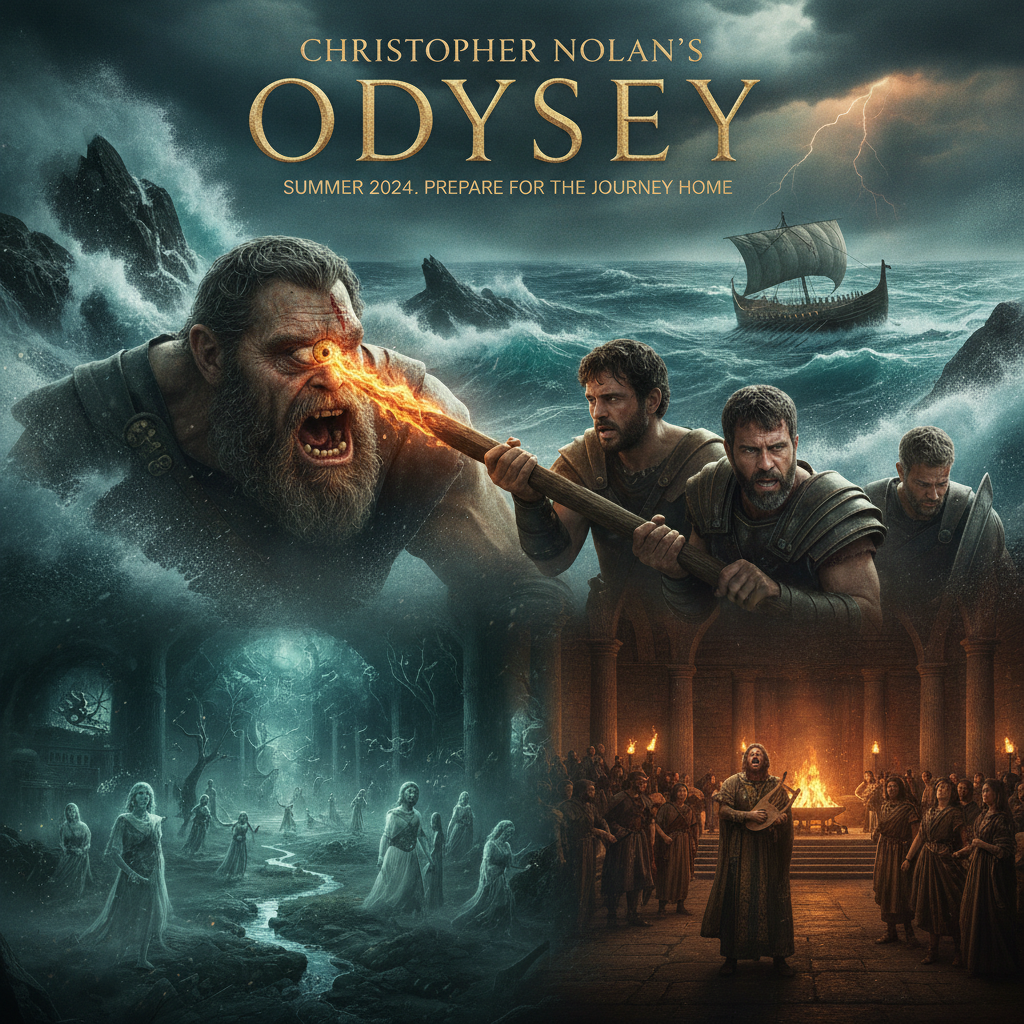
Explore how Christopher Nolan's upcoming film adaptation of Homer's 'Odyssey' brings to life a timeless epic, while delving into the poem's ancient oral traditions, its profound literary influence, and the enduring human questions it continues to pose across millennia.
Christopher Nolan's 'Odyssey' is anticipated as a summer blockbuster, promising magnificent effects, shocks, and thrills by depicting iconic scenes like the Cyclops, the land of the dead, and stormy seas. The article highlights that these adventures are central to the 'Odyssey,' one of the first great works of world literature, attributed to Homer and written down after the Greeks acquired writing technology in the 6th or 5th centuries BC. However, it challenges the idea of a single author, noting that research by classicists like Milman Parry revealed the 'Odyssey' originated from a long oral tradition, performed by bards using memory and improvisation for centuries before being written. The author suggests that the emotional force of a bard's performance in an ancient hall might have been more thrilling than modern cinema, as the poem itself depicts listeners weeping at the bards' stories, which are seamlessly woven into the epic. The article then explores why this ancient story continues to resonate, influencing countless literary and storytelling traditions, from Dante and Star Trek to Game of Thrones and modern novels like 'Circe.' The author shares their personal journey of reading the 'Odyssey' through various translations and life experiences, noting how the text flexes and offers new insights with each reread, particularly in light of contemporary events like the war in Ukraine. A detailed plot summary of the 'Odyssey' is provided, covering Odysseus's journey, his wife Penelope's plight, his son Telemachus's quest, and Odysseus's eventual stealthy return and revenge. The article concludes by emphasizing that the 'Odyssey' endures not just as a spectacular adventure, but as a profound exploration of fundamental human questions: fate, leadership, revenge, marriage, treatment of strangers, and a soldier's reintegration into civilian life. These universal themes ensure the 'Odyssey' remains a relevant poem for any moment, regardless of Nolan's cinematic interpretation.