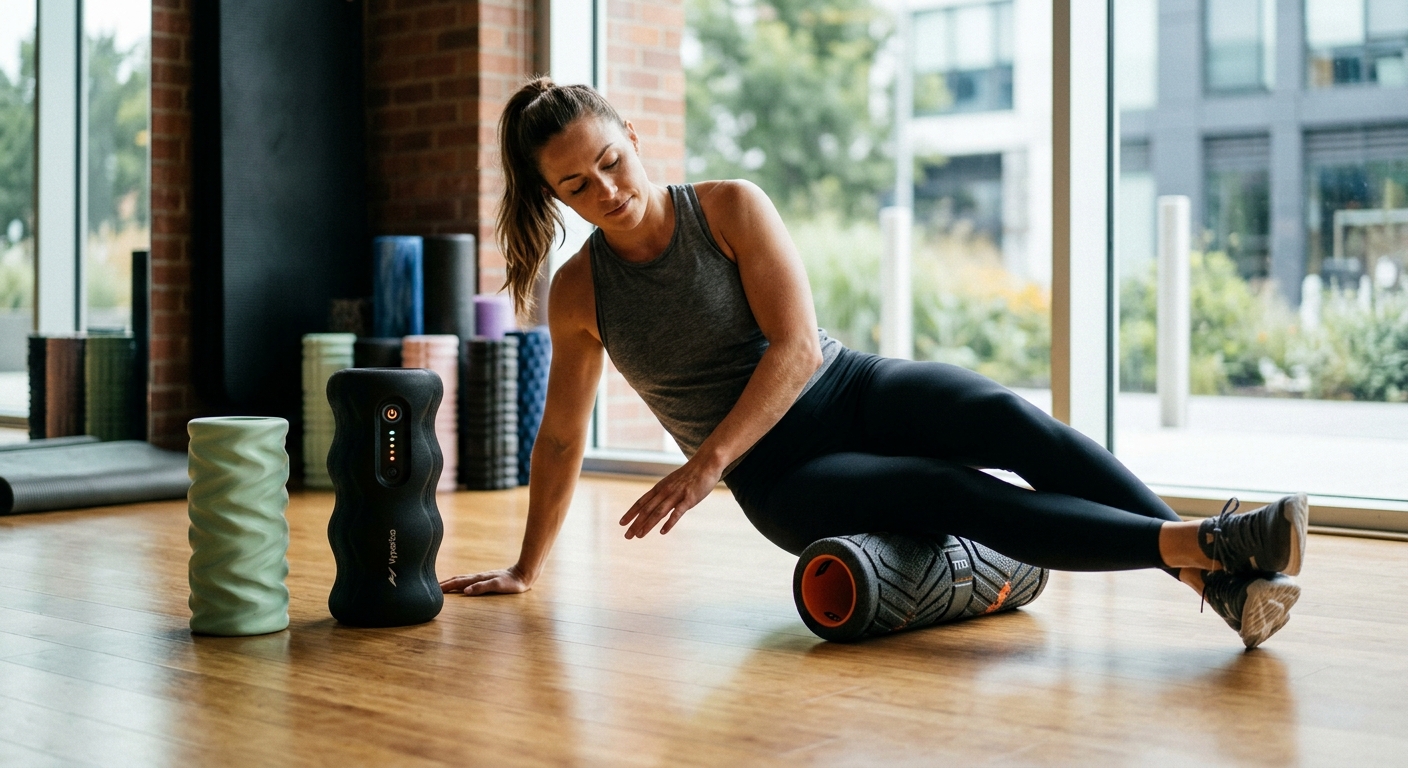
After testing nine different foam rollers on tense muscles, the author identified three standout options for effectively relieving hard-to-reach knots and general muscle soreness: the Oceanfoam Ripple Roller for targeted compact relief, the TRX Training Rev Roller for trigger points, and the Hyperice Vyper 3 for advanced vibrating intensity.
I tested 9 foam rollers on my tense and achey muscles. Only 3 relieved hard-to-reach knots Oceanfoam Ripple Roller Best foam roller The Ripple Foam Roller is a compact option that I found useful for targeting smaller, tighter areas without taking up much space. Its smaller size made it easy to maneuver around my legs and other hard-to-reach spots. TRX Training Rev Roller Best foam roller for trigger points The TRX Training Rev Myofascial Release Roller was my favorite for targeted muscle release, especially my calves and hamstrings. I was impressed by the relief I got from the trigger points, which was unlike any other roller I tested. The 14-inch length was long enough to work across my back and legs, but still compact and lightweight enough to move around easily. Hyperice Vyper 3 Roller Best advanced foam roller The Hyperice Vyper 3 was one of the most innovative and powerful rollers I tested, with three vibration settings that added much-needed intensity to my recovery routine. It felt like a massage gun and foam roller wrapped up into one tool. I liked using it on my quads, calves and even arms, where the vibration helped me work into particularly sore spots I struggle to reach. After a tough fitness class or long day hunched over my laptop, I’m often left with sore trapezius muscles, tight calves and shoulders that yearn for relief. A heating pad, massage gun, compression boots or massage chair can help, but I prefer a much more accessible option: a foam roller. There are about a million and one shapes and sizes to choose from, so I put nine foam rollers to the test to see which ones could actually work out my knots without making me regret my life decisions. Some hurt in a good way, but others were so aggressive that they gave a whole new meaning to “deep tissue” massage. After I rolled out my aches and pains with all nine, only three managed to release tension without causing any more pain. Here are the best foam rollers you can buy. Oceanfoam Ripple Roller Best foam roller The Ripple roller is a compact option that I found useful for targeting smaller, tighter areas without taking up much space. Its petite size made it easy to maneuver around my back and other hard-to-reach spots. Plus, it's made from algae, making it an eco-friendly purchase. TRX Training Rev Roller Best foam roller for trigger points The TRX Training Rev Myofascial Release Roller was my favorite for targeted muscle release, especially my calves and hamstrings. I was impressed by the relief I got from the trigger points, which was unlike any other roller I tested. The 14-inch length was long enough to work across my back and legs, but still compact and lightweight enough to move around easily. Hyperice Vyper 3 Roller Best advanced foam roller The Hyperice Vyper 3 was one of the most innovative and powerful rollers I tested, with three vibration settings that added much-needed intensity to my recovery routine. It felt like a massage gun and foam roller wrapped up into one tool. I liked using it on my quads, calves and even arms, where the vibration helped me work into particularly sore spots I struggle to reach. Best foam roller: Oceanfoam Ripple Roller At just 11 inches long, this foam roller is noticeably smaller than most of the rollers I tested. But the compact size ended up being one of its biggest strengths. Rather than trying to roll out my entire back or both legs at once, I could use it to zero in on particularly tight spots, like my calves, quads and even feet. The high-density foam is very firm, and its wave-textured surface helped apply plenty of pressure for a deeper massage. I found it especially useful when I wanted to spend a few extra minutes working on one stubborn knot instead of rolling aimlessly over a larger area. It’s also travel-friendly since it’s on the smaller side, which makes it a great tool to bring on long flights or car rides. According to Oceanfoam, this roller is made from an algae-based material called “Bloom,” giving it an edge over traditional foam rollers. Although algae may seem like a surprising material to use, it’s actually one of the fastest-growing plants on Earth. Using this material removes algae from water while reducing plastic usage. I was impressed that the eco-conscious materials didn’t come at the expense of durability or performance. Beyond muscle massage, the small size and dense, firm construction make the Ripple useful for stretching, balance work and mobility exercises. But its greatest strength was targeting smaller, specific areas, like the nooks and crannies of my back and neck. If you want a foam roller that can tackle tight muscles without taking up half your floor space, this one packs a lot of pressure into a surprisingly small package. That firmness can be a little intense, though not as much as other foam rollers I tested. But when used with controlled pressure, it gave me the coveted targeted muscle relief I was looking for without requiring a big, bulky roller. I also appreciated how easy it was to stash in a gym bag or carry to a workout, making it a practical option for travel, the gym or under my desk for an afternoon stretch. Best foam roller for trigger points: TRX Training Rev Roller This was one of the more approachable yet highly effective foam rollers I tested. I appreciated this one the most when my muscles were already feeling sore. At 14 inches long, it was big enough to roll out my quads, hamstrings and back without feeling cumbersome, but still light enough to lug around and stand on its own. The textured center and bumpy exterior provided enough pressure to feel like I was actually working through tight spots, while the smooth rings on either end made it easy to grip and control as I rolled. I found myself reaching for this one after painful lower-body workouts because it gave me a noticeable release without feeling overly aggressive. Some of the firmer rollers I tested made me tense up as soon as I put my body weight on them, but this one felt much easier to ease into. The TRX provided more targeted pain relief than other flat foam rollers, so be warned it may feel more intense on sore spots. It didn’t completely melt away every single knot, but it did a good job loosening up general post-workout soreness. I also liked that I could use it on pretty much any muscle group without having to think too hard about technique. The 14-inch length worked well for larger areas like my back and thighs, while the textured sections helped me focus on smaller areas that needed a little extra attention. Although it wasn’t lightweight as the Oceanfoam roller, I could actually see myself bringing it to the gym instead of using a gross, sweaty one that’s been used by everyone in my gym. The included access to the TRX Training Club app is a nice bonus if you want some guidance, but even without it, I found this roller straightforward to use. It’s not the most intense roller I’ve tested, but if you want something versatile that loosens tight muscles without making you dread your recovery routine, the TRX gets the job done. Best advanced foam roller: Hyperice Vyper 3 Roller The Hyperice Vyper 3 was not messing around. Of the nine foam rollers I tested, this was one of the first I reached for when my quads and calves were particularly tight after a run or Solidcore class. Granted, I was thrown off at first. The vibration is intense, and there is a learning curve when you’re trying to roll your back out on a hard surface. But the vibrations made a noticeable difference compared to a traditional foam roller: Even on the lowest of its three speeds, I could feel the buzz working through my muscles as I rolled. The higher settings were significantly more intense, and I found myself lowering the speed when I was working on already-sore muscles. The firm, high-density foam provided ample pressure without requiring me to put my full body weight on the roller. I spent extra time on my calves, quads and hamstrings, where I tend to hold the most post-workout tension, and the Vyper 3 did a superb job of reaching those tight spots. I also tested it on my back and appreciated the contoured shape, which kept the roller from pressing directly against my spine. Instead of feeling like I was balancing on a hard cylinder, I could settle into the curved surface and adjust my position to target different areas. That made it easier to control the pressure, particularly when rolling my back. All that said, this roller lost some points in the comfort department. The combination of firm foam and strong vibration can be a lot to handle, especially when you’re already sore. I found the highest setting more aggressive than I wanted for everyday recovery, and I preferred the lowest or middle setting for most of my testing. However, I am on the petite side, so a taller frame could likely handle more pressure. Unlike a basic foam roller that I could mindlessly roll over my muscles while watching TV, this one required a little more attention because small changes in my body position noticeably changed the pressure and vibration. I also tested the practical features, including the three speed settings, cordless operation and the Hyperice app. Switching between speeds was straightforward, and not having a cord made it easy to move from the living room floor to my workout space. The app adds guided recovery routines, although I didn’t necessarily need it to figure out how to use the roller. After several testing sessions, I liked having the option to turn the vibration on when I wanted more intensity and use the roller without it when I didn’t. The Vyper 3 is definitely more of an intense recovery gadget than a basic foam roller, but if you like deep pressure and want to feel your foam roller actually doing something, the powerful vibration makes a world of difference. How we tested I tested nine foam rollers over multiple sessions to see which ones could relieve muscle tension without causing unnecessary discomfort. I used each roller on my back, legs and glutes after stair stepper sessions and Lagree workouts as well as whenever I felt particularly tight. During testing, I assessed how each roller felt in use, how well it targeted sore areas and how easy it was to maneuver. I also considered each product’s construction, portability and any additional features to determine which rollers were genuinely useful for recovery. Materials Function Features How to choose a foam roller When choosing a foam roller, consider the level of pressure and the areas you plan to target. Physical therapist Aspen Owens recommends using a roller to apply “moderately deep pressure” without causing excessive discomfort, noting that foam rollers work best when placed over “the thickest portion of a specific muscle belly.” A roller can also be useful for mobility work and warming up before exercise, when the pressure can increase local blood flow. It can also help with cooling down afterward, reducing tightness. Although foam rollers are generally used for muscle soreness, muscle strains, and chronically achy areas, Owens says they should not be used directly on “acute bone injuries or open wounds.” For harder-to-reach areas such as the hamstrings, glutes and lower back, he recommends a roller that lets you use your body weight to control the pressure. Other foam rollers we tested Gaiam Restore Textured Foam Roller I’ve owned the Gaiam Restore roller for years, and it’s one of those pieces of workout equipment I keep coming back to. At 12 inches long and 4 inches in diameter, it’s compact enough to store easily, but still gives me enough surface area to work on my legs, glutes and smaller muscle groups. The lightly textured surface of the Gaiam adds a little extra pressure without feeling overly aggressive, making it a good option when I want to loosen tight muscles without subjecting myself to a more intense massage, like the TRX or Oceanfoam winners. I particularly like using it on my calves, quads and glutes, where I can easily control the amount of pressure by shifting my body weight. It’s firm enough to feel effective, yet has held its shape through years of regular use, speaking to its durability. It’s not compact enough to toss into a gym bag, nor is it the most sophisticated roller I tested. But after owning it for years, I’ve found it to be a reliable, straightforward option for working out everyday muscle tension. BetterMe Recovery Foam Roller The BetterMe recovery foam roller is a straightforward roller without frills. Compared to other options, though, I had a hard time justifying its price. At 23.6 inches long and 6 inches in diameter, this was one of the larger rollers I tested, giving me plenty of surface area to work on my back, legs and glutes. I could use my body weight to really dig into tight muscles, and the size made it easy to roll across larger areas without constantly repositioning myself. However, the smooth surface didn’t do much for me. I craved more targeted relief, especially after trying more advanced rollers. Despite its length, the roller is relatively light and easy to store, which I appreciated when moving it around my apartment. But compared with some of the other rollers I tested, it didn’t offer much beyond the basics. It helped loosen tight muscles and felt sturdy enough for regular use, but there weren’t any standout features that made it feel particularly different or innovative. For the price, I expected a little more. RAD Roller Mobility Starter Pack The RAD Mobility Starter Pack gave me more ways to target sore muscles than a traditional foam roller alone. The set includes a foam roller, peanut massage ball and mobility stick, so I could switch between tools depending on where I was feeling tension. I found the foam roller useful for larger areas like my legs and back, while the massage ball let me apply more focused pressure to smaller, stubborn spots. But the mobility stick was easily my favorite. I absolutely loved using it to reach those annoying pain points near my shoulder blades and traps that are difficult to target with a traditional foam roller. I could control exactly where and how much pressure I applied, which made it much easier to work into tight spots without contorting my entire body. The stick also came in handy when I wanted to massage a specific area without having to get down on the floor. Having three different tools made this set more versatile than most of the individual rollers I tested, particularly for anyone who tends to carry tension in different parts of the body. It does take up a little more storage space than a single roller, but I liked having the right tool for different types of soreness. Of everything in the set, I found myself reaching for the mobility stick most often, especially when my upper back and traps needed some extra attention. Bala Hourglass Roller There aren’t many bells and whistles here, but I don’t think the Bala roller needs them. Like the BetterMe roller, the Bala is a well-made, no-frills roller that works particularly well for yoga, stretching and gentle recovery. The Bala Hourglass roller has a sleek, thoughtfully designed shape that made it one of the more comfortable rollers I tested. It has a handy indentation for spine work, which gave it an advantage over the comparable BetterMe roller. At nearly 19 inches long and just under 5 inches wide, it gave me plenty of room to work on larger muscle groups like my back, quads and hamstrings without feeling overly bulky. The dense foam is supportive and firm, but it didn’t feel as unforgiving as some of the harder rollers I tested. The hourglass shape was one standout for me. It gave me more control as I moved across different areas of my body and made it easier to position the roller where I wanted it. I found it particularly useful for stretching and slower mobility work, rather than for aggressively digging into a stubborn knot. It also felt stable underneath me, which I appreciated when using it for longer stretches. Chirp Wheel+, Set of 3 The Chirp Wheel+ was one of the more unusual foam rollers I tested, and I struggled to get comfortable on it. Its tall, narrow design is meant to target the muscles surrounding the spine while keeping direct pressure off the spine itself. In theory, that sounded ideal for working out tension in my back, but in practice, I found the wheel too tall and thin to comfortably roll out my back. $90 $72 at Chirp I had a hard time finding a position that let me put enough pressure on my muscles without feeling awkward or unstable. This could be due to my shorter height, considering it felt too tall and bouncy for me. I also tried using it to target tighter spots along my upper and lower back, but it couldn’t quite master the comfortable rolling motion I was looking for. Instead of smoothly moving across my muscles like with a traditional foam roller, I found myself constantly adjusting my position to get the right amount of pressure. The wheel’s shape may work better for someone looking for targeted pressure along the muscles beside the spine, but I personally preferred a wider, more traditional roller for working out back tension. After testing it alongside more conventional rollers, I found myself reaching for the others more often because they were simply easier and more comfortable to use. TriggerPoint Grid Foam Roller The TriggerPoint Grid Foam Roller was one of the more classic foam rollers I tested. At 13 inches long and 5.5 inches in diameter, it felt comparable to the Gaiam in terms of size and density, but with more intense ridges. This standard-density foam gave me a decent balance of firmness and comfort. I used it on my back, quads, hamstrings, calves and glutes, and the different sections of the textured surface let me vary the pressure depending on how tight I was feeling. However, it wasn’t nearly as intense as the winning TRX roller. The ridged exterior and hollow core gave the roller a little more structure than a basic foam cylinder, like the Gaiam. I could put my body weight into it without worrying, and after repeated use, it still felt sturdy and supportive. The texture also provided some targeted pressure, more than a completely smooth roller like the BetterMe or Bala. However, I still preferred the TRX roller when I wanted to really zero in on a specific tight spot and get targeted muscle release. I appreciated how versatile and straightforward the Grid was. There aren’t a ton of extra features to figure out. Overall, it’s a reliable, sturdy option that works well for general muscle recovery, but when my goal was to work out a stubborn knot or focus on one particular area, I found myself reaching for the TRX instead. FAQs Meet our expert For this article, we consulted the following expert to gain his professional insights. Why trust CNN Underscored CNN Underscored editors and writers ensure every product included in an article is thoroughly vetted and something we ourselves would feel comfortable buying and using. Our team has many decades of collective experience researching, testing and recommending products across every category — from fashion and food to home goods and health to electronics and everything in between — and we’re committed to using that expertise to help you make the most of your money and live a better life. CNN Underscored associate testing writer Carolina Gazal has tested a wide range of fitness products, from the best sports bras to the best leggings. For this story, she used all foam rollers on her tense muscles. She also spoke to a physical therapist to learn more about the best way to use foam rollers.