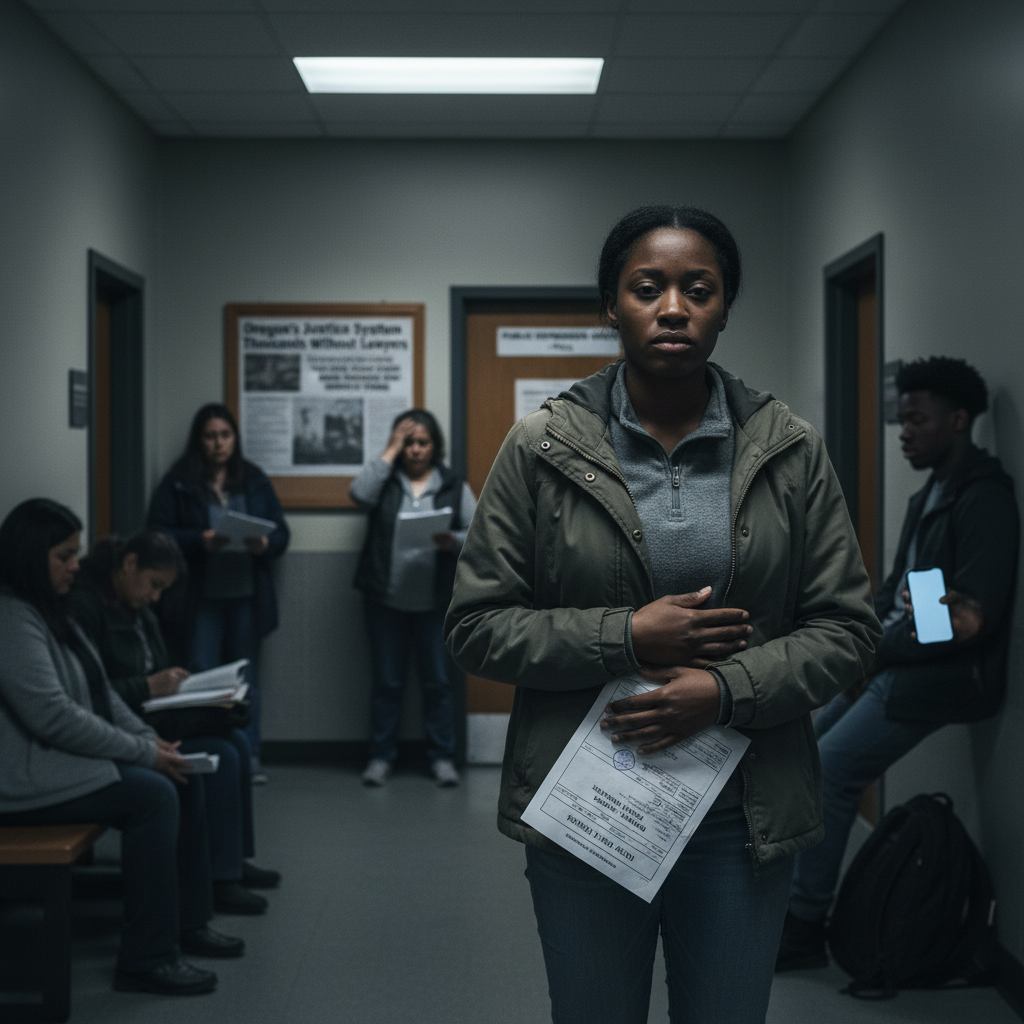
Oregon faces a severe public defender shortage, leaving thousands of defendants, including those wrongly accused like Corshelle Jenkins, without legal representation for months or even years. This crisis has led to devastating personal consequences, pushing the state's legal system to the brink despite a Supreme Court order to dismiss delayed cases.
Oregon is grappling with a severe public defender shortage, leaving thousands of defendants without constitutionally mandated legal representation for extended periods. Corshelle Jenkins's case exemplifies this crisis: she was wrongly charged with theft, faced an arrest warrant, and despite her innocence and an alibi, could not secure a lawyer for over two years. This ordeal caused immense stress, impacted her job prospects, and left her feeling abused by the system. Other individuals, like Veronica Gates, experienced miscarriages and humiliation due to court delays, while Nacyus Berry faced barriers to education, employment, and housing due to pending charges without counsel. The widespread delays have led to job loss, housing instability, custody issues, and health crises for many. In response to the escalating crisis, the Oregon Supreme Court ruled in February to dismiss felony cases pending over 90 days and misdemeanor cases over 60 days without a lawyer, impacting more than 1,400 cases. However, the problem persists, with dismissed cases potentially being re-filed and new defendants still facing long waits. Approximately 1,180 defendants statewide are currently awaiting legal counsel. The crisis has been brewing for years, attributed to difficulties in recruiting and retaining public defenders due to low pay and grueling workloads, compounded by the COVID-19 pandemic's impact, a surge in cases related to homelessness and addiction, and an exodus of attorneys. Oregon's unique, convoluted public defense bureaucracy, operating with a "stunning lack of oversight," exacerbated the issue. While some reforms have been implemented, such as stopping flat fees and directly hiring some public defenders, they have not resolved the systemic problems. There's a significant disagreement between public defenders and the Multnomah County District Attorney (DA) regarding solutions and blame. Public defenders argue the DA clogs the system with unnecessary prosecutions, while the DA accuses defenders of a "work stoppage" and ideological obstruction. Despite these challenges, some signs of progress have emerged, including a 23% dip in unrepresented defendants between November 2024 and 2025, attributed to increased capacity, specialized dockets, and strategic deployment of state-employed lawyers. Efforts to recruit new defenders, increase funding, and prioritize alternatives to prosecution are ongoing, but a complete overhaul of the system remains a complex and debated issue. For many, like Corshelle Jenkins, who eventually had her case dismissed after her lawyer proved mistaken identity, the experience has left lasting anxieties and a deep distrust of the justice system.