A federal appeals court rejected the Trump administration's attempt to block 20,000 California ballots, citing concerns it could 'jeopardize' midterm elections and disenfranchise eligible voters. This marks the third loss for the administration in its efforts to challenge alleged non-citizen votes, with courts warning of 'havoc' and 'irreparable harm' to democracy.
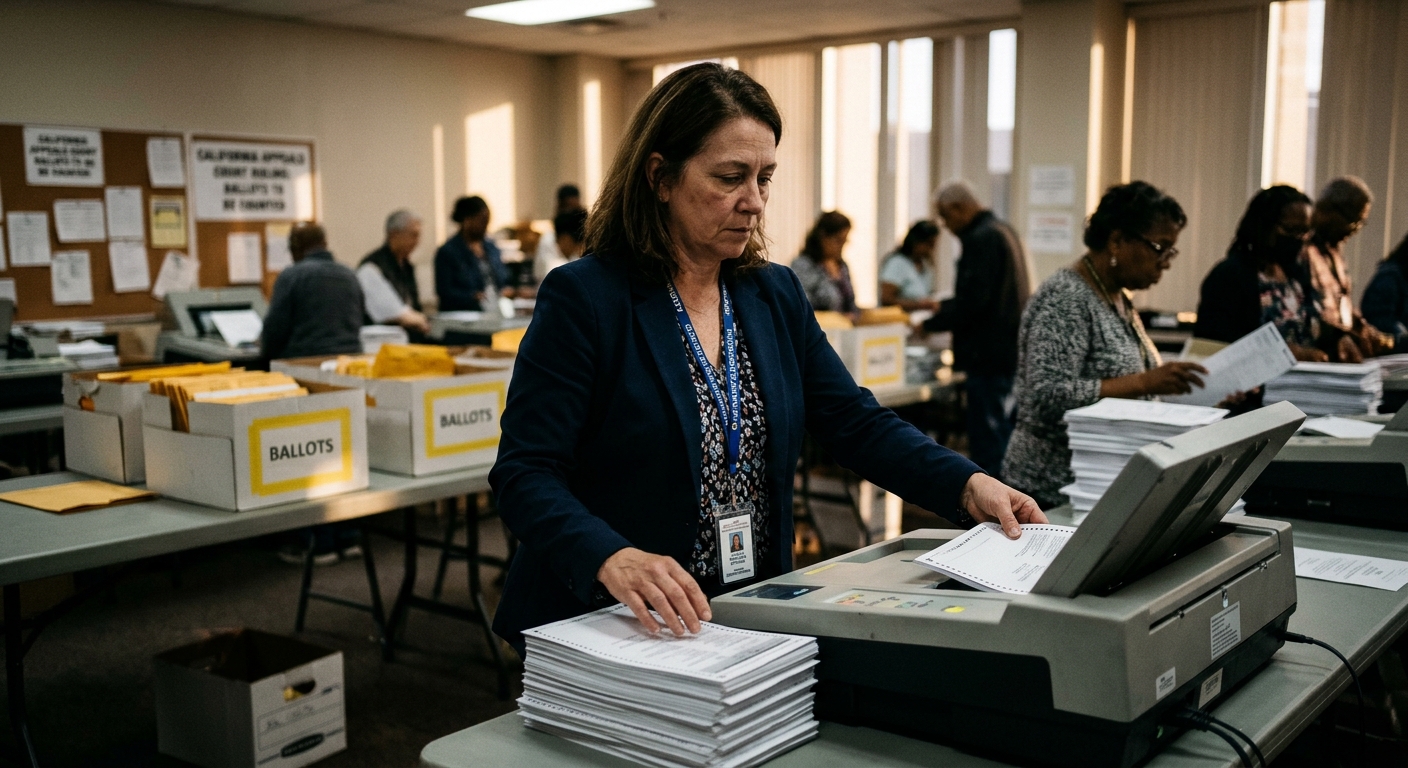
A federal appeals court has decisively rejected the Trump administration's latest effort to halt the counting of 20,000 ballots in California. In a 2-1 decision, the court warned that such an action could 'jeopardize' the upcoming midterm elections and lead to the disenfranchisement of thousands of eligible voters. This ruling represents the third consecutive legal defeat for the administration in its quest to block ballots from individuals it alleges are non-citizen voters, a legal battle that is anticipated to reach the Supreme Court just days before Election Day. The court's majority emphasized its refusal to 'contravene the Elections Clause by undermining the Constitution’s plain text' and expressed 'major concerns' that the administration's interference could risk 'disenfranchisement of eligible voters' and put the 'entire tabulation process in jeopardy.' Earlier, a federal judge in California had also cautioned that segregating ballots could 'wreak havoc' on elections and imperil American democracy, stating, 'Eroded trust in our democracy is irreparable.' Despite these judicial warnings, the Department of Justice escalated its efforts by appealing the initial order and issuing federal grand jury subpoenas to local election officials. The administration also pressured Washington state officials to sequester ballots from approximately 400 individuals accused of being non-citizens. These actions came less than four weeks before Election Day, when the Trump administration sent a list of 20,000 alleged non-citizens to Los Angeles election officials, demanding a 48-hour investigation. This timing likely violates the National Voter Registration Act's 'quiet period,' which mandates a 90-day window before an election to prevent wrongful disenfranchisement. State officials who reviewed a sample of names from the administration's list found significant inaccuracies: over half had never received ballots, nearly three-quarters never voted, and almost 40 percent were, in fact, citizens. The appeals court judges concluded that there was 'no feasible way to identify and segregate the ballots of specific individuals without potentially catastrophic effects on the entire system.' The union representing California election workers has since sued the Justice Department, calling its tactics 'unprecedented and unlawful threats' that risk interfering with the election. Meanwhile, in a separate D.C. case, a federal judge ordered the administration to share its disputed list of non-citizen voters with advocacy groups.