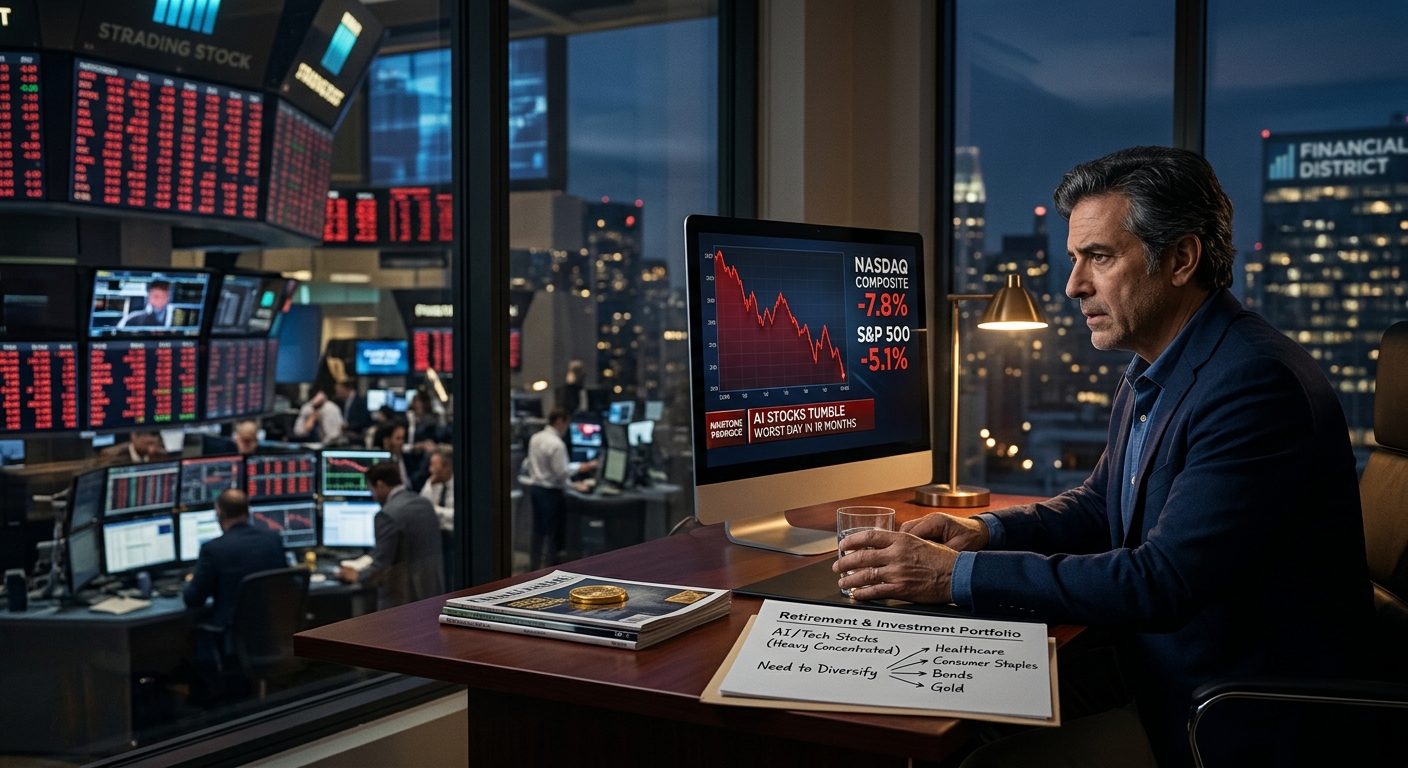
A recent $2.5 trillion drop in the Nasdaq, driven by AI stock volatility, is a stark reminder to investors about the critical importance of diversifying their portfolios to avoid over-reliance on a single sector.
The Nasdaq Composite recently experienced a $2.5 trillion decline, marking the worst day in 19 months for major indexes like the Dow, S&P 500, and Nasdaq. This sharp downturn, largely attributed to tumbling AI stocks and concerns over potential policy hurdles for AI data center construction, has served as a 'wake-up call' for investors. Many portfolios and 401(k)s have become increasingly concentrated in AI and tech stocks due to their significant market value surge and growing representation in benchmark indexes like the S&P 500. With chipmakers making up nearly one-fifth of the S&P 500's market value and the top 10 stocks (mostly tech) accounting for almost 40% of the index, portfolios are heavily exposed to AI-related risks. The article emphasizes that while seeing red can be unsettling, panic selling should be avoided. Instead, investors should proactively work to diversify their holdings. Strategies include investing in sectors less correlated to AI, such as healthcare and consumer staples, considering long-term bonds for stable income, and exploring active futures funds or commodities like gold and cash equivalents. Diversification, while not eliminating losses, significantly reduces a portfolio's dependence on any single market segment, helping it weather volatility and align with individual risk tolerance and long-term financial goals.