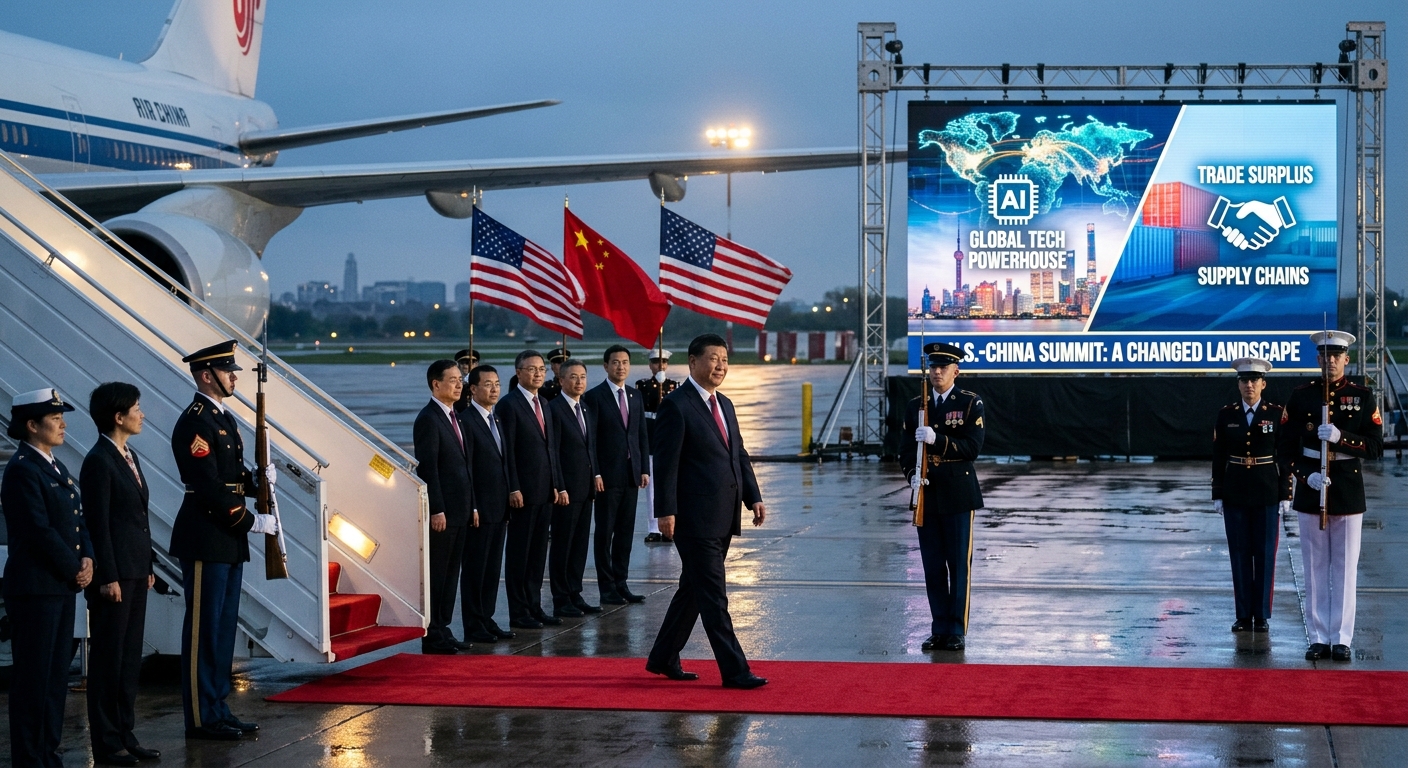
Chinese leader Xi Jinping arrives in the US in a vastly stronger position than a decade ago, with China emerging as a tech heavyweight, global economic power, and influential diplomatic actor, forcing the US to treat Beijing with new equality and respect amidst shifting global dynamics.
When Chinese leader Xi Jinping visits the US, he arrives at the helm of a nation profoundly transformed since his last state visit nearly a decade ago. China has transitioned from lagging behind the US to becoming a global tech powerhouse, boasting advancements in AI, space, electric vehicles, and chips. This technological prowess, coupled with a massive $1.2 trillion trade surplus and strategic control over critical supply chains like rare earths, grants Beijing significant leverage over Washington. While the US grapples with international conflicts and strained alliances, China has cultivated an image as a responsible global leader, with its influence extending from proposing new security architectures in the Middle East to aiding BRICS nations with smart factories and AI. Policy circles in Beijing now assert that the era of one-directional US demands is over, with China demanding reciprocal treatment and respect. Despite domestic economic challenges like slowing growth and youth unemployment, there's a strong national pride in China's tech rise, even against US restrictions, exemplified by Huawei's resilience. Xi's visit aims to inject momentum into China's economy through high-tech transformation, maintain "constructive strategic stability" with the US, and firmly establish China's "red lines" on issues like Taiwan and human rights. The shifting balance of power means both nations are wary of pushing too far, recognizing an "equally matched" leverage that discourages aggressive actions. Globally, China's soft power is growing, with its AI models and EVs gaining traction, and its cultural exports sparking international interest. As the US seeks to curb China's ties with nations like Iran, Beijing signals its ability to mediate and warns against sanctions, underscoring its enhanced diplomatic stature and independence on the global stage.