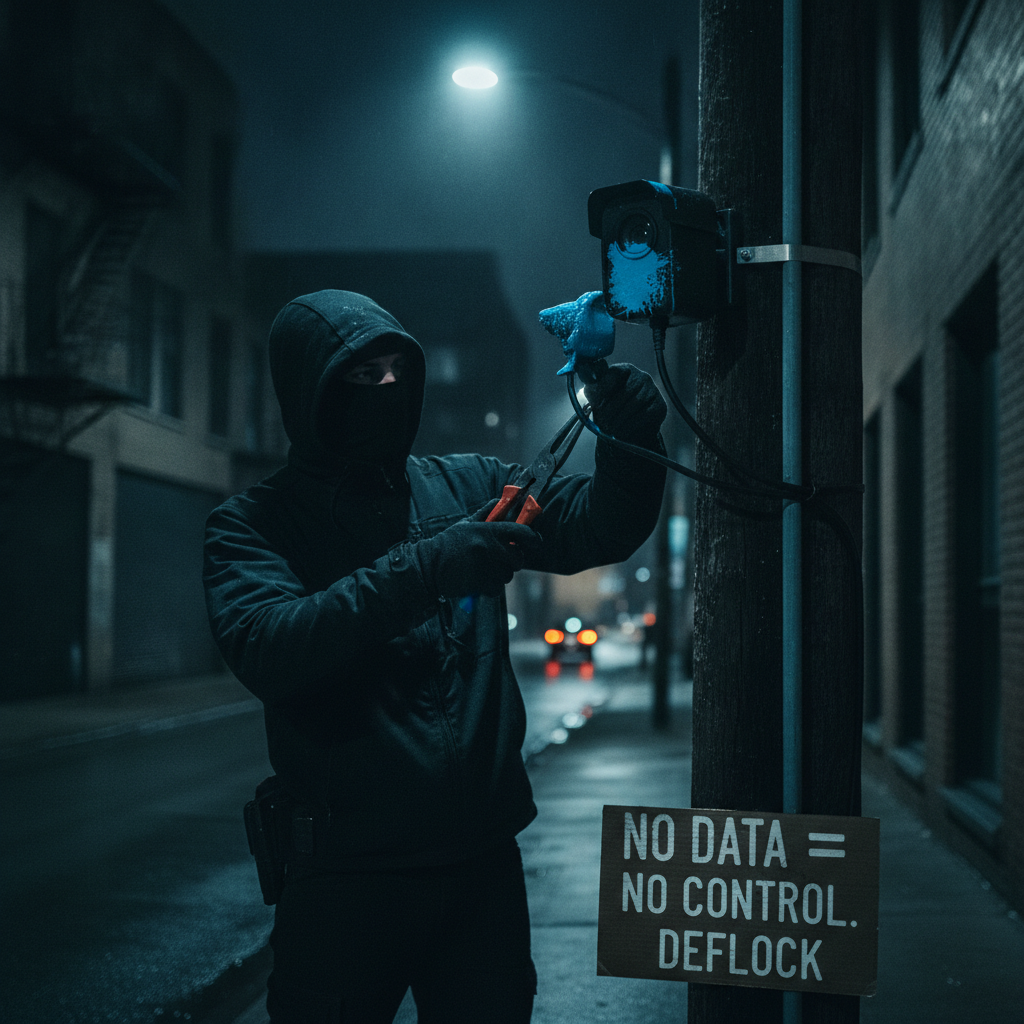
A growing movement of vigilantes, led by figures like 'NoMark' dubbed 'Minneapolis' Batman,' are actively destroying Flock Safety's automated license plate reader (ALPR) cameras across the US. These actions are fueled by widespread privacy concerns over mass surveillance, happening in tandem with legal challenges and grassroots advocacy against the devices.
The article details the rise of vigilante actions against Flock Safety's automated license plate reader (ALPR) cameras, driven by profound privacy concerns. A central figure, 'NoMark' from Minneapolis, known for his online vigilante persona, describes his initial nervousness and subsequent calm in taking down over a dozen cameras. He, and many others across the country, view these actions as the only way to combat the rapid proliferation of ALPRs, which critics fear enable mass surveillance by tracking vehicles and individuals without warrants. Flock Safety, valued at $8.4bn, claims its cameras are not mass surveillance tools and are vital for public safety, scanning billions of license plates monthly across 6,000 communities. The article highlights various forms of protest, from 'paint bombing' and snipping wires to 3D printing obstructions and leaving defiant messages. The Guardian identified at least 33 instances of camera damage across 23 states explicitly protesting surveillance. While NoMark remains uncaught, others like Jeffrey Sovern and Jevon Martinez face charges, expressing their belief that the cameras are unconstitutional. Law enforcement agencies are monitoring anti-Flock advocacy, with fusion centers directing officers to report vandalism or sabotage. Public sentiment largely favors the vigilantes, with online communities sharing tips for disabling cameras and offering support to those facing charges. Beyond direct action, privacy advocates and groups like 'DeFlock' are pursuing policy changes, leading over 80 cities to disband or reject Flock contracts. Concerns also include potential misuse by law enforcement, such as stalking or searching for non-vehicle specific markers. Congress is also taking note, with a Texas lawmaker introducing a bill requiring warrants for Flock camera data. Flock's CEO, while initially calling DeFlock 'terroristic,' later apologized and the company is adapting by canceling features like 'human distress detection,' acknowledging public concerns.