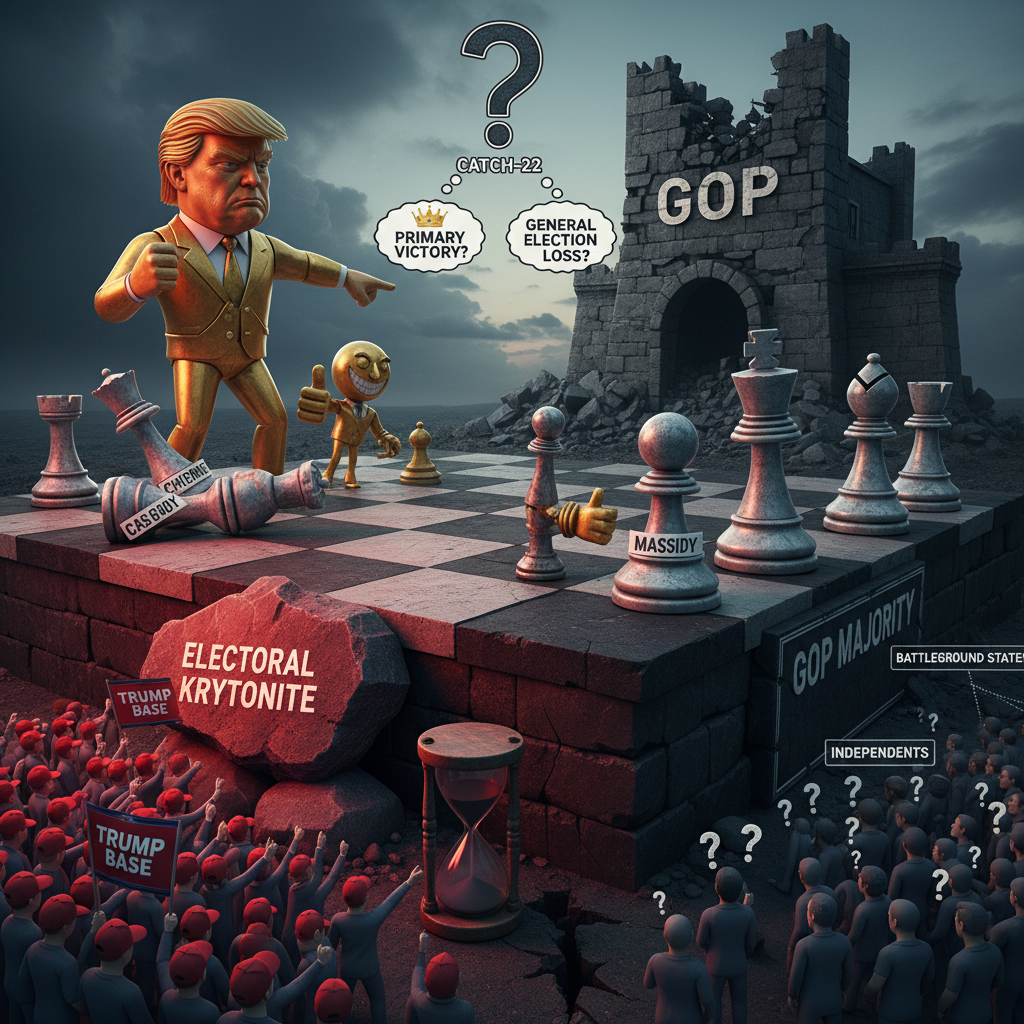
Donald Trump is actively purging Republican dissenters, celebrating primary defeats like Thomas Massie's, in a bid to consolidate power. However, critics argue this 'revenge tour' could undermine his legislative agenda, jeopardize the party's fragile majorities, and alienate crucial swing voters, creating a 'catch-22' for Republicans in upcoming elections.
Donald Trump is relentlessly pursuing a 'revenge tour' against Republican members who have crossed him, exemplified by his celebration of Thomas Massie's primary defeat in Kentucky. This effort aims to purify the Republican party of dissenters and enforce absolute loyalty. Numerous Republicans, including Liz Cheney, Adam Kinzinger, and Bill Cassidy, have either been ousted or faced intense pressure. However, this strategy is increasingly seen as a double-edged sword. Critics argue that by alienating and defeating moderate Republicans, Trump risks undermining his own legislative agenda and the party's slim majorities in Congress. Ironically, some defeated or threatened Republicans, like Massie and Cassidy, feel liberated to oppose Trump more vigorously in their remaining time in office. Public opinion polls suggest that while Trump's base remains strong, his approval ratings are low, and the party is losing ground with independent voters crucial for general elections. Republicans are caught in a 'catch-22': Trump's endorsement is vital for primary victories, but his divisive nature could be electoral 'kryptonite' in general elections. His recent endorsement of scandal-plagued Ken Paxton over a more electable incumbent in Texas further highlights his prioritization of personal loyalty over party electoral success, potentially draining resources from critical battleground states. This internal conflict and the empowerment of former allies to act against him could ultimately cost the Republican party significantly.