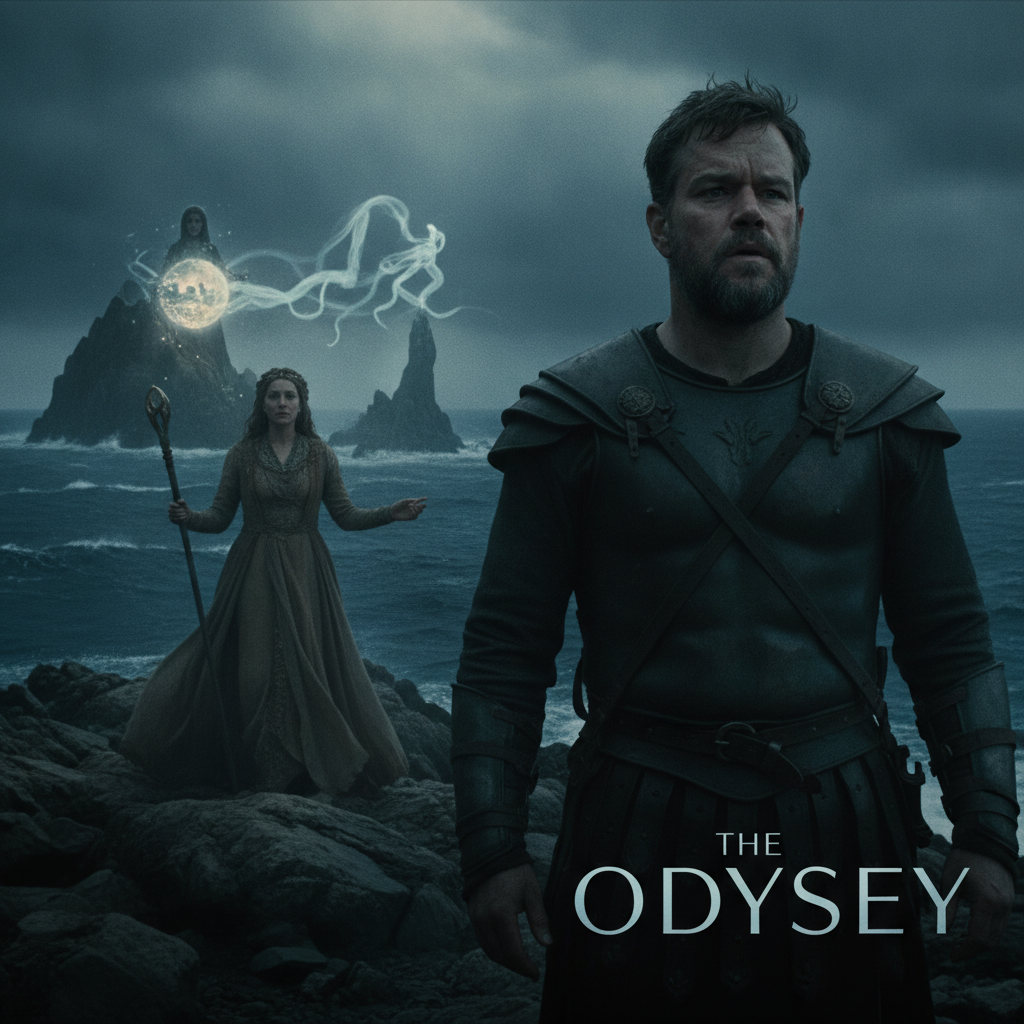
This article critically examines Christopher Nolan's film adaptation of 'The Odyssey,' arguing that it sacrifices the original epic's 'delicious darkness' by largely removing the sexual encounters and motivations of key characters like Circe and Calypso. The author contends that this 'de-sexing' fundamentally alters the narrative, making Odysseus's long journey home less coherent and introducing contradictory elements like trauma.
The author critiques Christopher Nolan's film, 'The Odyssey,' for what is perceived as a deliberate 'de-sexing' of Homer's classic epic. The article highlights the absence of sexual chemistry between Odysseus and figures like Circe and Calypso, suggesting that these encounters, integral to the original poem's narrative and character motivations, have been sacrificed. The author questions the film's portrayal of Circe's passion and Calypso's coercive control, arguing that their actions in the original text are often driven by sexual desire or the desire to keep Odysseus for sex. Similarly, the siren song, traditionally interpreted as sexual longing, is depicted in the film as a call of unnamable loss, which the author finds less compelling. The article posits that by removing these 'shagging adventures,' the film struggles to explain Odysseus's prolonged absence, leading to the introduction of trauma as a key motivator. While acknowledging Matt Damon's understated monologue on Odysseus's trauma from bloodshed, the author finds this explanation contradictory, especially when juxtaposed with the violent mass suitor-killing at the journey's end. Ultimately, the piece concludes that while modern sensibilities might necessitate Odysseus's faithfulness to Penelope, 'de-sexing the classics' is a challenging endeavor that fundamentally alters their meaning and impact.