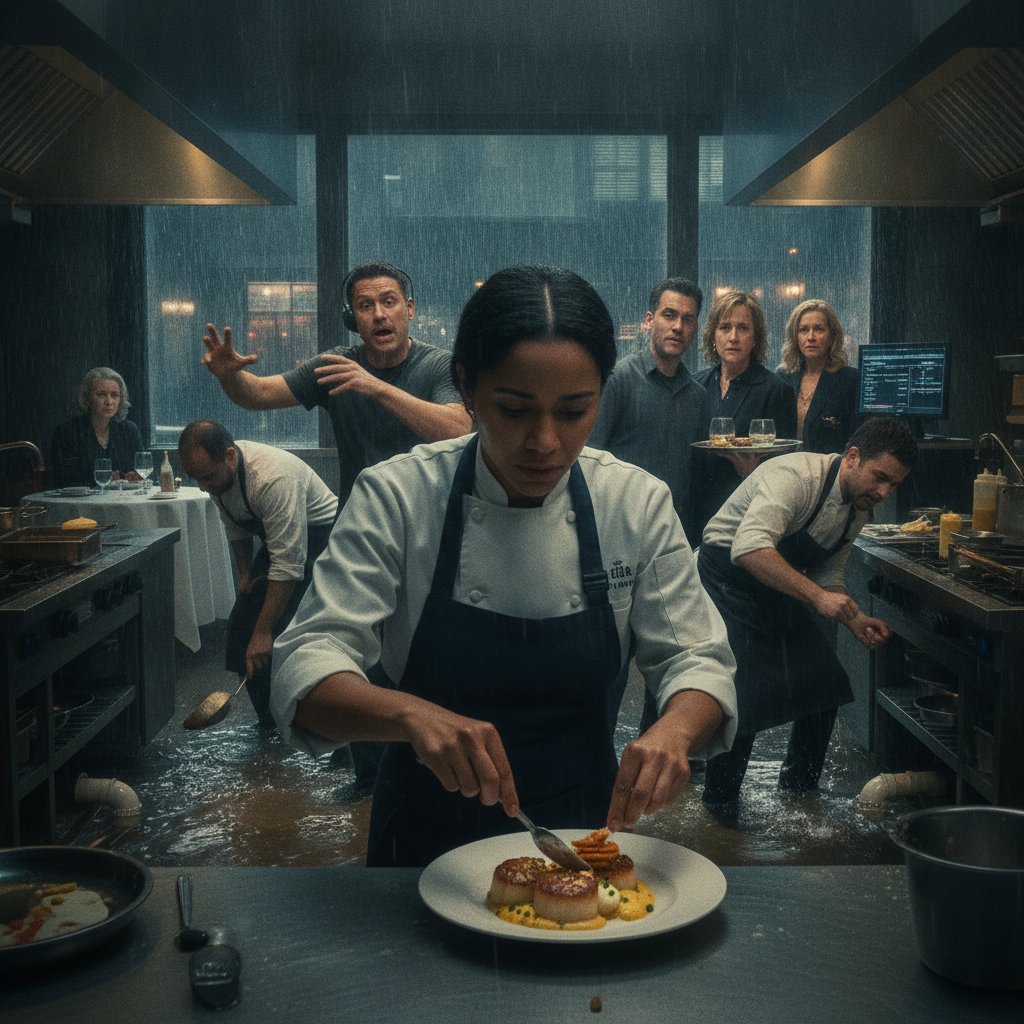
The much-anticipated final season of 'The Bear' sees Carmy's restaurant facing financial ruin and a chaotic last service, complete with a Michelin inspector. This review delves into the show's signature blend of high-stress 'competency porn,' indie melancholy, and gallows humor, questioning if its polarizing style ultimately provided a satisfying conclusion to its critically acclaimed run.
The article reviews the final season of FX's 'The Bear,' a show transformed from a sandwich shop to a fine dining establishment by chef Carmy Berzatto. The author critiques the show's polarizing nature, citing the season four finale as 'Marmite TV'—either a naturalistic exchange of emotional truths or a plotless, cacophonous half-hour. 'The Bear' is presented as an encapsulation of peak streamer-era TV, prioritizing thematic richness and indie melancholy over crowd-pleasing, balancing uncompromising integrity with self-indulgence. This fifth and final season marks the end of an era, not just for the show, but for the period when platforms heavily invested in auteurish projects. Despite its 21 Emmy awards, often controversially in comedy categories, the show's final outing is a near real-time chronicle of the restaurant's potential last service. With Uncle Jimmy pulling funding and Carmy resigning, Syd must navigate a night of culinary chaos to impress a Michelin inspector, hoping to secure a star and keep the restaurant afloat. The season leans into 'competency porn,' immersing viewers in a high-stress kitchen where hyper-skilled individuals battle torrential rain, plumbing disasters, car crashes, double bookings, dropped food, and emotional meltdowns. While the relief of overcoming these hurdles is transcendent, the tone is inconsistently serious, sometimes becoming a slog. However, the gallows humor, particularly Richie's farcical attempts to cancel bookings and Natalie's anxieties about her baby and dysfunctional mother, is highlighted as the best aspect, proving the show's comedic strength when tragedy and comedy fuse. The review hints at a gratifying level of catharsis and closure, suggesting that despite the chaos, 'The Bear's' kitchen evolves into a place of community and compassion, ultimately rewarding viewers who embraced its peculiar flavor.