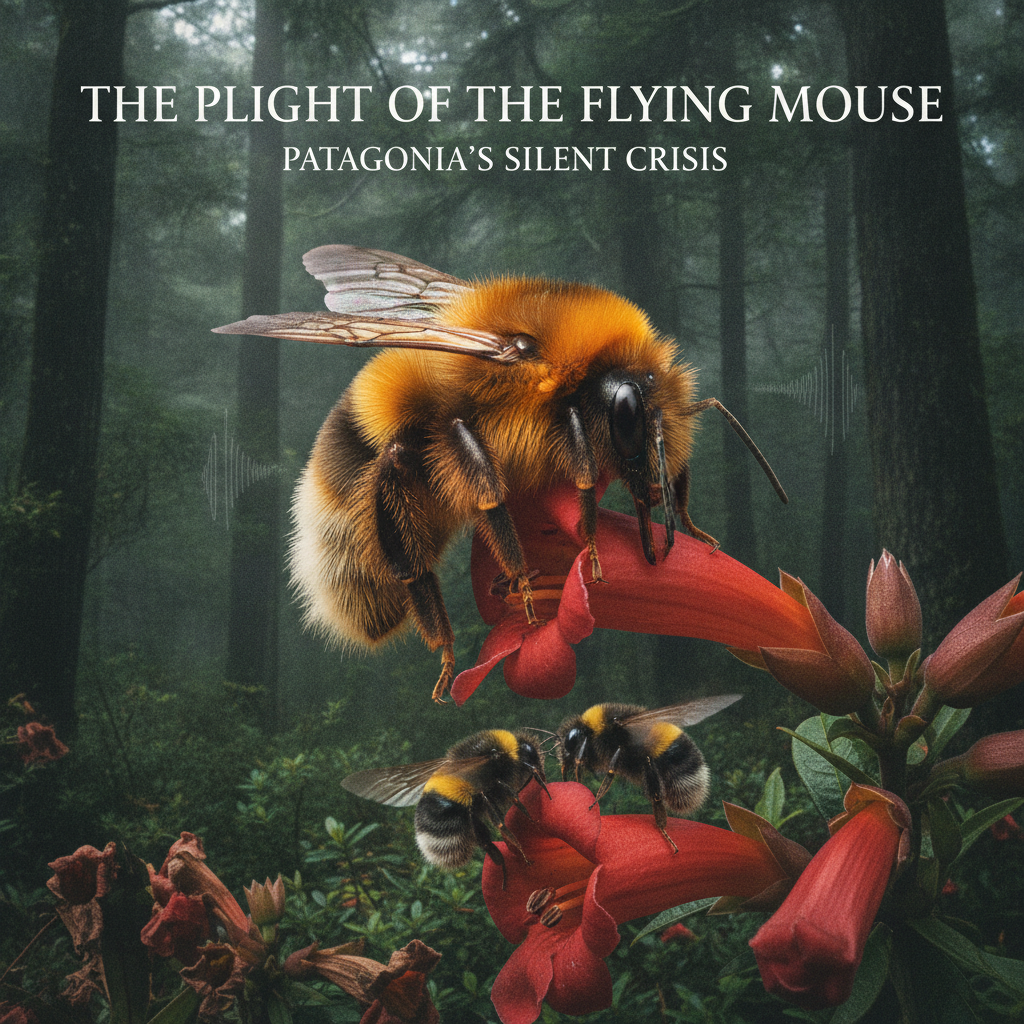
Meet Bombus dahlbomii, the magnificent giant ginger bumblebee of Patagonia, affectionately known as the 'flying mouse.' This crucial pollinator is rapidly disappearing due to invasive European bumblebees introduced for agriculture, threatening its survival and the delicate balance of its native ecosystem.
The article details the critical situation of Bombus dahlbomii, the largest bumblebee species, native to the temperate forest-clad mountains of Patagonia in Argentina and Chile. Known as the 'flying mouse' or 'moscardón' due to its impressive size (females up to 4cm, 1.5g) and furry ginger appearance, this bee is a vital pollinator for native plants, including those with red flowers that it uniquely detects. However, its populations have plummeted since the 1980s following the introduction of non-native European bumblebees, Bombus ruderatus and Bombus terrestris, for commercial agricultural pollination. These invasive species not only outcompete Bombus dahlbomii for resources but also introduce novel pathogens and diseases, decimating the native population. This decline has severe repercussions for the entire Patagonian web of life, from native flora to other endemic species, and inadvertently aids the spread of invasive plants. Despite its nomination for 'invertebrate of the year' and ongoing research efforts like bioacoustics, the invasive bees are now too widespread to be eradicated, highlighting a significant conservation crisis.