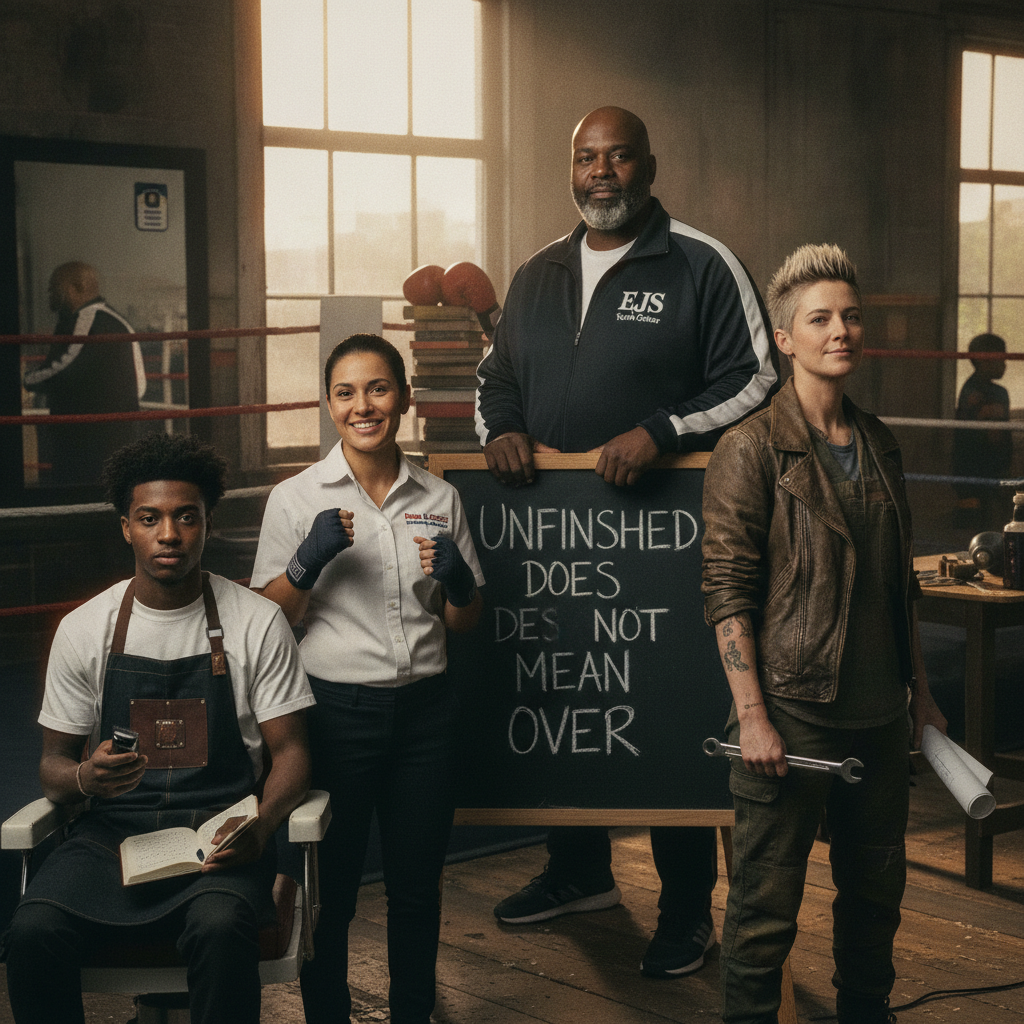
This article explores the widespread but often unspoken experience of 43.1 million Americans who begin college with hope but leave without a degree. It delves into the diverse reasons for not finishing—from financial hardship and family responsibilities to illness, addiction, and mental health struggles—and shares the compelling stories of individuals like Aaron, Alina, Dupree, and Sylvie who found alternative paths and purpose despite their unfinished academic journeys.
The article highlights the common, yet often stigmatized, experience of leaving college without a degree, affecting 43.1 million Americans. The author, a documentary photographer, shares personal anecdotes of unfinished projects and introduces the project's focus on individuals who couldn't complete their higher education due to various life circumstances. These include financial instability, family responsibilities, illness, addiction, and burnout, leading to a sense of shame. Four diverse individuals are profiled: * Aaron (20, Santa Cruz, CA): Diagnosed with bipolar disorder, lost financial aid, and became financially independent after his parents moved. He now balances barber school, security work, and creating autobiographical rap music, aiming for a different future. * Alina (26, Chicago, IL): Her plans to attend Hawaii Pacific University were derailed by an unexpected pregnancy. She enrolled locally but left after a year due to a newborn, postpartum depression, a 30-hour job, and COVID-19 disruptions. Alina now mentors young boxers and works at a car dealership, still hoping to become a teacher. * Dupree (42, Delray Beach, FL): A former football player, he left college twice—first due to grades and financial aid, and later with only 18 credits remaining to support a struggling cousin. He now runs the EJS Youth Center, a nonprofit named after his father, guiding at-risk youth based on his own experiences. * Sylvie (43, Charlottesville, VA): Her academic path was repeatedly interrupted by mental health struggles, a friend's suicide, a serious motorcycle accident leading to opioid addiction, and involvement in the punk scene. Despite numerous setbacks, she is focused on sobriety, family stability, and pursuing a union apprenticeship, demonstrating a persistent desire for a different future and a love for learning. The article emphasizes that for these individuals, 'unfinished does not necessarily mean over,' showcasing their resilience and ability to forge meaningful lives outside conventional academic paths.