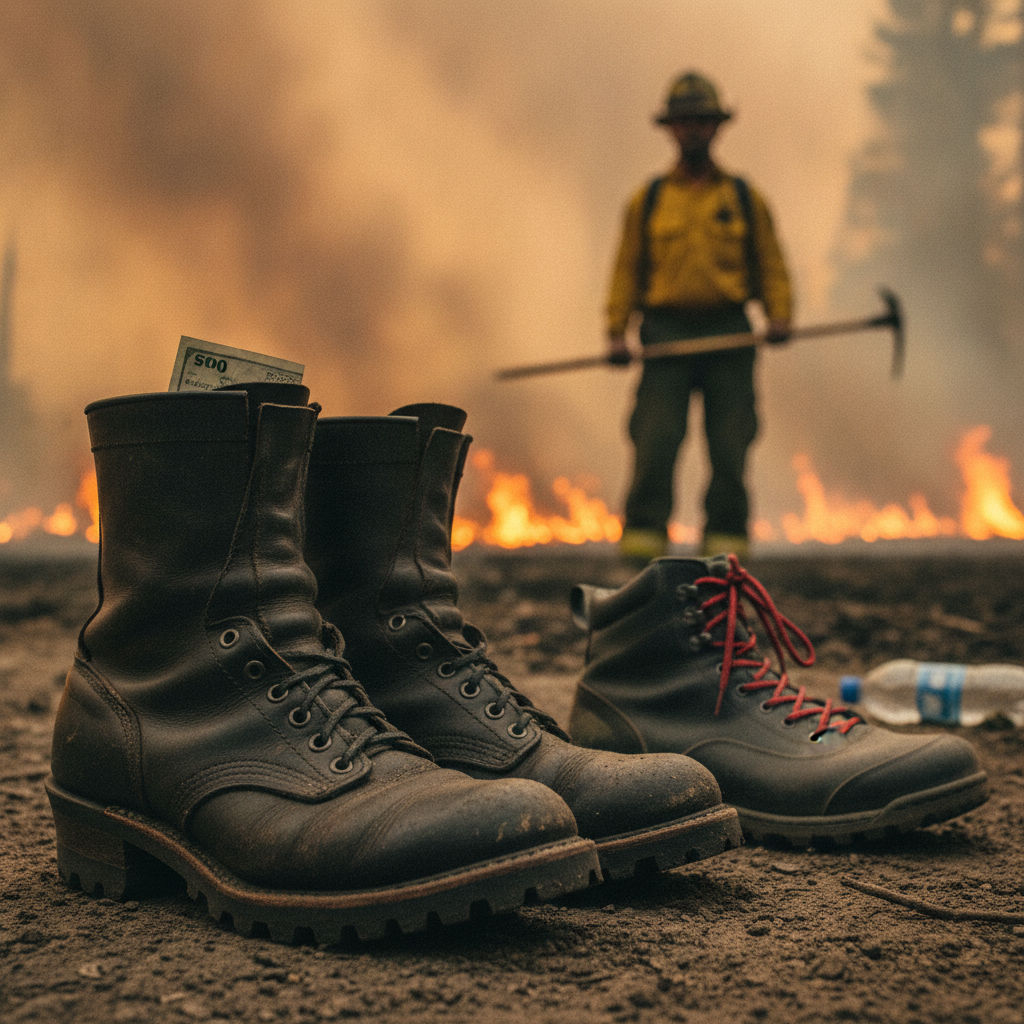
US wildland firefighters rely on expensive, handcrafted boots, costing up to $800, which they often must purchase themselves due to outdated government classifications. This essential gear, steeped in tradition, faces a changing market as the firefighting workforce evolves.
For 18 years, Luke Mayfield, like other US wildland hotshots, relied on specialized, handcrafted boots essential for navigating dangerous wildfires. These boots, typically 8-inch full-grain leather with heat-rated soles and tall heels, have remained largely unchanged for over a century, originating from companies like White's Boots in the Pacific Northwest. While certified by the NFPA and designed for durability (often rebuilt rather than replaced), they can cost up to $800 a pair. A major issue is that wildland firefighters are largely responsible for equipping themselves. Historically, the US government classified them as 'forestry technicians,' not 'firefighters,' which minimized federal responsibility for their gear. This bureaucratic classification, combined with low wages (only recently reaching a $15/hour minimum) and inconsistent funding across agencies, contributes to significant retention problems in a workforce facing an ever-lengthening 'fire year.' Despite their high price, boot manufacturers like Nicks Handmade Boots believe their products are underpriced given the specialized materials (e.g., Technora thread, thick leather) and intensive handcrafting involved. White's Smokejumper, a legendary model, has maintained its price relative to a week's pay for nearly a century, but demand for these premium handmade boots is shifting. A younger, more transient firefighting workforce is increasingly opting for lighter, cheaper hunting-style boots, often Italian-made, which require less break-in but may lack the durability and NFPA certification of traditional options. Even White's is adapting by introducing its own Italian-made boot. While there have been recent government reforms, including permanent pay raises and extended hazard pay, the stipend for boots has remained at $500 since 2020, failing to cover the cost of this critical, self-purchased equipment made by a shrinking number of skilled artisans.