High-profile women in Donald Trump's circle, including White House press secretary Karoline Leavitt and second lady Usha Vance, are leveraging their pregnancies and new motherhood to promote the Republican party as 'pro-family' and push a pronatalist agenda, sparking debate over whether this is genuine support or political propaganda amidst contradictory policies.
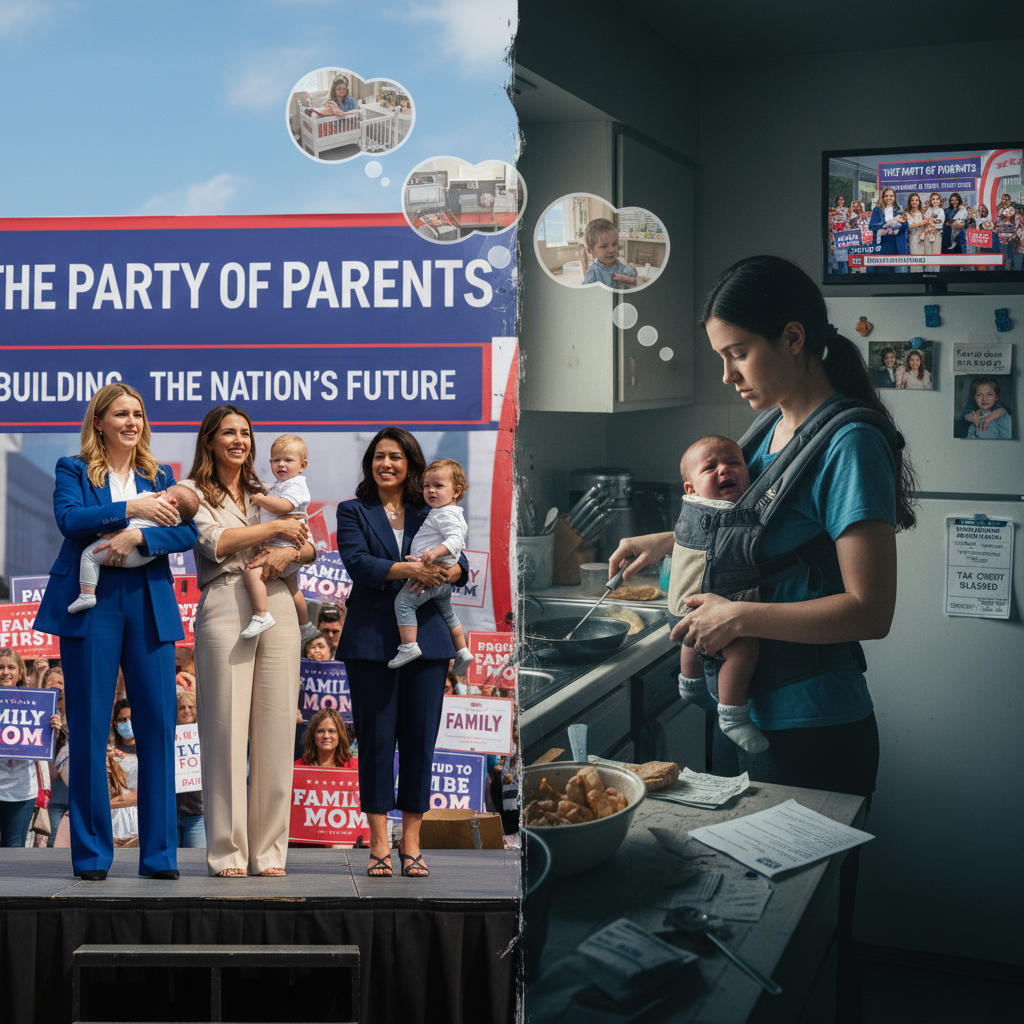
The article details a 'Maga baby boom' among prominent women associated with Donald Trump, such as White House press secretary Karoline Leavitt (who became the first to give birth while in the role), right-wing podcaster Katie Miller, and second lady Usha Vance. Their pregnancies and new motherhood are being strategically used to advance a political narrative: that the Republican party is the 'party of parents' and that having children is vital for the nation. This messaging, described by experts as 'propaganda' tied to Trump's political goals, often features explicitly pronatalist commentary, urging women to prioritize family over careers. However, the article highlights significant contradictions. Despite the 'pro-family' rhetoric, the Trump administration and the Republican party grapple with conflicting ideologies, such as advocating for women in powerful roles while simultaneously pushing traditional views of women as homemakers. Policies proposed, like eliminating federal tax credits for daycare, often favor stay-at-home mothers. Furthermore, the pronatalist push clashes with Trump-era anti-immigrant policies that actively slow population growth and cuts to social programs (e.g., Medicaid, food stamps) that financially strain families. Examples include Leavitt's quick return to work, framed as 'atonement' for her career and intense loyalty to Trump, and Miller's embrace of pronatalism alongside 'great replacement' theory paranoia. Usha Vance, in contrast, adopts a more subdued, relatable approach to family life. Ultimately, the article concludes that despite this 'strange motherhood promotional tour,' US fertility rates continue to plummet, and the 'pro-family' claims often lack concrete policy support, making the 'Maga baby boom' a complex blend of personal experience and political strategy.