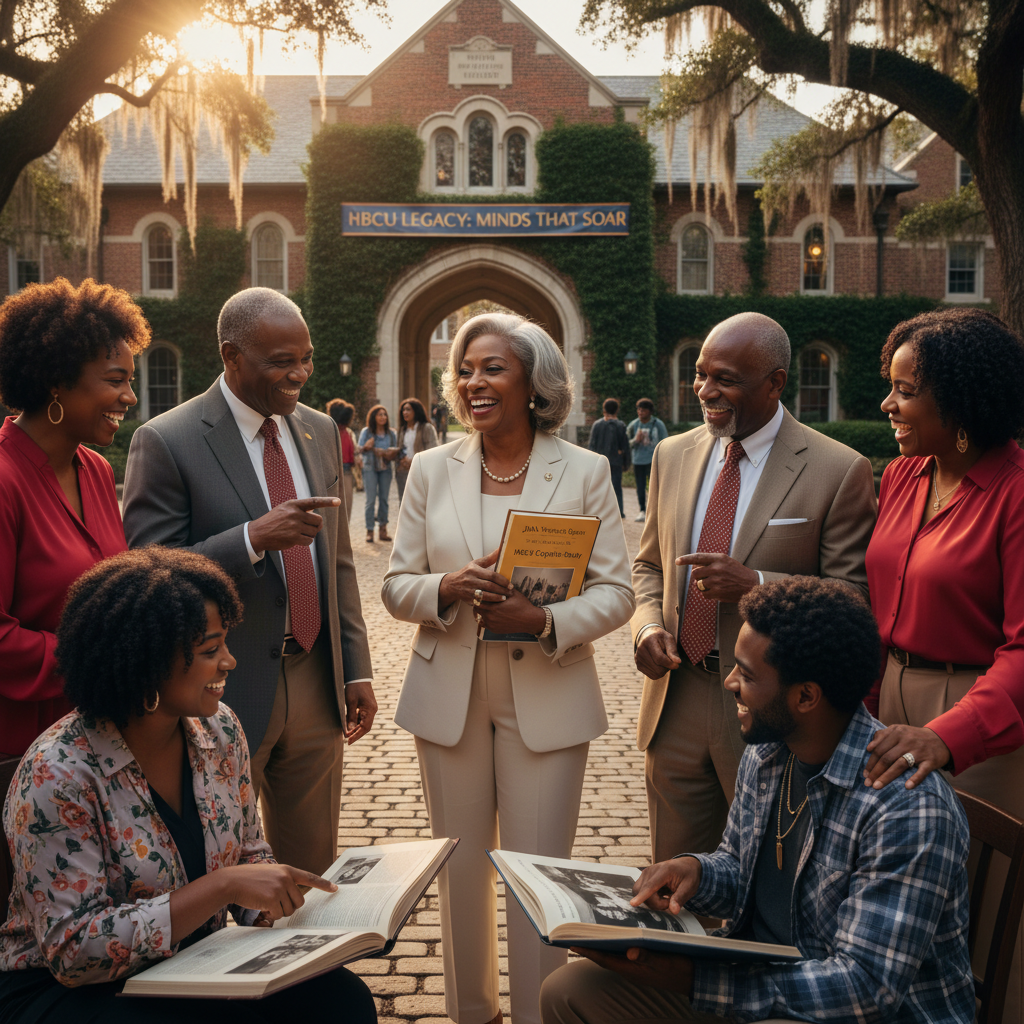
A new study suggests that attending a Historically Black College or University (HBCU) may be linked to significantly better cognitive function and memory for Black Americans in their later years, highlighting the long-lasting benefits of culturally affirming educational environments.
A recent exploratory study, co-authored by Dr. Marilyn Thomas and published in Jama Network Open, indicates a strong correlation between attending a Historically Black College or University (HBCU) and superior later-life cognitive outcomes for Black Americans. The research sampled 1,978 Black adults who attended college between 1940 and 1980, finding that those with any exposure to an HBCU showed better memory and cognitive function at age 62 compared to their counterparts who attended predominantly white institutions (PWIs). This finding holds true across different time periods, including before and after major desegregation policies like Brown v Board of Education and the Civil Rights Act. Dr. Thomas noted that HBCU attendees often reported different early life experiences, such as having college-educated mothers and receiving more affection. The study emphasizes that culturally affirming spaces can promote and protect cognitive health, with benefits lasting well beyond graduation. It serves as a crucial first step in understanding how educational environments, not just years of schooling, impact long-term wellness, underscoring the vital importance of supporting and preserving institutions like HBCUs, especially amidst current scrutiny of diversity, equity, and inclusion (DEI) programs.