Discover how compression socks, initially used for post-surgery recovery, can alleviate leg pain, swelling, and circulation issues for various activities like travel, intense workouts, or prolonged standing. This article reviews top doctor-recommended brands and explains the science behind their benefits.
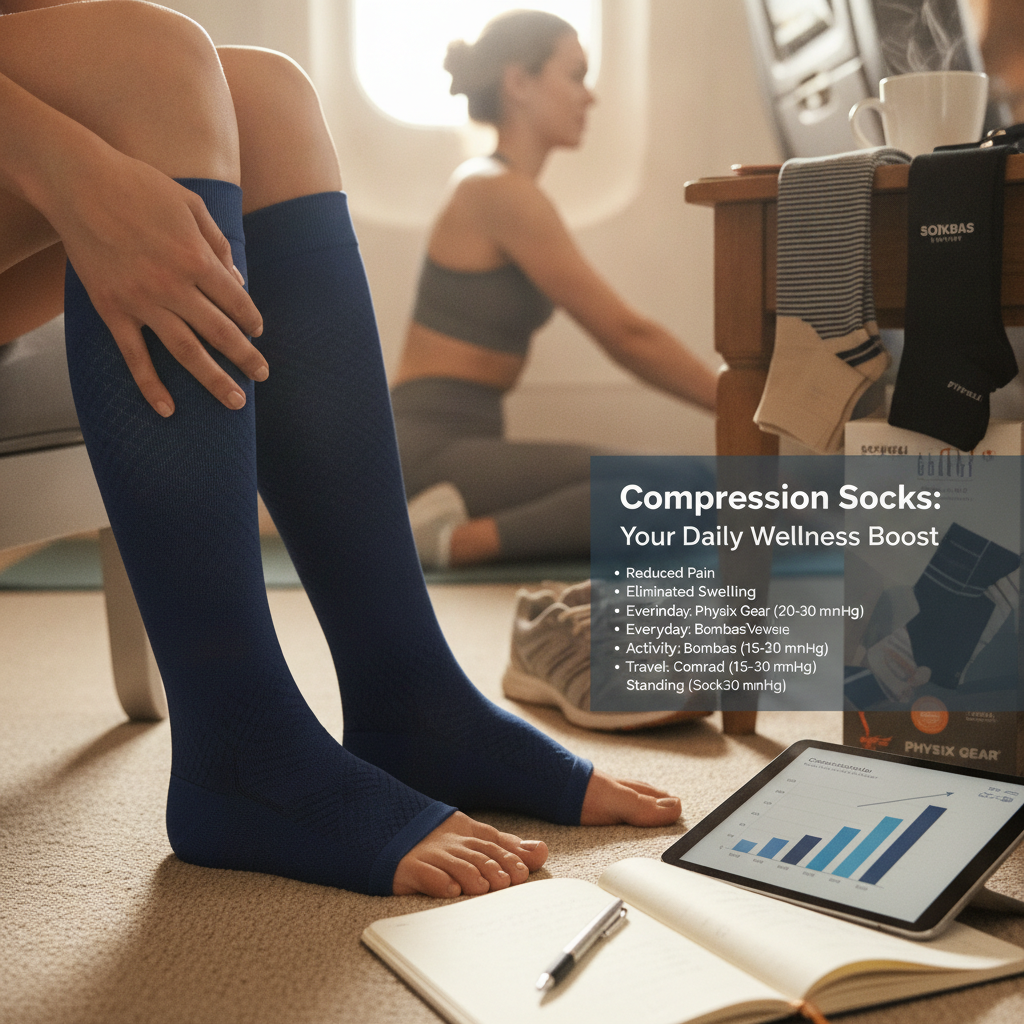
The author shares a personal journey of recovering from leg surgery, experiencing chronic pain, numbness, and toe twitching due to circulation issues. The solution? Compression socks, which gently squeeze legs to improve blood flow. Regular use over two years significantly reduced pain and stopped twitching, demonstrating their effectiveness beyond surgical recovery. The article highlights that compression socks offer benefits for a wide range of individuals, including eliminating swelling during long flights, providing comfort for those on their feet all day, aiding athletes in post-workout recovery, and even preventing spider veins. When choosing compression socks, key factors include price, fit, and moisture-wicking material. The author personally recommends Fitrell (under $20) for its snug fit and cushioned sole, and Bombas Everyday compression socks ($30) for their superior fabric quality and style versatility. The article also mentions various types like knee-high, ankle, and toeless socks, each serving different functions. To provide expert advice, the author consulted podiatry and vascular surgery specialists who recommend specific compression socks for different needs: * **Best Overall**: Physix Gear Compression Socks (20-30 mmHg) for those on their feet often. * **Best for Everyday Wear**: Bombas Everyday Compression Knee-High Socks (15-20 mmHg), praised for comfort and style. * **Best for Physical Activity**: CEP Tall 4.0 Compression Running Socks (20-30 mmHg) for support and breathability. * **Best for Travel**: Comrad Knee-High Compression Socks (15-20 mmHg) to combat swelling from prolonged elevation. * **Best for Standing All Day**: Sockwell Moderate Graduated Compression Socks (15-20 mmHg) for comfort and support. The article further delves into essential information about compression socks: * **Benefits**: They decrease discomfort, improve blood flow, reduce swelling (from sitting, standing, pregnancy, health ailments like lymphedema, diabetes), aid muscle recovery for athletes, prevent blood clots, and can help with varicose veins. They work by applying gentle pressure to promote blood flow back to the heart. * **Compression Measurement**: Measured in millimeters of mercury (mmHg). Mild (8-15 mmHg) for general use, Moderate (15-20 mmHg) for varicose veins or prolonged standing, and Higher (20-30 mmHg) for more noticeable issues or specific medical conditions under professional guidance. * **Wearing Guidelines**: Recommended for about eight hours, but not during sleep, as lying horizontally naturally elevates legs. * **Comfort**: While effective, they can feel constricting and may leave temporary skin imprints. They are crucial for post-surgery healing by addressing the lymphatic system. * **Gender Differences**: Medically, there's no difference; variations are primarily in sizing, design, and fashion preferences. * **Ideal Material**: Look for soft, durable, moisture-wicking materials like spandex, nylon, and lycra for comfort and breathability. A seamless design and reinforced padding also enhance comfort and stability. Effective socks should feel supportive, not painfully tight, and retain compression after washing.