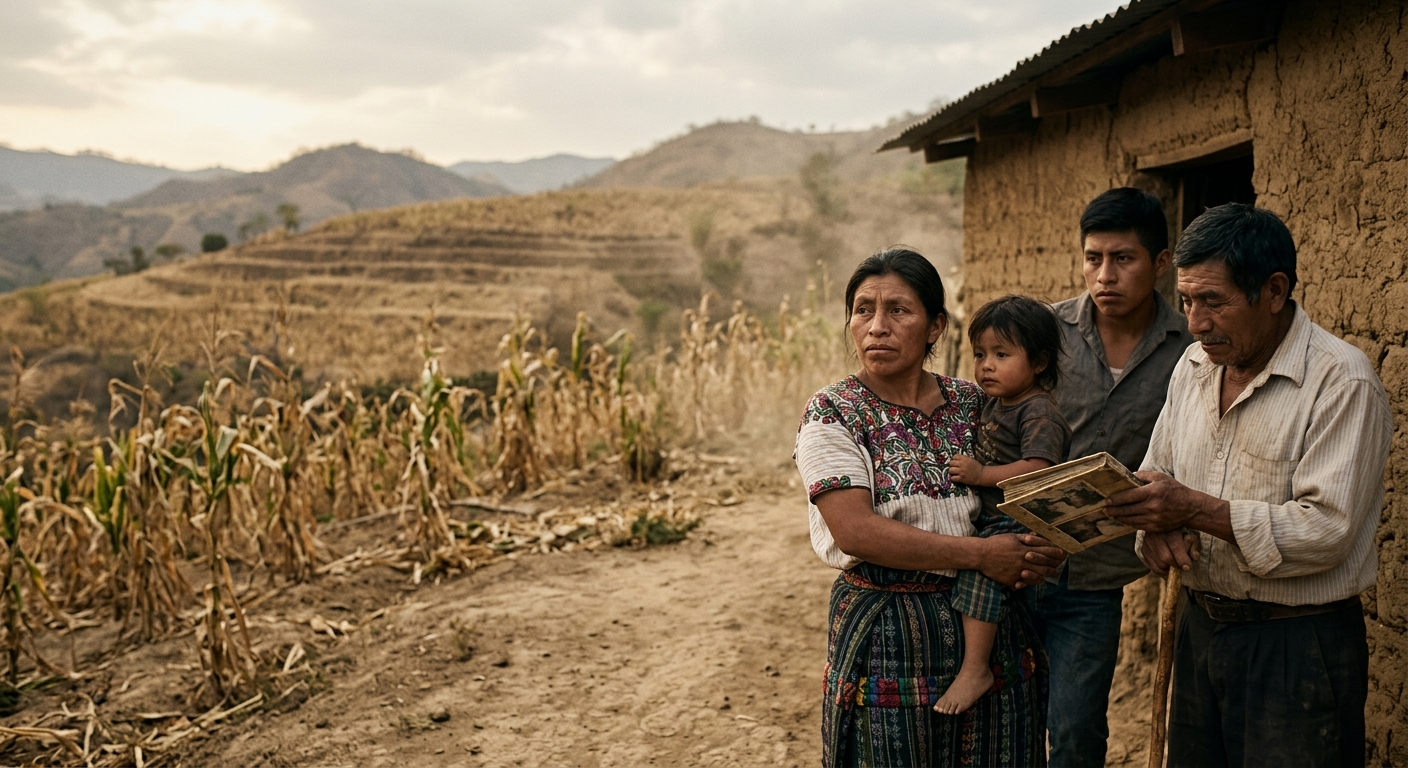
Guatemala's Indigenous Maya Ch’orti’ communities face devastating droughts, forcing thousands to migrate to the US for survival. However, stringent US immigration policies, particularly under the Trump administration, have led to mass deportations, severing vital economic lifelines and leaving families in deeper despair. While some communities find innovative local solutions, the lack of international climate finance and historical injustices continue to trap many in a cycle of poverty and forced displacement.
In eastern Guatemala, Indigenous Maya Ch’orti’ villages like Caparrosa are experiencing severe, prolonged droughts, with the rainy season failing and subsistence crops like maize withering. This climate breakdown, exacerbated by Guatemala's vulnerability to climate change, has pushed communities to the brink, leading to widespread malnutrition, especially among children. For centuries, the Maya Ch’orti’ have maintained their way of life despite historical displacement, but climate change now forces a desperate choice: migration. Thousands of Guatemalans, many Indigenous, have taken out loans or pawned ancestral land to fund perilous journeys to the United States, hoping to find work and send remittances home. However, US immigration policies, particularly under the Trump administration, have intensified crackdowns, leading to mass detentions and deportations. Policies like Title 42 have turned away asylum seekers, and individuals who had lived and paid taxes in the US for years are being forcibly removed. This severs the crucial economic lifeline for their families, often leaving them with immense debt and no means of repayment. Through personal stories like that of Lidia Molina and Brian Pérez (pseudonyms), the article illustrates how attempts to migrate have been met with detention, separation, and deportation, forcing Brian into precarious labor to repay his 'coyote' (smuggler) debt. Another individual, Jorge Cruz (pseudonym), was deported after years of working in Minneapolis, losing everything and still owing debt, exemplifying the devastating personal cost of these policies. While some communities, like Corozal Arriba, have found local solutions by building reservoirs and irrigation systems through grassroots efforts with organizations like Comundich, these are rare and underfunded. The Guatemalan government lacks the resources to implement widespread adaptation, and international climate finance from wealthy, polluting nations falls far short of the estimated $305 billion needed annually by developing countries. Historical injustices, including land and water seizures, further complicate adaptation efforts. Despite the profound challenges and the US's historical role as a major emitter of greenhouse gases, Indigenous communities like the Maya Ch’orti’ express a deep desire to remain on their ancestral lands. Organizations like Comundich advocate for long-term, community-led adaptation, believing the Dry Corridor can be productive with proper support. However, without significant international investment and a shift in policy, parts of the Dry Corridor risk becoming uninhabitable, perpetuating a cycle of forced migration and human suffering.