Slum residents in Delhi are documenting their daily struggles against increasingly severe heatwaves through 'heat diaries,' revealing the human cost and urging policymakers to recognize extreme heat as a human rights issue and implement targeted, community-driven solutions.
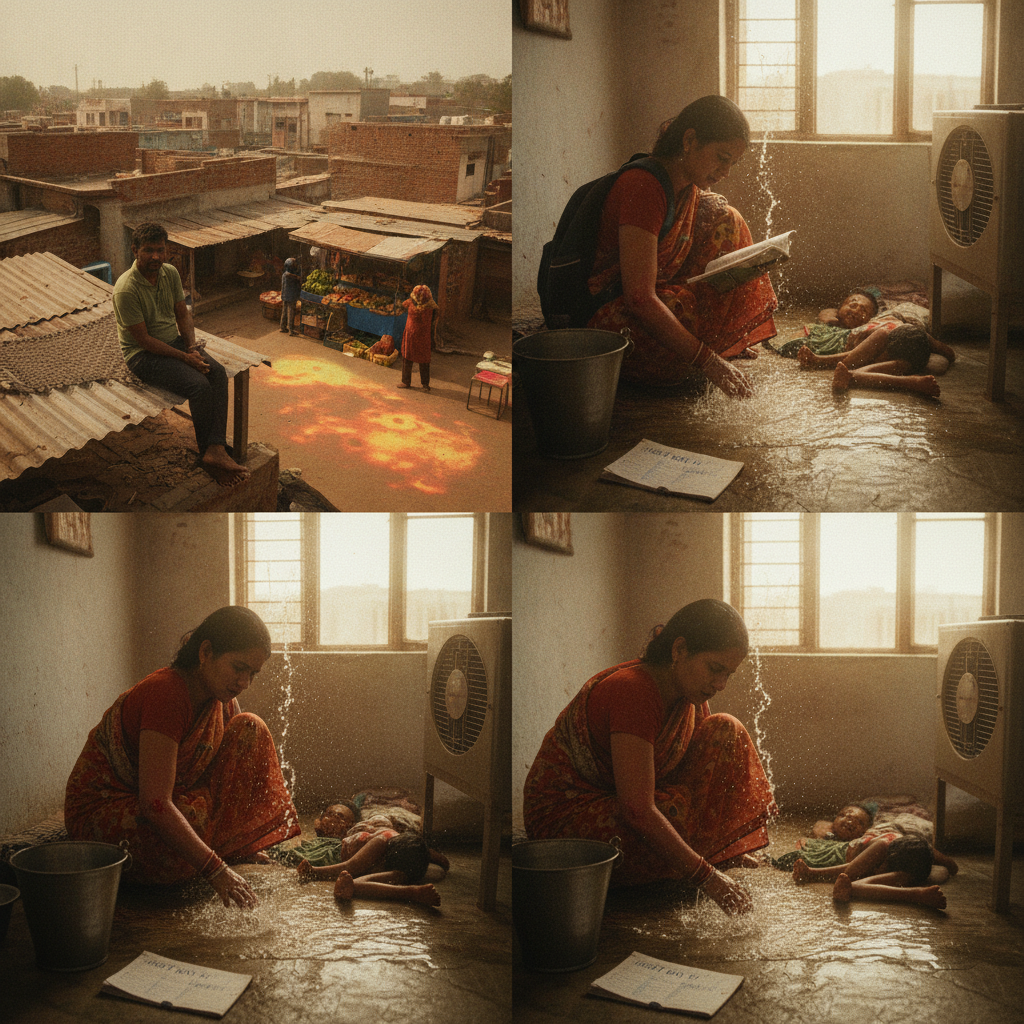
In Delhi's Sunder Nagri slum, 40 households are participating in a unique 'heat diary' project, documenting their daily battle against extreme heat. Residents like Gulshan, who washes her floor multiple times and dampens clothes for her children, suffer from rashes and skin infections despite using a desert cooler cautiously. Arshi, a student and worker, endures a humid one-room home, seeking brief respite in an air-conditioned library. Raja, a street vendor, faces income loss as produce spoils and fewer people brave the 45C heat, often sleeping on the roof for air. This initiative, spearheaded by Greenpeace India, aims to provide crucial qualitative data, moving beyond mere meteorological numbers to highlight the disproportionate impact of heatwaves on vulnerable communities. Thermal imaging reveals ground temperatures exceeding 54C in their neighborhood. The diaries have been submitted to India's National Human Rights Commission, advocating for extreme heat to be recognized as a human rights issue, and will be shared with policymakers. With the Indian government recently adding heatwaves to the national disaster list, there's hope for decentralized action and funds to support community-led solutions, offering a glimmer of relief to those on the front lines of the climate crisis.