English, long the dominant language in pop music and at the Eurovision Song Contest, is seeing its reign challenged as non-English and multilingual entries surge, reflecting a growing embrace of cultural diversity.
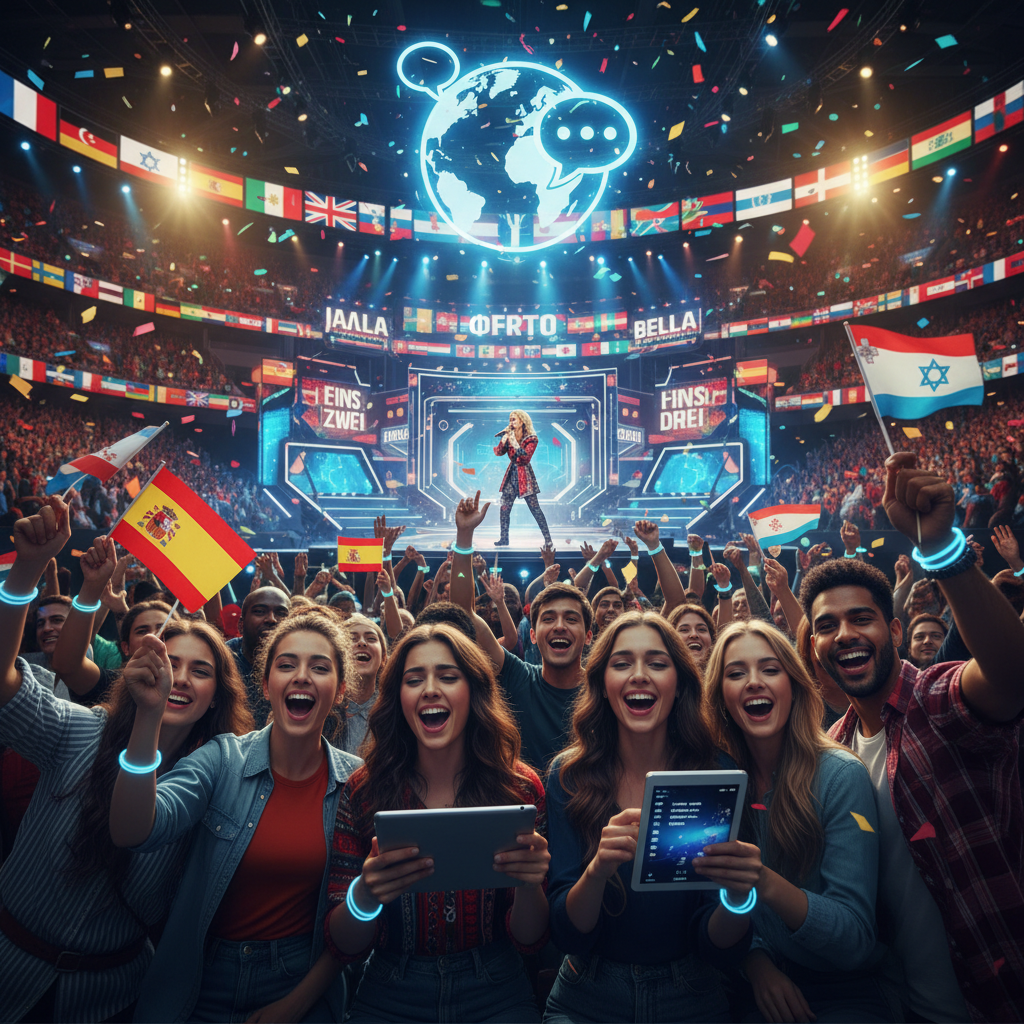
The Eurovision Song Contest, once mandating performances in national languages, has seen a significant linguistic shift since 1999, when artists gained the freedom to perform in any language. While English initially became the preferred choice for international appeal, with 20 of 26 winners between 1999 and 2024 singing in English, its dominance is waning. The past decade has shown a steady increase in non-English songs; this year, out of 35 acts, 12 are entirely non-English, 16 are entirely in English, and seven are multilingual. Artists are increasingly using their native tongues, including Spanish, German, Croatian, Azerbaijani, and Romanian, fostering cultural exchange as fans learn words like Cypriot 'Jalla' and Greek 'ferto.' Multilingual entries are also on the rise, such as Malta's 'Bella' (English/Maltese), Israel's 'Michelle' (Hebrew/French/English), and even the UK's 'Eins, Zwei, Drei' (German/English). Experts note that this linguistic diversity is crucial for Eurovision to serve as a showcase of cultural identity and national representation, though some artists still opt for English to maximize their message's reach.