The Trump administration eliminated a key civil rights protection, ending the Department of Transportation's ability to hold agencies accountable for discriminatory outcomes in transportation projects, even if unintentional. This move effectively erases decades of safeguards for equitable access.
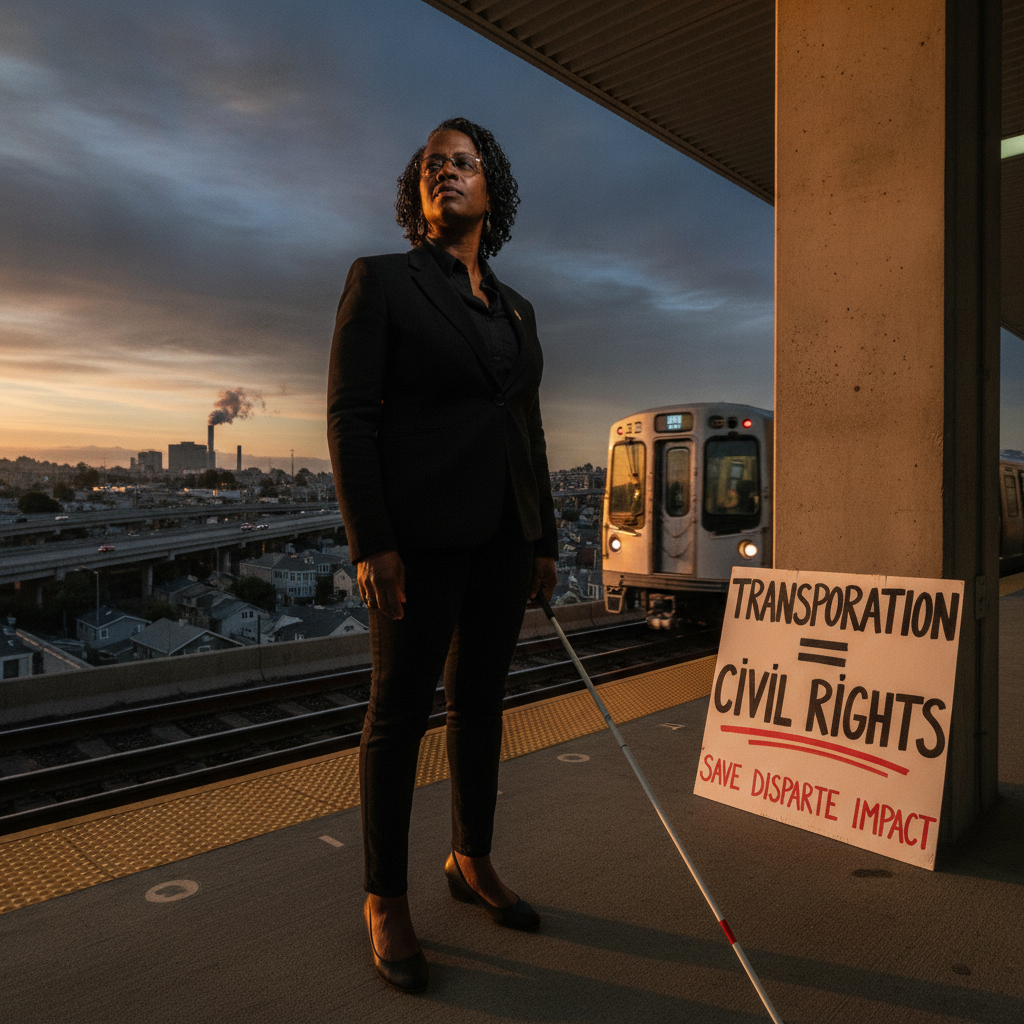
Congresswoman Lateefah Simon, a congenitally blind member of Congress and former BART president, argues that the Trump administration has 'derailed' the promise of civil rights in transportation. Through a 'regulatory maneuver designed to evade public scrutiny,' the Department of Transportation (DOT) announced it would no longer hold transportation agencies accountable for discriminatory outcomes—no matter how severe—so long as the discrimination was unintentional. This decision, she states, has 'erased decades of civil rights protection by regulatory fiat.' The consequences are far-reaching, as the DOT oversees highways, transit, and aviation, channeling billions in taxpayer dollars. Previously, these funds came with a condition: projects had to be reviewed for fairness, and agencies could be held accountable if decisions caused significant harm along racial lines without justification. This condition is now gone. Simon provides an example: in 2009, the Federal Transit Administration (FTA) investigated BART over a 3.2-mile extension to Oakland International Airport. The project traversed predominantly Black and Latino neighborhoods but excluded stops for local residents and charged a premium fare, effectively pricing them out. The FTA found BART out of compliance and pulled federal funding, demonstrating 'disparate impact liability working exactly as intended.' This tool, she laments, 'is now gone.' This rollback is part of a systematic dismantling of disparate impact liability across federally funded programs in employment, housing, and lending. Simon emphasizes that transportation has always been a civil rights battleground, citing historical struggles from Homer Plessy to the Americans with Disabilities Act. She asserts that the freedom to move with dignity is 'a prerequisite for full participation in society.' Without disparate impact analysis, harmful infrastructure decisions—like eliminating bus lines in Black neighborhoods or building highways through Latino communities that cause increased pollution—become invisible and unchallengeable. Simon calls on states and local transit agencies, particularly California, to fill this gap by voluntarily adopting disparate impact standards, collecting demographic data, and conducting equity analyses to ensure equitable outcomes and protect this fundamental civil right. For Simon, who relies on public transit as a disabled person and single mom, affordable and reliable transit is not a policy preference but 'what makes full participation in society possible.'