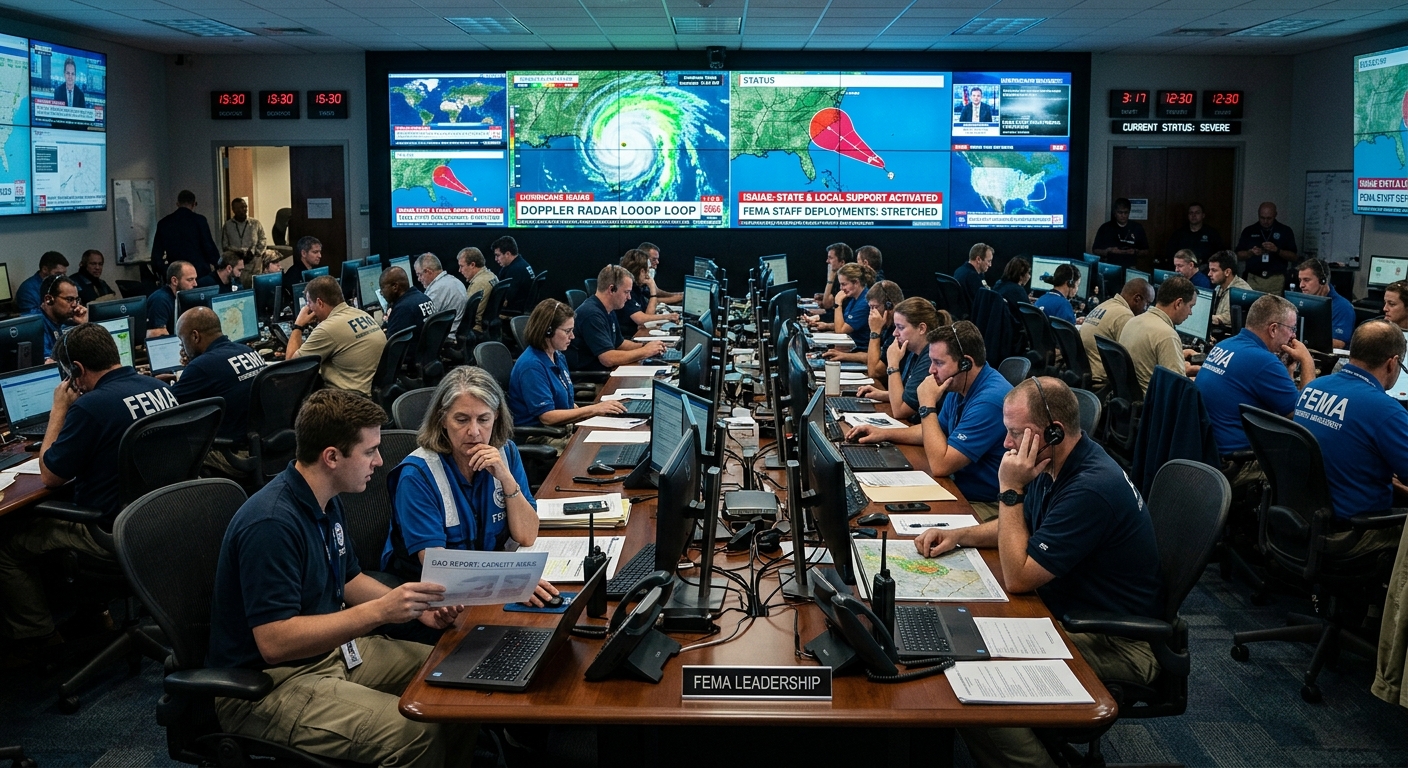
Hurricane Isaias is set to be the first major test of FEMA's capabilities following the Trump administration's significant staffing cuts and restructuring, raising expert concerns about the agency's ability to deploy a large workforce, maintain institutional knowledge, and respond effectively to potential multiple disasters.
Hurricane Isaias is considered the 'biggest test' for FEMA since the Trump administration's sweeping cuts and restructuring of the agency, according to emergency management experts. Over 4,300 employees, about 17% of the workforce, left FEMA in fiscal year 2025, with many experienced senior executives departing through early retirement. This loss of institutional knowledge is a major concern, as highlighted by former FEMA head Deanne Criswell. While FEMA stated it is actively monitoring and preparing for Isaias, deploying teams and prepositioning supplies, experts like Chris Currie from the GAO warn that the agency's ability to respond in depth, particularly to multiple concurrent disasters, is at risk. He cited the 2024 hurricane season, where Hurricanes Helene and Milton in Florida strained FEMA's capacity. The agency currently manages over 1,000 open emergency disaster declarations, and new deployments could halt existing recovery efforts. Furthermore, a federal judge ruled the Trump administration’s plan to cut FEMA staff by 50% unlawful, and major disaster funding approvals in 2026 reportedly took three times longer than average. Ginny Goldman of Rebuild: the National Disaster Survivors Association noted that survivors of Texas flooding have yet to receive individual assistance, underscoring that while Gulf state officials express preparedness, disaster survivors are likely to feel the impact of a potentially 'broken' system.