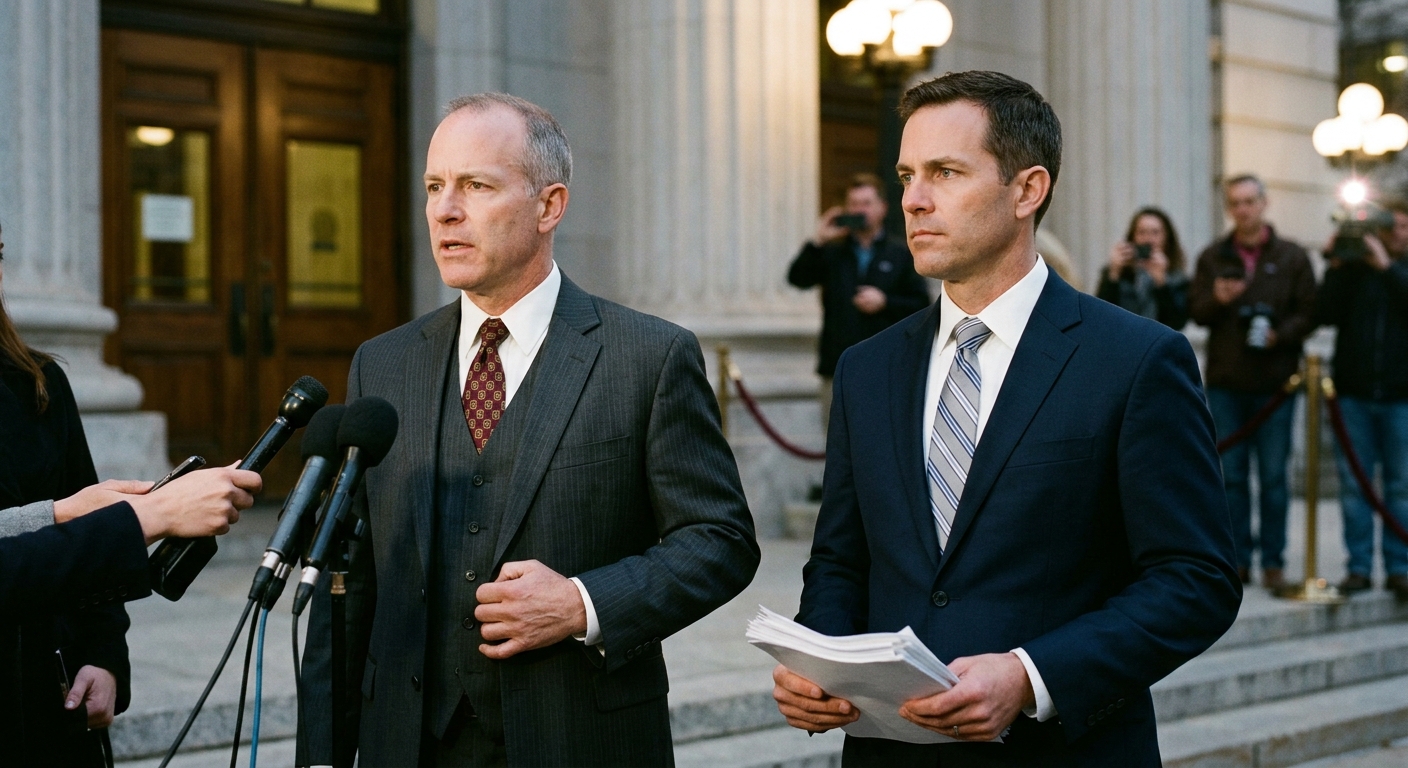
Karoline Leavitt, Donald Trump's 28-year-old press secretary, is departing her role, citing family reasons. However, the article critically examines her tenure, accusing her of spreading misinformation, defending controversial policies with false claims, and displaying unprofessional conduct, suggesting her exit might be politically motivated.
The article delves into the resignation of Karoline Leavitt, 28, from her position as Donald Trump's press secretary, officially attributed to her desire to spend more time with her two young children and 60-year-old husband. The author challenges this narrative, suggesting Leavitt's departure is more likely an attempt to distance herself from Trump amid low approval ratings. The piece provides a scathing critique of Leavitt's 20-month tenure, characterizing her communication style as one of 'attacking Trump’s enemies and spouting lie after lie.' Key examples of her alleged misinformation include promoting global tariffs as 'tax cuts for the American people,' a claim economists widely refute, stating they are taxes on consumers costing around $1,000 per household. Leavitt also dismissed concerns about the high cost of living for young people, advocating for 'hard work' and 'meritocracy.' A significant accusation involves her false justification for freezing federal funding to USAID, claiming it was to prevent '50m taxpayer dollars that went out the door to fund condoms in Gaza,' a statement demonstrably untrue by official documents. The author highlights the severe consequences of USAID cuts, linking them to millions of potential deaths. Furthermore, Leavitt's professionalism is questioned through an incident where she responded with crude and insulting remarks to a journalist. The article speculates on Leavitt's post-White House career, predicting roles in media or reality TV, rather than a domestic life. It also notes her new role as a 'top outside advisor' to Trump, which the author suggests could be a strategic move to leverage executive privilege, making future investigations more difficult. The piece concludes with a cynical outlook on the revolving door of White House personnel, implying that replacements often prove to be worse.