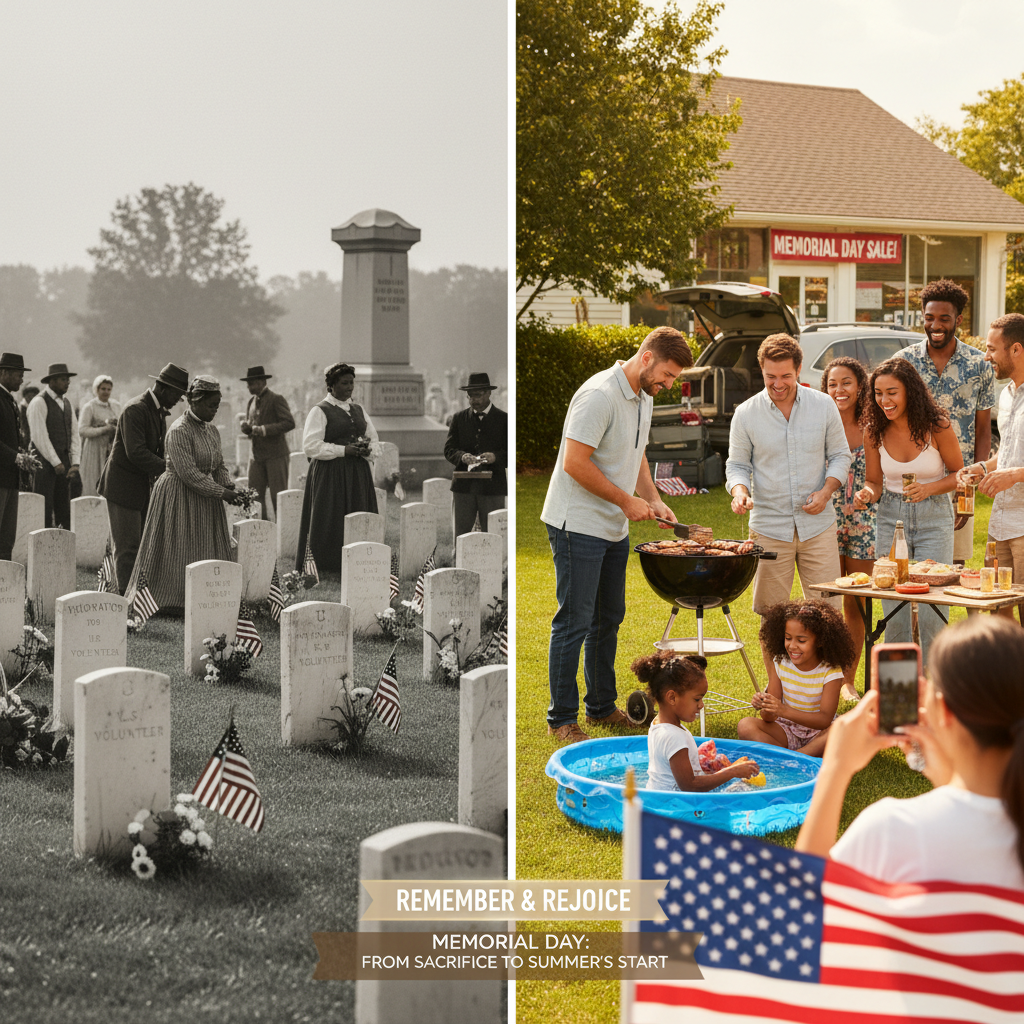
Memorial Day, officially a solemn day to honor fallen service members, has largely transformed into the unofficial start of summer marked by sales and leisure. This article delves into its true origins, the historical controversies surrounding its evolving meaning, and how it came to be associated with barbecues and discounts.
Memorial Day's official purpose is to reflect on and remember U.S. service members who died in combat, observed with a National Moment of Remembrance. However, it has widely become the unofficial start of summer, characterized by barbecues, sales, and leisure. The holiday's origins trace back to the American Civil War, with the first national observance, Decoration Day, on May 30, 1868. Local observances, including one by a Black community in Charleston, South Carolina, in May 1865 for Union dead, predate this. From its early days, the holiday faced contention; as early as 1869, concerns arose about it becoming 'sacrilegious.' Abolitionist Frederick Douglass feared Americans were forgetting the Civil War's impetus—enslavement—leading to a 'white Memorial Day' in many communities. The holiday's evolution continued with the addition of Armistice Day (later Veterans Day) and a significant change in 1971 when Congress moved it to the last Monday in May, creating a three-day weekend. This shift further cemented its transformation into a day of leisure, as businesses began to embrace sales and travel. Historically, grave ceremonies were followed by leisure, and the holiday evolved alongside modern life elements like baseball and automobiles. Today, Memorial Day sales and travel are deeply ingrained, with millions traveling despite inflation. Veterans acknowledge the profound personal meaning of the day for mourning lost comrades, while also expressing a desire for Americans to enjoy the holiday, recognizing the sacrifices that made such freedoms possible.