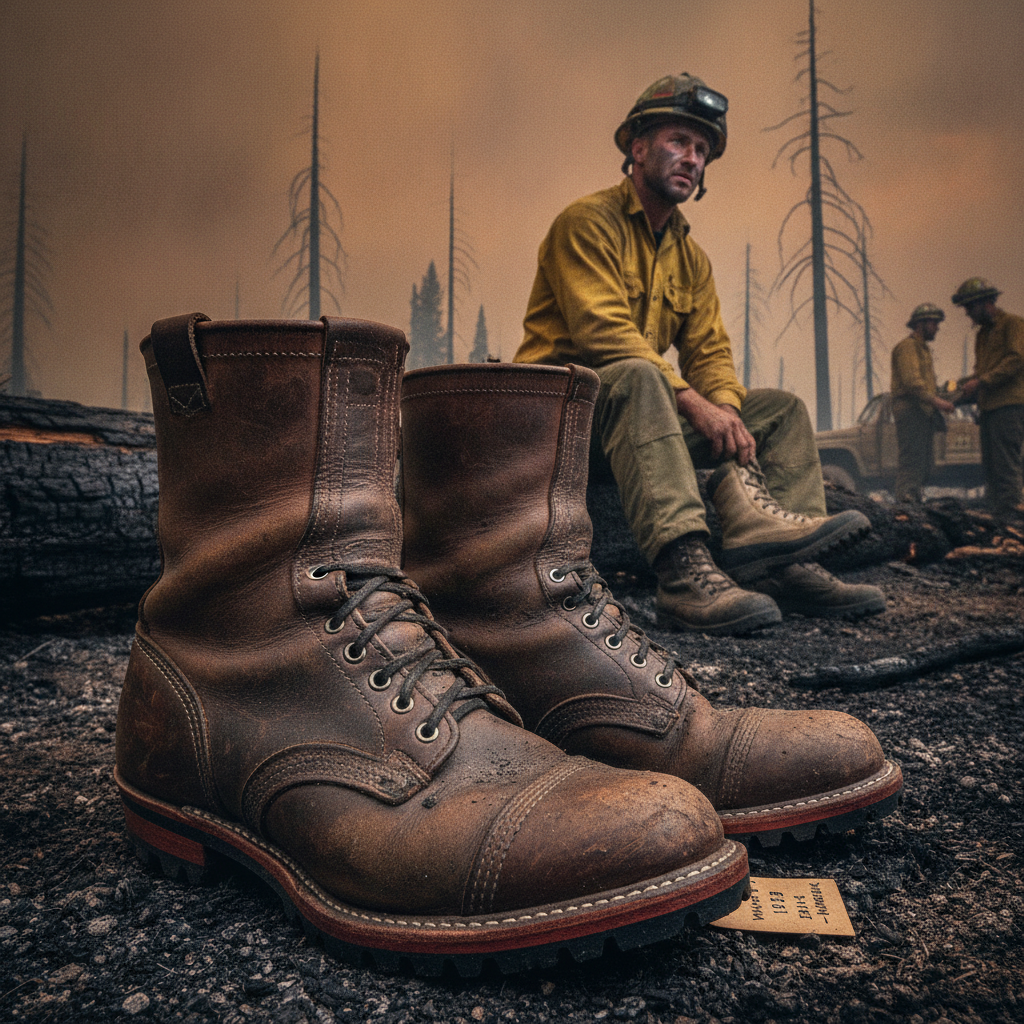
Discover the untold story of the specialized, handcrafted boots essential for US wildland firefighters, costing up to $800, and why these heroes are often forced to buy their own life-saving gear due to outdated government classifications and insufficient funding, leading to a crisis in retention and a changing industry.
For nearly two decades, Luke Mayfield, an elite hotshot firefighter, relied on his specialized boots, hiking thousands of miles and enduring 16-hour days in extreme conditions. These boots, an 8-inch, full-grain leather design with heat-rated soles and stacked heels, have remained largely unchanged for over a century. Originating from White’s Boots in 1939, they are meticulously handcrafted in Pacific Northwest workshops, incorporating fire-resistant Technora threads but largely adhering to traditional methods. Despite NFPA certification, these boots aren't foolproof, with firefighters experiencing 'hot foot' from prolonged heat exposure. Built to be rebuilt, a quality pair can last a decade, but at a steep price, ranging from $300 to over $800. Surprisingly, wildland firefighters are largely responsible for equipping themselves. This stems from a historical bureaucratic classification where the US government considered them 'forestry technicians' rather than 'firefighters,' effectively shifting equipment costs onto them. Funding disparities further complicate matters, with some crews having significant discretionary spending while others struggle. This, combined with inadequate compensation—wages only recently guaranteed a $15/hour floor—and increasingly longer 'fire years,' contributes to a severe retention problem. The market for these high-end, handmade boots, such as White's Smokejumper model (considered the gold standard since 1939) and Nicks Handmade Boots, is niche. Bootmakers like Shuyler Mowe of Nicks believe their products are underpriced given the labor-intensive process, specialized materials, and 'institutional knowledge' involved. White's, a company with a 168-year history, finds demand for its premium hand-welted boots decreasing. Firefighters, especially a younger, more transient workforce, are finding the decade-long payoff of expensive boots harder to justify. Many, like Mayfield, are turning to lighter, cheaper hunting-style boots, often Italian-made, that require less break-in, even if they may lack NFPA certification or long-term durability. In response, White's is preparing to release its own Italian-made boot. While there has been some government movement on pay, with permanent raises and extended hazard pay, reform has not reached equipment. A $500 boot stipend, set in 2020, remains insufficient, leaving firefighters to personally cover the cost of this critical, handmade gear, made by a shrinking number of skilled artisans.