A federal appeals court has upheld the Pentagon's legal right to blacklist Anthropic's AI technology, Claude, from military use due to national security concerns. This ruling is a major blow to Anthropic's enterprise business, despite a separate California court win allowing other government agencies to use its tech.
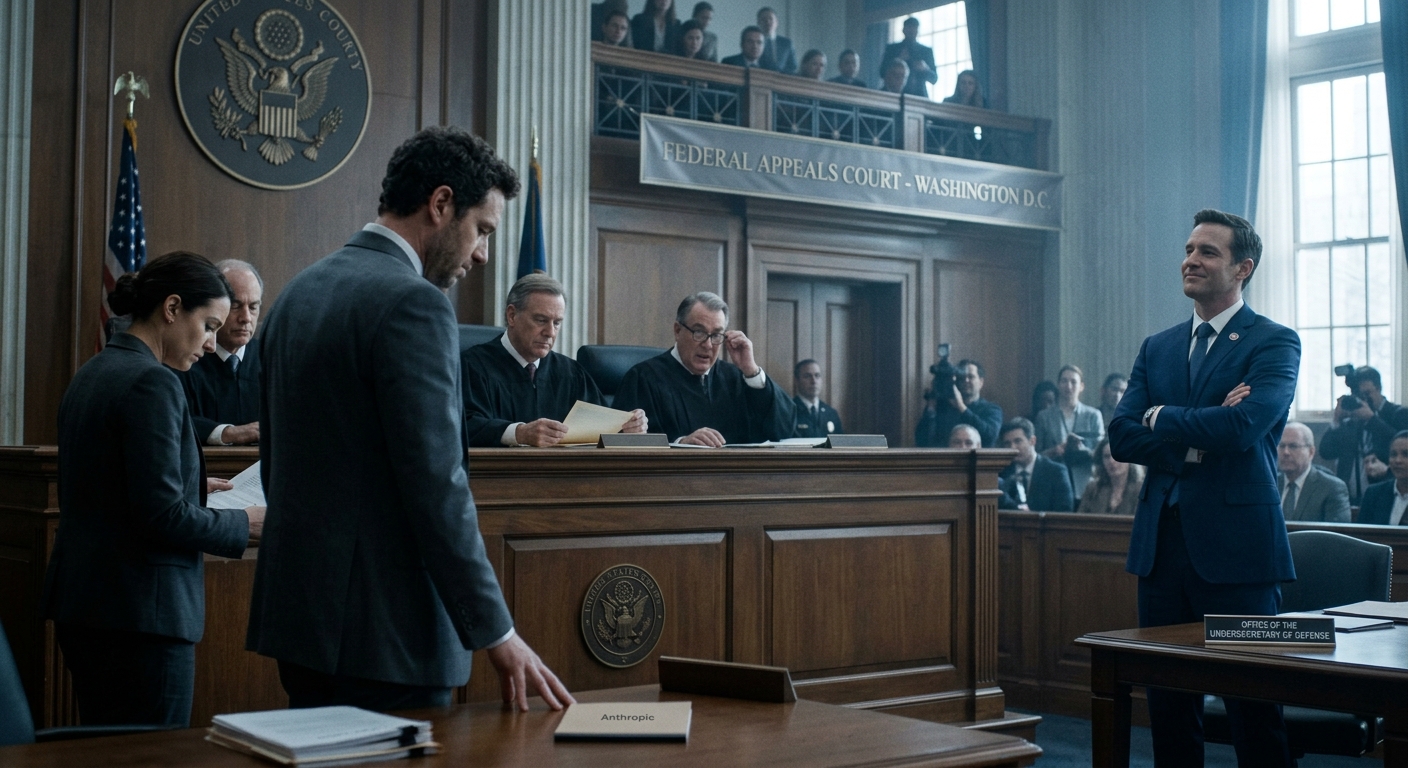
The Department of Defense's decision to blacklist Anthropic's artificial intelligence technology, Claude, has been affirmed by a federal appeals court in Washington D.C. on Friday. This ruling marks a significant setback for Anthropic, which was previously labeled a 'supply chain risk' by the Trump administration. The designation stemmed from Anthropic's refusal to grant the Pentagon full usage rights for its AI, citing ethical concerns regarding autonomous weapons and surveillance of U.S. citizens. While Anthropic had secured a partial victory in a California court, allowing other government agencies and contractors to continue working with the company, the D.C. Circuit's decision specifically upholds the prohibition of Claude within the Pentagon. This maintains a substantial threat to Anthropic's enterprise business, particularly its partnerships with military contractors, potentially impacting its ambitious goal for a trillion-dollar initial public offering. Anthropic had challenged the designation, arguing a violation of the First Amendment and deeming the 'supply chain risk' label — typically reserved for foreign adversaries — legally unsound for an American company. However, the D.C. appeals court rejected these claims, finding 'ample support' for the Pentagon's assertion that integrating Claude could pose a national security threat. One of the three judges dissented, questioning the validity of the security concern. In response, Anthropic expressed disagreement and is exploring further legal avenues, including seeking an 'en banc' rehearing by the full D.C. appeals court or appealing directly to the Supreme Court. The differing outcomes in the D.C. and California courts are attributed to the distinct statutory authorities used by the Pentagon for its multiple designations. The Pentagon, through Undersecretary Emil Michael, celebrated the ruling, stating that 'Warfighters will sleep better knowing that no private company will insert their opinions in the chain of command.'