A white Democratic congresswoman, Debbie Wasserman Schultz, successfully ran for Florida's historically Black 20th congressional district, sparking controversy and concerns about Black political power. Despite efforts by local Black leaders to consolidate votes among four Black candidates, their failure to unite allowed Wasserman Schultz to win with a minority of the vote, raising questions about 'friendly fire' from within the Democratic party and the future of Black representation.
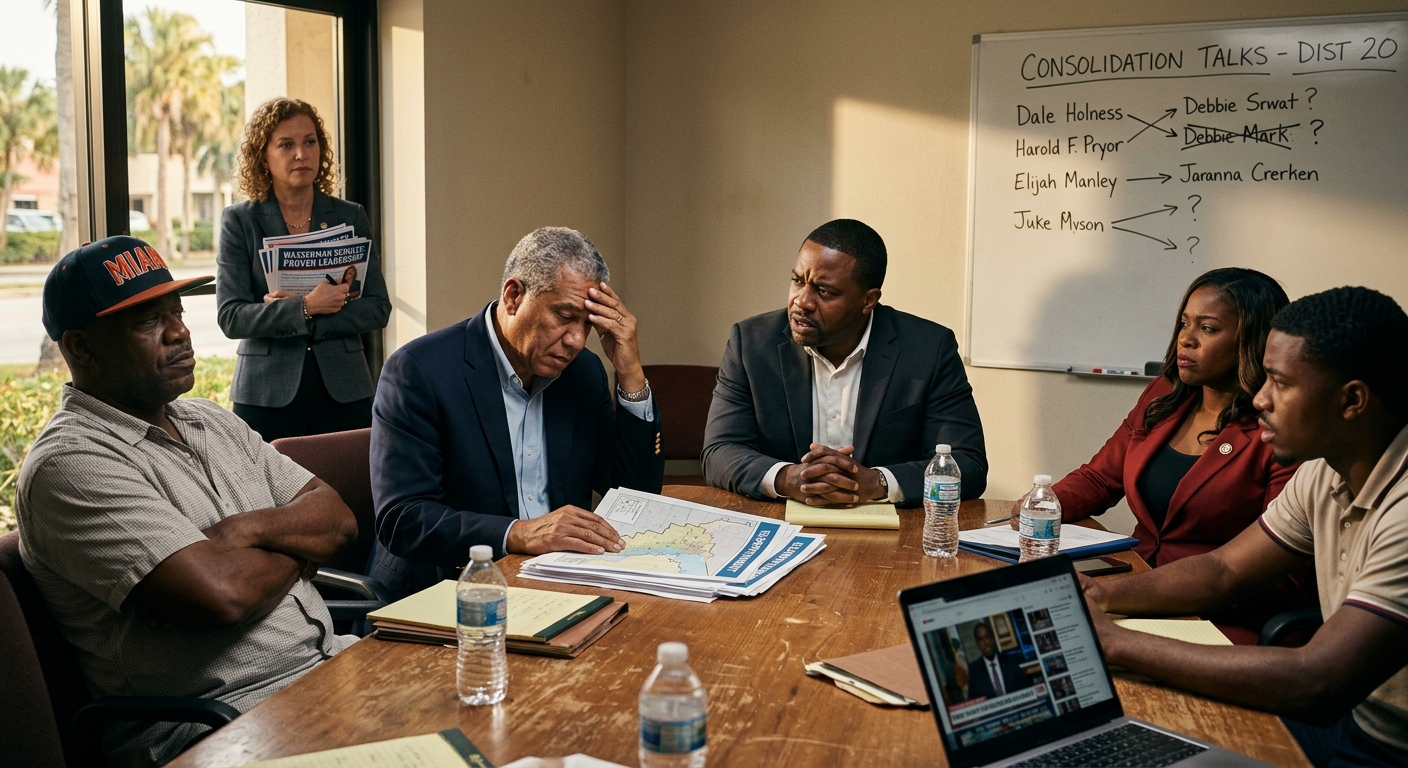
During a period of hyper-partisan redistricting aimed at eliminating traditionally Black congressional seats, a significant subplot unfolded in Florida. Veteran white congresswoman Debbie Wasserman Schultz, whose own district was splintered, chose to seek re-election in Florida’s 20th congressional district, a seat historically held by Black legislators since 1992 and which is 42% Black. This decision prompted local Black leaders, including Broward state attorney Harold F Pryor, to convene the four Black candidates running for the seat – Dale Holness, Luther 'Uncle Luke' Campbell, Sheila Cherfilus-McCormick, and Elijah Manley – in a desperate attempt to consolidate behind a single Black candidate. However, internal pride, suspicion, and distrust, particularly Cherfilus-McCormick's refusal to concede and Manley's early filing, led to the failure of these consolidation efforts. Wasserman Schultz's candidacy, backed by her significant 'seniority and clout' and a large campaign war chest, was met with resistance from local Black Democrats and some Florida DNC members who urged her not to run in what they viewed as an inviolable Black political inheritance. However, national Democrats and the Congressional Black Caucus offered little public pushback, with some, like Rep. Emanuel Cleaver, even campaigning for Wasserman Schultz. Wasserman Schultz actively courted Black voters through mailers, community events, and endorsements from local Black clergy. Ultimately, she won the primary with 45% of the vote, while the combined 55% of votes for the four Black candidates were split among them. This outcome raised 'prickly questions' about the value of lived experience versus legislative experience, the economic vulnerabilities of 'Black seats,' and the impact of non-Black opponents within the Democratic caucus. The article draws parallels to a 2006 Tennessee race where Steve Cohen, a white Jewish man, won a majority-Black district due to a split Black vote. While Cohen also faced arguments about lived experience, he lived in the district and ran at a time when Black congressional representation was growing. In contrast, Wasserman Schultz's victory comes as the CBC predicts a significant loss of its members. Critics accuse Wasserman Schultz of 'carpetbagging' and exploiting a fractured vote, fearing that other powerful, well-funded Democrats might follow suit, threatening Black representation and the Democratic party's commitment to it.