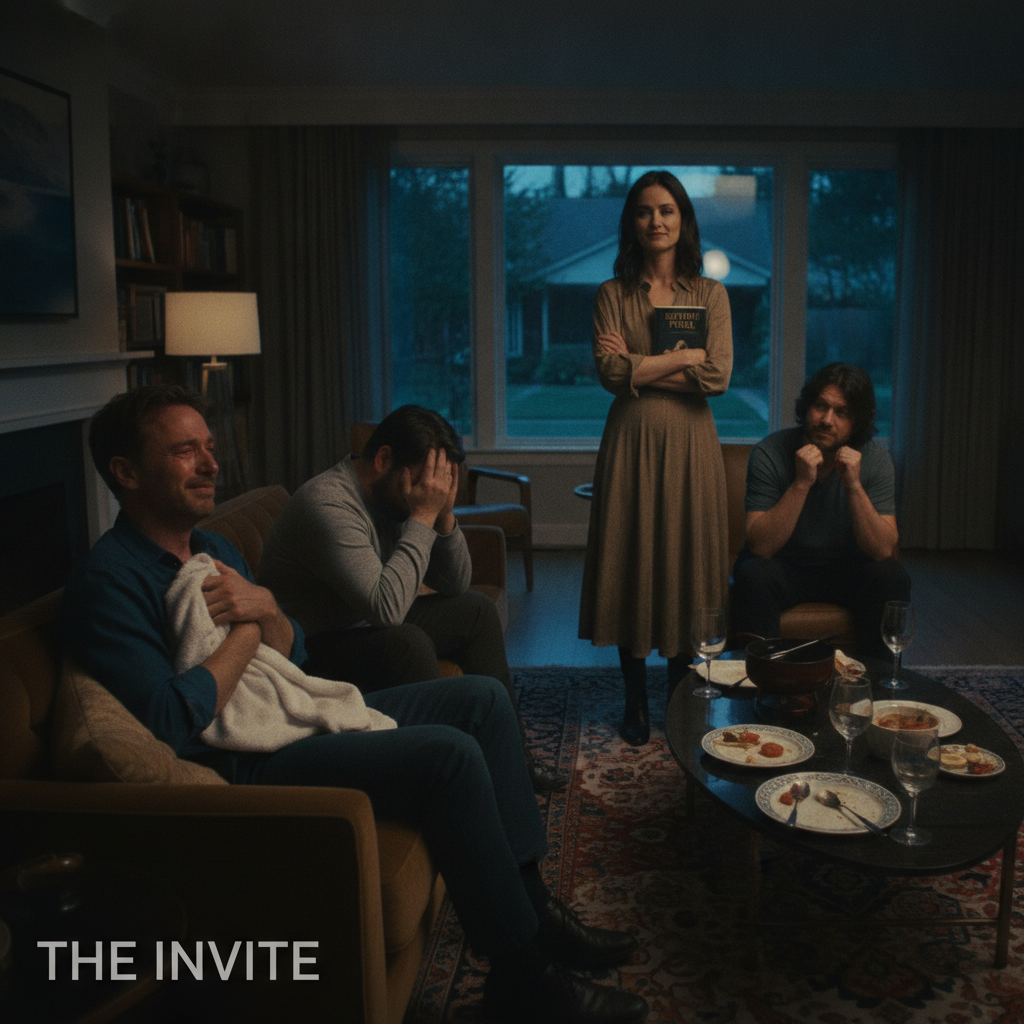
Edward Norton and Olivia Wilde discuss their new film, 'The Invite,' which explores the devastating impact of marriage on sex life, resonating deeply with audiences who find catharsis and relief in its raw honesty about relationship dysfunctions.
Edward Norton and Olivia Wilde delve into their new film, 'The Invite,' a powerful exploration of how marriage can devastatingly impact one's sex life. Norton recounts a personal moment of catharsis after a massage, mirroring the tearful relief audiences experience watching the film, which addresses the universal feeling of isolation within relationship dysfunction. Wilde, who co-stars and directs, highlights the liberating 'I thought I was the only one!' laugh from viewers. The movie, featuring Wilde as Angela and Seth Rogen as Joe, portrays a frustrated married couple whose evening with neighbors (Norton as Hawk and Penélope Cruz as Piña) goes awry, evoking 'Who’s Afraid of Virginia Woolf?' with a modern twist. Piña's character channels psychotherapist Esther Perel's theories, particularly that 'bed death' is an inevitable byproduct of the American dream, rooted in puritanical values that prioritize duty over pleasure and sexual exploration. Wilde and Norton, both parents, discuss the cultural contrast where American parenthood often signals the end of sexual intimacy. Despite its Spanish play origin, the film feels distinctly US-specific due to cast workshops and improvisation, creating a deeply personal narrative. Norton praises the chronological shooting for its profound effect on the story's arc. Wilde expresses immense satisfaction with the collaborative experience, calling it both 'thrilled and ruined.' Following its Sundance success, 'The Invite' has become a critical and commercial hit. Wilde sees storytelling as a therapeutic tool, with her performance drawing inspiration from Diane Keaton, to whom the film is dedicated. The movie's deliberate absence of technology and its focus on spontaneous, uncurated social interactions create a nostalgic atmosphere, challenging modern tendencies towards isolation and brand-like self-definition. Ultimately, Norton argues the film is a 'tonic' or 'medicine' for people feeling disconnected from their erotic selves amidst global trauma, offering a much-needed emotional release.