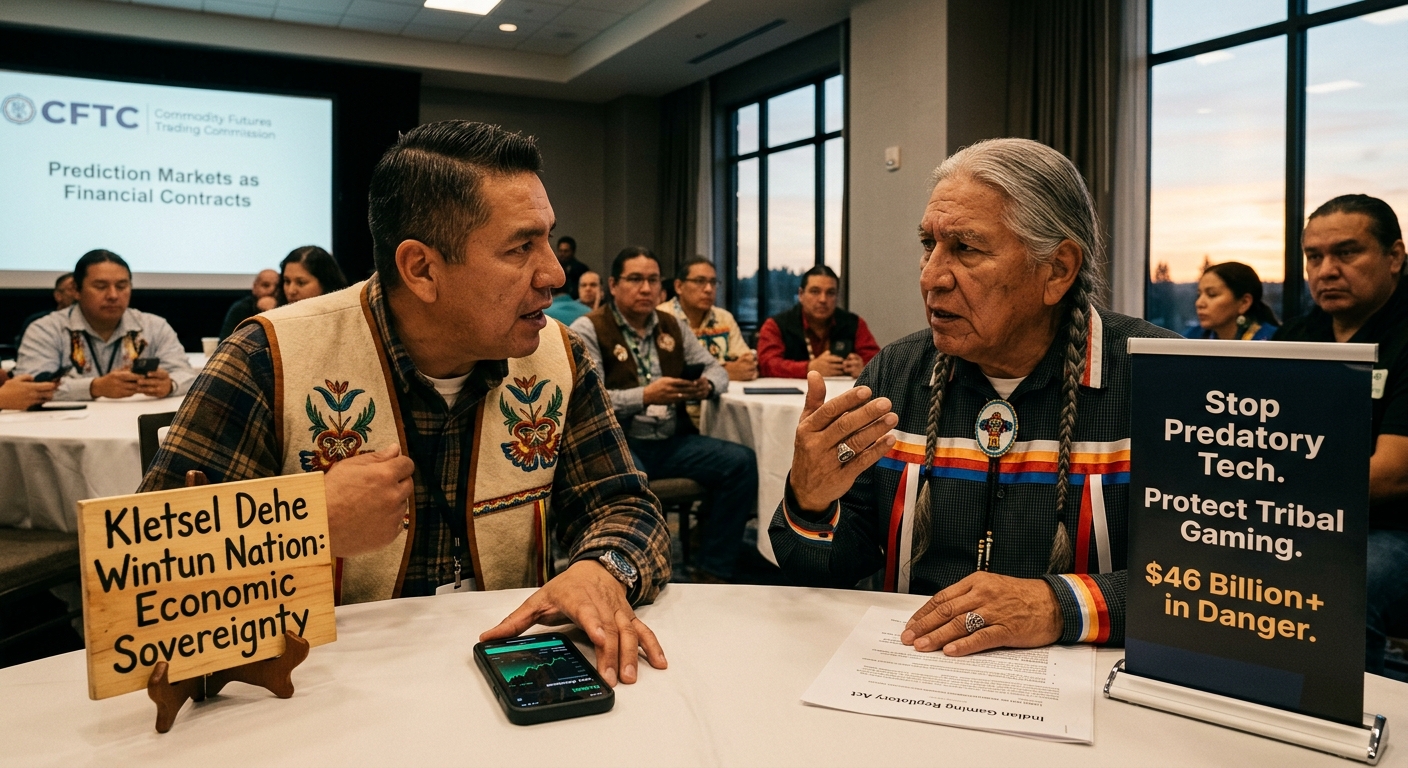
Kalshi's launch of prediction apps with Native American tribes is creating a deep division within Indian Country. While some tribes view these apps as a vital new revenue source for essential services and a path to economic self-determination, the majority fear they threaten the multi-billion dollar casino industry that serves as their primary economic lifeline, leading to legal battles and heated debate.
Kalshi's new prediction apps, launched in partnership with several Native American tribes, are causing significant division across Indian Country. Smaller tribes, such as the Kletsel Dehe Wintun Nation, see these apps as a crucial economic opportunity to fund much-needed infrastructure like potable water, emphasizing tribal sovereignty and economic self-determination. For them, it's a chance to generate revenue beyond traditional gaming, which they may not have. However, the vast majority of Native American tribes, particularly those with established and lucrative casino operations, vehemently oppose prediction markets. They view companies like Kalshi as illegally encroaching on their gaming rights, which generate over $46 billion annually and are vital for funding essential services, infrastructure, and healthcare in their communities. Leaders express concern that the growth of prediction markets, especially those heavily focused on sports, could cannibalize their casino revenues, which have historically transformed their reservations from impoverished conditions. The conflict is playing out in courts, with conflicting rulings on whether prediction markets violate tribal gaming rights. The regulatory framework is also a key point of contention: prediction markets are structured as financial exchanges under the Commodity Futures Trading Commission (CFTC), bypassing state gaming regulations that tribal casinos must navigate. CFTC Chairman Mike Selig, a strong proponent, has been criticized by tribal leaders for effectively circumventing established tribal gaming laws. Historically, tribal gaming itself faced legal challenges before the Indian Gaming Regulatory Act of 1988 provided a federal framework. Now, some argue that prediction markets are using a similar 'backdoor' approach. The debate involves not only legal and economic arguments but also intense public rhetoric, with tribal gaming advocates clashing with Kalshi representatives. Despite the widespread opposition, some tribes partnering with Kalshi believe these digital platforms offer a distinct experience that won't detract from traditional casino gaming and see it as a legitimate path to diversify their economies.