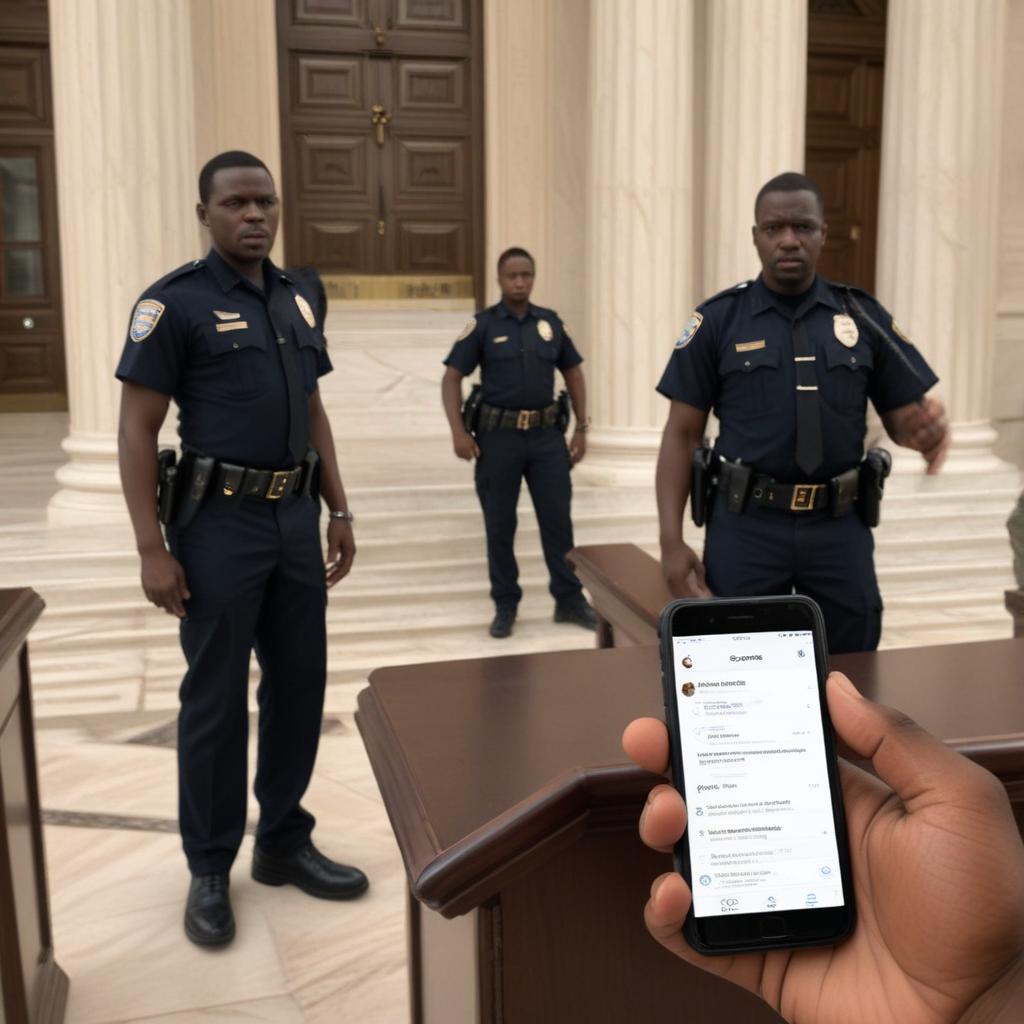
The Supreme Court will decide the constitutionality of 'geofence warrants,' which allow law enforcement to collect the location data of all cellphone users near a crime scene, raising significant privacy concerns.
The Supreme Court has agreed to review the legality of 'geofence warrants,' a controversial law enforcement tool that enables police to obtain the location history of every cellphone user within a specific geographic area and time frame near a crime scene. This case stems from the arrest of Okello Chatrie, who was identified using a Google geofence warrant after a 2019 bank robbery in Virginia. Chatrie's lawyers argue that these warrants violate Fourth Amendment privacy rights by collecting data on potentially innocent individuals, while prosecutors contend that users waive privacy expectations by opting into Google's Location History. Lower courts have delivered conflicting rulings, with one federal judge finding Chatrie's rights violated but allowing the evidence, and a federal appeals court in New Orleans ruling geofence warrants unconstitutional. The Supreme Court is expected to hear arguments later this year, addressing the critical balance between public safety and individual privacy in the digital age.