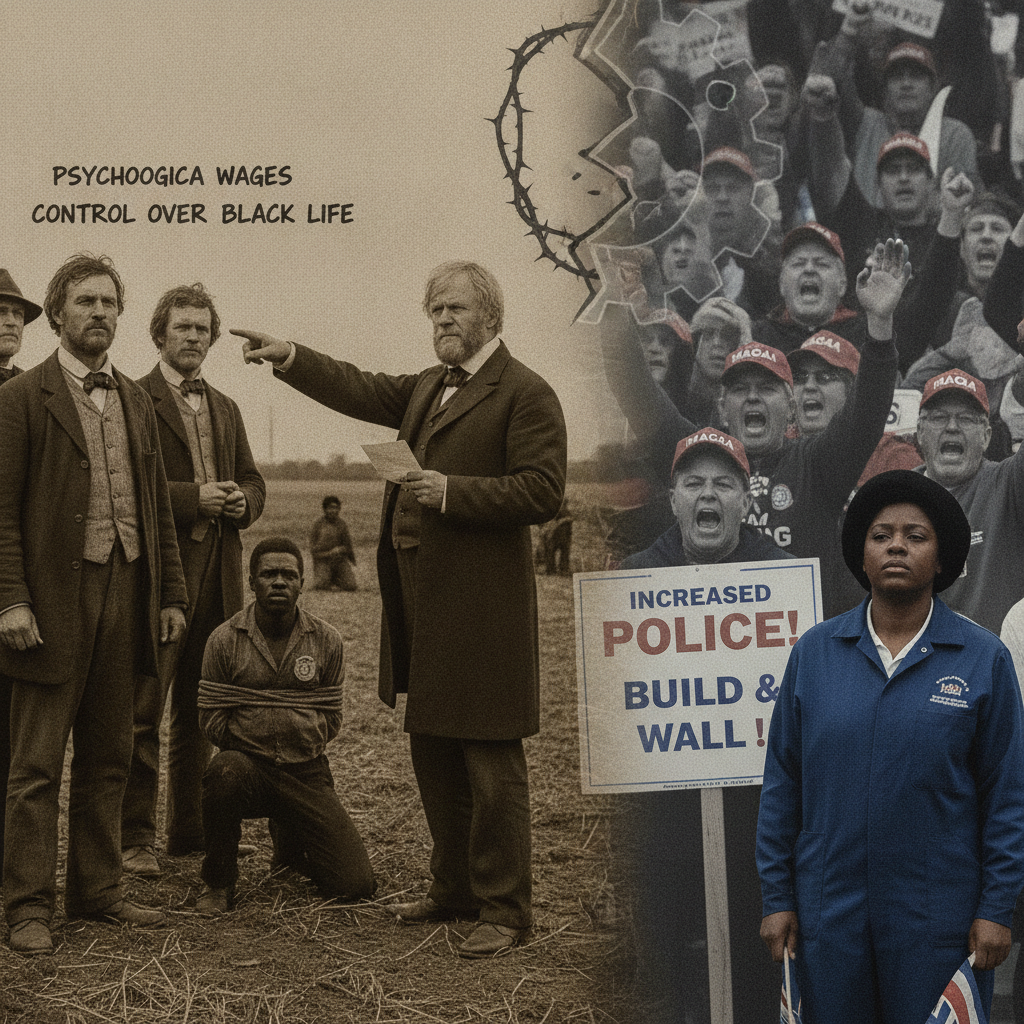
This article challenges the common narrative that white working-class voters support right-wing politics due to economic anxieties, arguing instead that they consistently prioritize 'psychological wages of whiteness'—racial power and social dominance over other groups—even when it means economic detriment.
The article debunks the pervasive idea that white working-class voters are 'left behind' economically and thus turn to right-wing conservatism, particularly figures like Donald Trump. It highlights the historical inconsistency of this view, noting that Black working classes, facing greater economic hardship, remain loyal to progressive politics. Drawing on W.E.B. Du Bois's concept of 'psychological wages of whiteness,' the author argues that poor and working-class whites have historically traded economic self-interest for social and political dominance over Black people. During Reconstruction, figures like President Andrew Johnson actively manipulated racial resentment, offering whites control over Black life and land from Indigenous peoples, thereby thwarting potential multiracial class alliances. This 'wage' included participation in the nascent police state, where whiteness itself granted authority to surveil and control Black individuals, justifying anti-Black violence and suppressing resistance. This pattern continued post-Civil War, evolving into state-sanctioned violence and vigilantism that benefited white communities economically by destroying Black competition. Even with significant government handouts (Social Security, FHA, GI Bill) that uplifted whites, rhetoric demonized aid to people of color. The shift of blue-collar whites from class solidarity to racial alliance under Nixon's 'silent majority' further cemented this prioritization of racial power. In the contemporary era, Trump's appeal to Maga voters is not primarily economic but stems from a perceived social, demographic, and cultural status threat. These voters eagerly support increased police and immigration enforcement, demonstrating a preference for maintaining white dominance and participating in a draconian police state over tangible economic relief. The article concludes that calls for empathy for the white working class's economic woes rejustify their racial priorities, as they consistently choose control and violence over economic well-being, often at the expense of others.