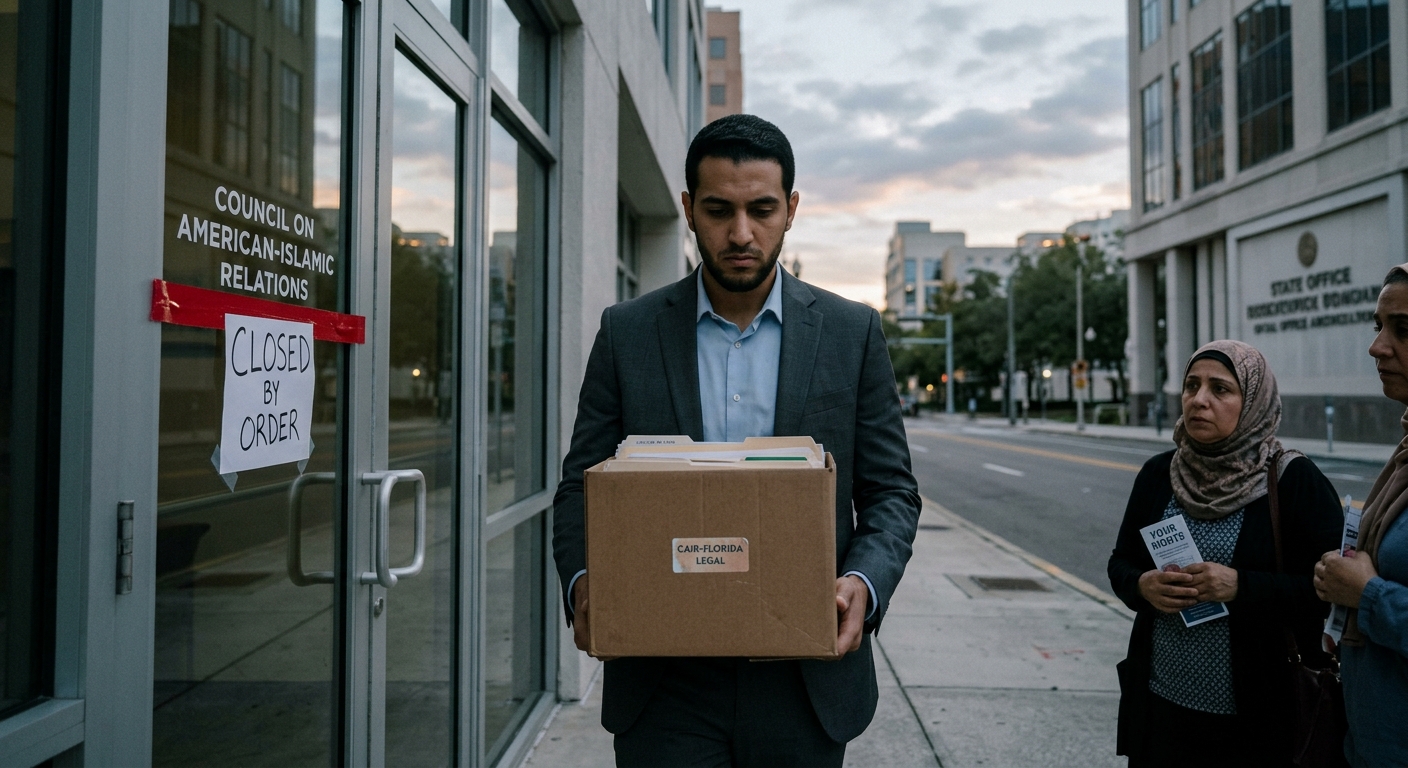
Florida has designated the Council on American-Islamic Relations (CAIR), the nation's largest Muslim civil rights group, as a domestic terrorist organization. This unprecedented move, following CAIR's defense of pro-Palestine protesters, has forced CAIR-Florida to suspend operations and is being challenged in federal court for alleged violations of free speech and due process.
Florida's Governor Ron DeSantis approved new legislation in July, granting state officials the power to designate groups as 'domestic terrorist' organizations. On November 5th, the Council on American-Islamic Relations (CAIR), the nation's leading Muslim civil rights group, and its Florida chapter were officially labeled as such, a decision that followed CAIR's defense of pro-Palestine protesters. This designation has triggered severe penalties, effectively forcing CAIR-Florida to suspend all operations, including vital pro bono legal services for discrimination and immigration cases, leaving Florida Muslims without their primary civil rights advocate. CAIR has since filed a federal lawsuit against Florida officials, including DeSantis, alleging violations of free speech and due process. The state has argued, without clear evidence, that CAIR acts as a front for Hamas and the Muslim Brotherhood, claims CAIR vehemently denies, asserting it has never been charged with a crime and is being targeted for its religious missions and advocacy. Civil rights advocates, including Stanford law professor Shirin Sinnar, view this as an unprecedented and dangerous attempt by a state government to shut down lawful advocacy, particularly targeting a marginalized group to set a precedent. The move has created a 'chilling effect' within the Muslim community, with mosques now wary of any programming perceived as political. While individual lawyers are attempting to fill the void, the scale of CAIR-Florida's services is too vast to be easily replaced. The article notes a contrast with Texas, where a similar designation against CAIR was reversed after a shift in political leadership, but expresses concern that Florida's Republican-controlled government makes an electoral solution unlikely. Students and community members express dismay and fear for the future of civil rights advocacy, with one student noting the designation has made him associate working for the Muslim community as 'controversial.'