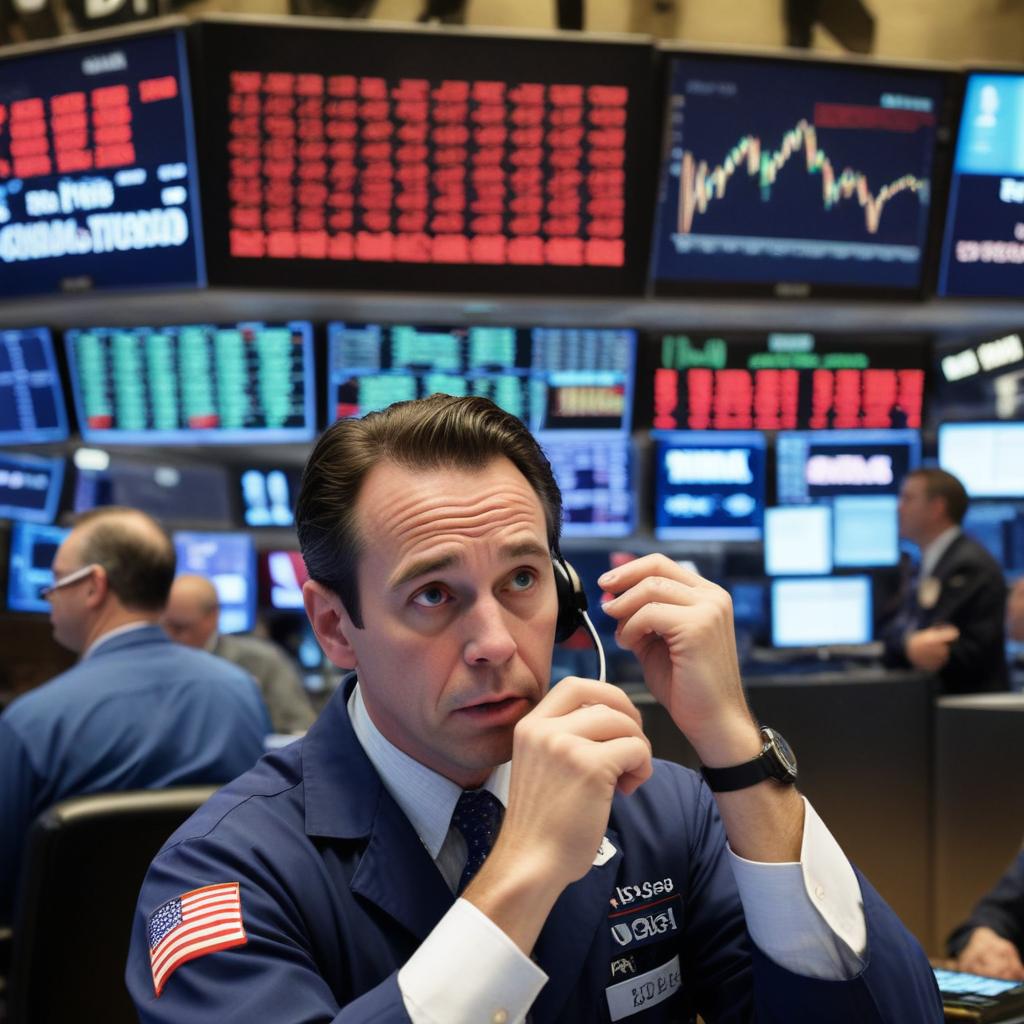
Global stock markets, including those in the US and Europe, plummeted Tuesday, wiping out year-to-date gains for the S&P 500 and Nasdaq. Investors reacted to President Trump's escalating clash with European leaders over Greenland and new tariff threats, compounded by a snap election and tax cut proposal in Japan. The VIX surged, the dollar fell sharply, and safe-haven assets like gold and silver hit record highs.
On Tuesday, global financial markets experienced significant declines as investors reacted to a confluence of geopolitical and economic concerns. US and European stocks fell, with the Dow dropping 631 points (1.28%), the S&P 500 falling 1.4%, and the Nasdaq Composite sliding 1.6%. Both the S&P and Nasdaq wiped out their gains for the year. The VIX index, a key measure of market volatility, surged 19%, briefly crossing the 20-point threshold for the first time since November, signaling elevated fear. The primary driver of this market turmoil was President Donald Trump's ongoing dispute with European leaders, particularly his demand for the United States to acquire Greenland from Denmark, and his subsequent threat of a new 10% tariff on imports from eight European countries, including Denmark, the United Kingdom, and France. US markets were closed Monday for Martin Luther King, Jr. Day, making Tuesday the first opportunity for traders to react to these developments. Adding to the global jitters, a snap election in Japan and Prime Minister Sanae Takaichi's proposal for a temporary food tax cut, despite the nation's substantial debt, rattled Asian markets and caused Japanese bond yields to surge. This contributed to broader bond market anxieties, with the benchmark 10-year US Treasury yield rising to 4.28% and the 30-year yield jumping to 4.9%, both hitting their highest levels since September. The "Sell America" trade resumed, leading to a significant 0.98% drop in the US dollar index, marking its worst day since April. Investors sought safe havens, driving gold futures up 3.5% to a record high above $4,750 a troy ounce, and silver futures up 6.3% to a record high above $95 a troy ounce. Experts warned of continued volatility, with George Vessey of Convera highlighting concerns over Trump's policy shifts and lingering questions about Fed independence. European markets also suffered, with the Stoxx 600 index closing 0.7% lower, following Monday's 1.19% drop. While Denmark's OMX Copenhagen 20 rose slightly on Tuesday, it had experienced a significant decline on Monday. Analysts like Ed Yardeni of Yardeni Research described the week as a "be-ready-for-anything" period due to POTUS-related wild cards. There is some hope that the US Supreme Court might intervene by ruling against the President's authority to levy tariffs using the International Emergency Economic Powers Act, which some strategists believe could lead to a market rally. However, Carsten Brzeski of ING warned that the tensions are "pushing the long‑standing transatlantic relationship into a severe crisis," with a clear risk of further escalation. Sarah Bianchi of Evercore ISI cautioned that the EU is preparing potential retaliation, including a "trade bazooka" (anti-coercion instrument) that could be "extremely punitive towards US companies," suggesting headlines could worsen before improving. Despite the market turbulence, the S&P 500 remained approximately 2% away from its all-time high.