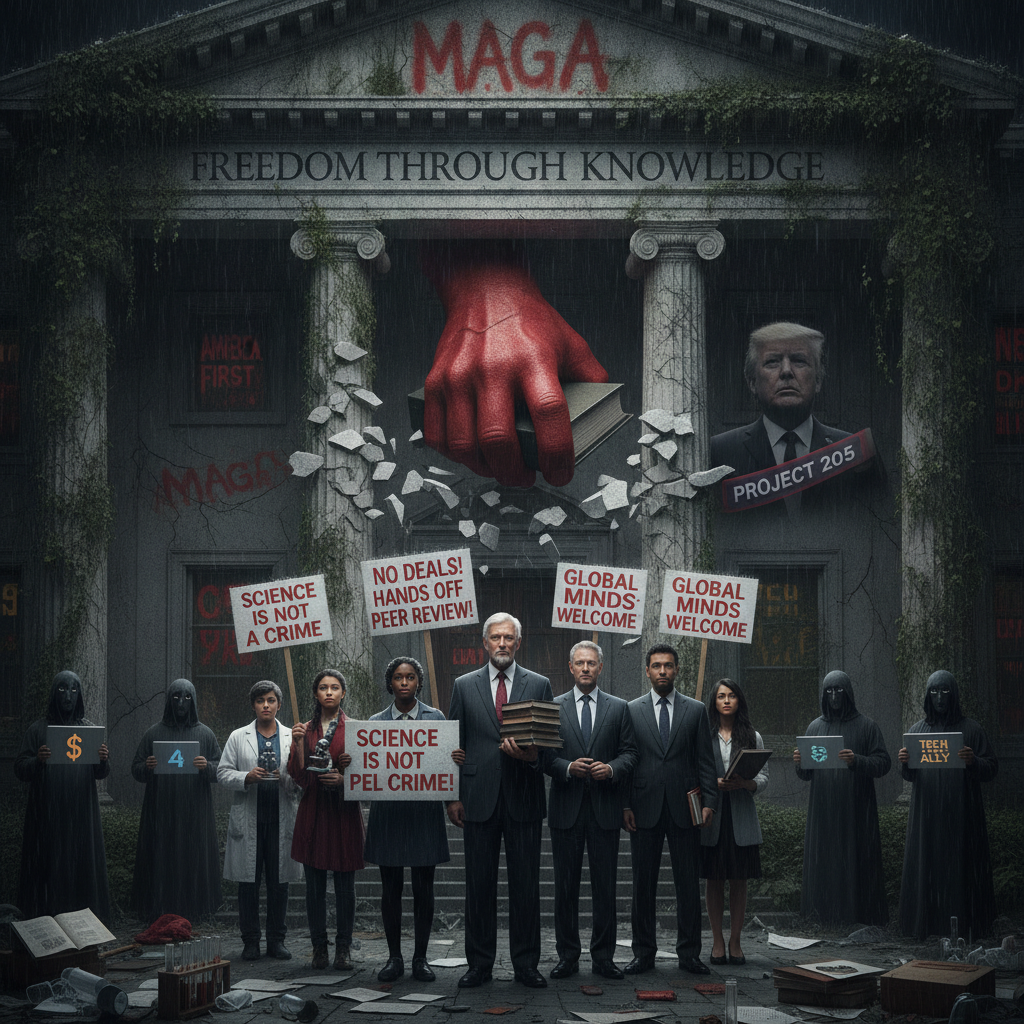
The Trump administration is waging an unprecedented campaign against US research and higher learning institutions, implementing policies that include political control over science grants, shifting funding to private corporations, imposing ideological demands on universities, and restricting international collaboration. This 'self-injury' is driven by anti-intellectualism and a desire to dismantle the existing system.
The Trump administration is actively undermining institutions devoted to research and higher learning, a 'war' described as unprecedented in a democracy and reminiscent of Stalin's Soviet Union. This assault targets foreign students and international collaboration, significantly impacting US soft power. Key actions include Project 2025's initiative to subject federal grants, including science funding previously allocated by peer review, to political appointees, creating leverage to threaten universities. Trump's science adviser, Michael Kratsios, proposes shifting decision-making from university experts to private corporations, abandoning the successful post-WWII model of public investment in basic science for what critics see as funneling money to tech allies. Ideologically, Linda McMahon is demanding universities pledge allegiance, promote 'intellectual pluralism' (favoring conservatives), police student speech, and prioritize provincial, vocational education over critical thinking. Nativist policies, inspired by Stephen Miller, target international donors and limit PhD student visas to an unrealistic four years, hindering research. This 'self-harm' is attributed to long-standing right-wing hostility towards higher education, a novel coalition of anti-intellectual MAGA supporters, Silicon Valley oligarchs aiming to monetize university functions, and radical conservatives seeking to either control or destroy the system. A post-Covid sentiment equating science with a lack of freedom, coupled with a desire for revenge, further fuels this anti-intellectualism. While some congressional pushback has occurred, it is deemed unreliable, with calls for university leaders and scientists to firmly resist 'deals' and recognize that the administration cannot be trusted to solve genuine systemic problems.