The Pacific Northwest is battling a historic and devastating wildfire season, with Spokane, Washington, bearing the brunt of the destruction. Extreme heat, drought, and strong winds, exacerbated by the climate crisis, have fueled fast-moving blazes that have consumed hundreds of structures and millions of acres. Firefighting resources are stretched thin, and with conditions not expected to ease, experts warn of continued and potentially unprecedented dangers, highlighting the global impact of climate change on fire activity.
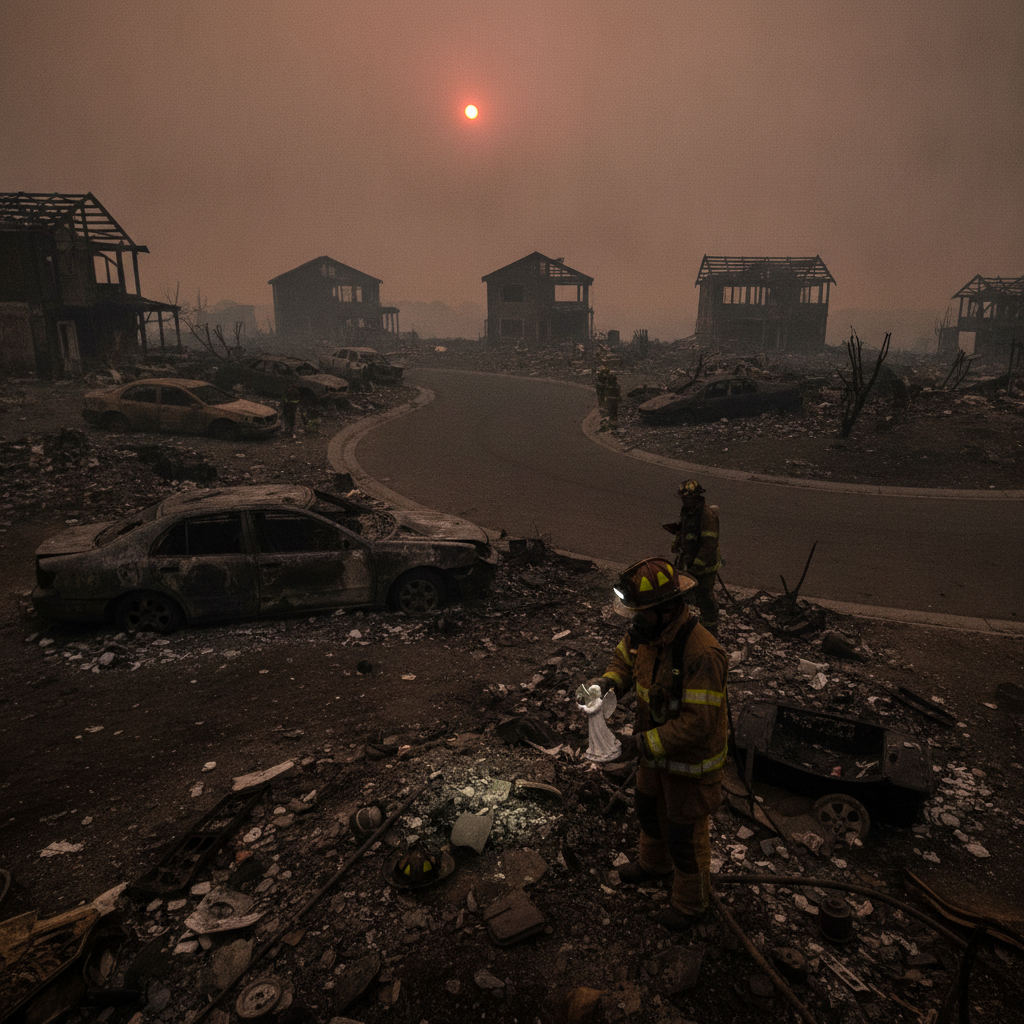
Piles of twisted metal and ashen debris line the cul-de-sacs where the tranquil suburbs of Spokane, Washington, once stood. The scale of devastation from a historic fire season of wildfire in the Pacific north-west has come into sharper focus as firefighters wrangle a trio of blazes that consumed at least 846 structures on the eastern side of the state. More than 2.9m acres (1.1m hectares) have already burned across Washington and Oregon this year, as extreme conditions fuel fast-moving fires that have draped the region in toxic plumes for weeks on end. Oregon has already logged more burned acreage this year than any in recorded history. Washington, meanwhile, is in the midst of its most destructive fire season. And the dangers are far from over. Firefighting resources are already being pushed to their limits, but there are months left before the highest risks on desperately dry landscapes might begin to subside. In the US and around the world, the climate crisis has pushed temperatures higher and extended the seasons when infernos are more able to erupt. With the threat of another warm winter looming large, experts say there will likely be even more time for calamitous conditions to align. Active wildfires in Pacific north-west as of 7 August 2026 On Friday, firefighters were battling 95 large blazes across the US, with reports of extreme fire behavior across multiple regions. More than 6.3m acres have burned across the US since the start of the year, according to the US National Interagency Fire Center (NIFC). The number of fires ignited has also been exceedingly high. Firefighters have had to battle more than 45,800 blazes across the country since the year began. A hundred new fires erupted in a single day last week. Aerial perspective of two matching views with a slider, showing before and after images of a residential neighborhood. The after image shows blackened areas. A satellite image shows damage from the Old Trails fire to the Balboa neighborhood of Spokane. Credit: Vantor/Reuters “We are living through climate change and it’s accelerating,” said Dr Susan Prichard, a fire ecologist at the University of Washington. “There’s a longer window where if we get the dreaded ignitions – whether they’re accidental, or purposeful, or lightning – the forests become really receptive to burning.” A landscape primed to burn The stage was set for an intense summer of fire long before the flames ignited. Vegetation across the region cured during an exceptionally hot, dry, July, according to an outlook from the NIFC, as swathes of Oregon and Washington received only half or a quarter of the rainfall typically seen in the month. With the thirsty terrain primed to burn, more than 600 fires exploded to life in a 10-day period in July, started by rounds of lightning and fueled by strong winds. Some spread through areas that should have still been covered by snow this time of year. The so-called Old Trails fire, one of at least three fires that converged around Spokane, may have been ignited by an arsonist, and a man has been taken into custody. Thousands of people rushed from their homes as the fires closed in on Washington’s second-largest city. Whole neighborhoods were wiped from the map as flames bellowed through communities, sweeping from structure to structure. Tim Hansen retrieves a statuette of an angel from the remains of a home burned in the Old Trails fire in Spokane, Washington, on 3 August. Photograph: David Ryder/Reuters The resulting urban conflagration followed a devastating pattern of destruction seen in other cities hammered by wildfire in recent years, including Los Angeles in 2025; Lahaina, Hawaii, in 2023; and the suburbs of Boulder, Colorado, in 2021. “Spokane has joined the rapidly growing list of our communities that have been devastated by these climate-exaggerated fires,” said Jay Inslee, the former Washington governor. Wildfires rage across Washington as drought and heat fuel painful summer: ‘It’s not normal’ Read more While most of the fire activity has been concentrated on the eastern side of the Cascade mountains, an area that’s hotter and drier than the landscapes known for their lush rainforests and dense coastal fog to the west, Prichard expressed concerns about the risks that still lay ahead. Large fires are more rare in the moisture-rich areas closer to the Pacific, but not unheard of. Prichard pointed to the deadly and devastating Labor Day fires of 2020, when flames howled through communities on the western side of the Cascades in Oregon, fueled by dry winds. More than a million acres were scorched, thousands of homes were destroyed and 11 people died. “I hope I’m wrong,” Prichard said. “But western Washington and western Oregon are ready to burn.” Conditions across the region aren’t expected to ease any time soon. Increased significant fire potential will extend through September, according to the NIFC. Precipitation that might otherwise provide relief across the parched landscapes is forecast to be below normal into November. Aerial perspective of two matching views with a slider, showing before and after images of a residential neighborhood. The after image shows blackened areas. Damage to the Balboa neighborhood in Spokane. Credit: Vantor/Reuters The climate phenomenon known as El Niño, characterized by warming surface temperatures in the equatorial Pacific, could also punch fire risks higher through the end of the year, especially in the Pacific north-west. Models show there’s now a 95% chance of a very strong El Niño developing by September, and scientists have warned it could become the strongest ever recorded. El Niño has the power to affect weather around the world, but outcomes vary. In Oregon and Washington, however, the pattern trends hotter and drier through the winter. “It’s unprecedented, dangerous territory – Washington state has never been so exposed to multiple losses,” Inslee said. “You layer El Niño on top of that, and there could be additional catastrophes even this summer.” Across the Atlantic, Europe is also having a historic season, fueled by deadly heatwaves that baked moisture out of desiccating landscapes across the continent. More than 1.3m acres have burned so far this year, on pace with last year, when new records were set. Much like in the western US, extreme heat and drought globally aren’t expected to soften in the months ahead, and risks will remain high through autumn. Infernos ripped across France and Spain in July, leaving widespread destruction in their wake and cloaking millions of people in toxic air. Europe burns: a visual guide to the wildfires Read more Researchers found the extreme weather driving the fires in several countries was made more likely by human-caused climate change. The fires in south-western France were twice as likely, and in central Spain 20 times more likely, because of greenhouse gas emissions, mostly caused by the burning of oil, coal and gas that has spiked global temperatures, according to a study released at the end of July. “This is a new beast that is attacking our communities across the western United States and across the world,” Inslee said. “We’ve got the way to fight this beast right at its heart, which is climate change induced by pollution.” Firefighters under pressure The explosion in fire activity in the Pacific north-west in July made the region the focus of firefighting efforts over the last month, but across the US, crews are already spread thin. As of 18 July, the country has been classified at “preparedness level 5” – the highest level, and one that indicates resources are fully deployed. “PL5 means triage – it means some fires aren’t going to get firefighters,” a federal fire captain who works out of the Pacific north-west said, requesting anonymity because they were not authorized to speak to the press. “A well-staffed and well-functioning fire service should mean that there’s never a PL5, or that it’s very, very rare.” The fire captain described the emotional and physical strain inflicted on first responders who are taking on longer, harder and increasingly more dangerous assignments as the wildfire crisis outpaces resources provided. “We are trying to save what we can, but we’re just watching houses burn,” the fire captain said. “As a wildland firefighter, no matter how much you give, your presence is never enough.” A Cal Fire firefighter hoses down the remains of a home destroyed in the Old Trails fire in Spokane, on 6 August. Photograph: Mario Tama/Getty Images Injuries are common among the men and women who spend seasons away from friends and family on the frontline in the harshest environments. Seven wildland firefighters have reportedly died in the line of duty so far this summer. “We need to have a more realistic expectation about what our firefighters can do when we’re experiencing fire seasons like this one,” said Bobbie Scopa, a retired fire chief who now serves as a vice-president for the firefighter advocacy group Grassroots Wildland Firefighters. Along with the harrowing conditions firefighters face on the biggest blazes, she emphasized that the thousands of fires that are quickly extinguished before they become infernos, which rarely reach public perception. An estimated 98% of fires are suppressed before they spread across 100 acres, according to federal statistics. “We live in a fire environment and it’s getting worse,” Scopa said. “If we really expect to put out every single fire before it gets big, we would need double the workforce and probably triple the budget. Otherwise, we’re going to kill people trying to put out those last couple per cent and we’re going to spend a lot of money doing it.”