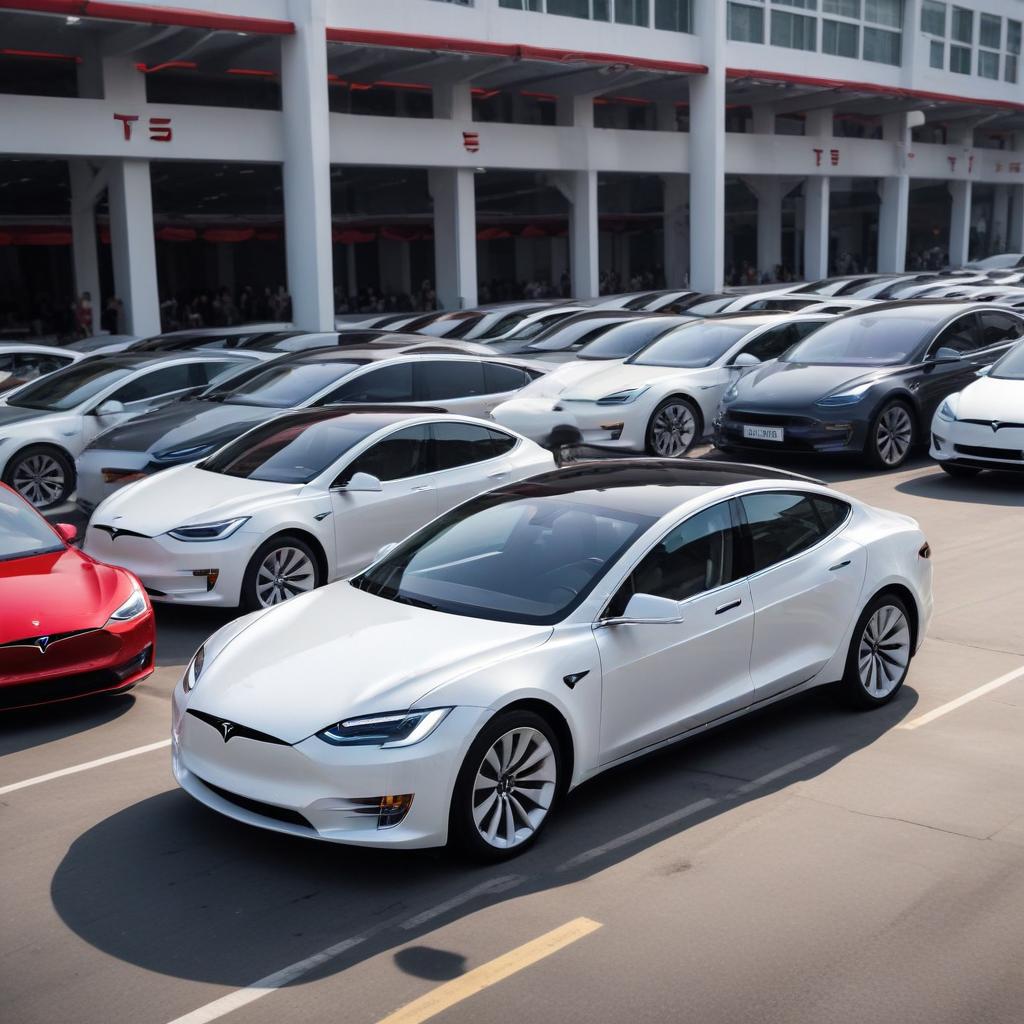
Tesla lost its crown as the world's bestselling electric vehicle maker to Chinese rival BYD in 2025, with sales dropping for a second consecutive year due to customer revolt over Elon Musk's politics, expiring U.S. tax breaks, and stiff competition. Despite this, investors remain optimistic about Musk's pivot to robotaxis and AI.
In a stunning reversal, Tesla, led by Elon Musk, was dethroned as the world's leading electric vehicle manufacturer in 2025 by Chinese competitor BYD. Tesla reported delivering 1.64 million vehicles, a 9% decrease from the previous year, marking its second consecutive annual sales decline. In contrast, BYD sold 2.26 million vehicles, securing the top spot. This decline is attributed to several factors, including a customer backlash over Elon Musk's right-wing political stances, the expiration of a $7,500 U.S. tax credit for EV purchases, and intense international competition. Fourth-quarter sales for Tesla also fell short of analyst expectations, partly due to the tax credit's phase-out. Despite a 2.6% dip in stock price on Friday, Tesla's stock still saw an 11% gain for the year 2025, reflecting investor confidence in Musk's broader vision. Musk is increasingly shifting Tesla's strategic focus away from traditional car sales towards ambitious ventures like driverless robotaxi services, energy storage solutions, and the development of humanoid robots. Tesla introduced more affordable versions of its Model Y and Model 3 in an effort to boost sales and compete globally. However, the company faces significant challenges in its robotaxi ambitions, including fierce competition from established players like Waymo, regulatory hurdles, and ongoing federal safety investigations. Despite these setbacks, analysts like Dan Ives remain bullish on Tesla's autonomous future. Meanwhile, Musk continues to secure substantial compensation packages, including a recent $55 billion payout, and is poised for a potential landmark IPO of SpaceX, which could make him the world's first trillionaire.