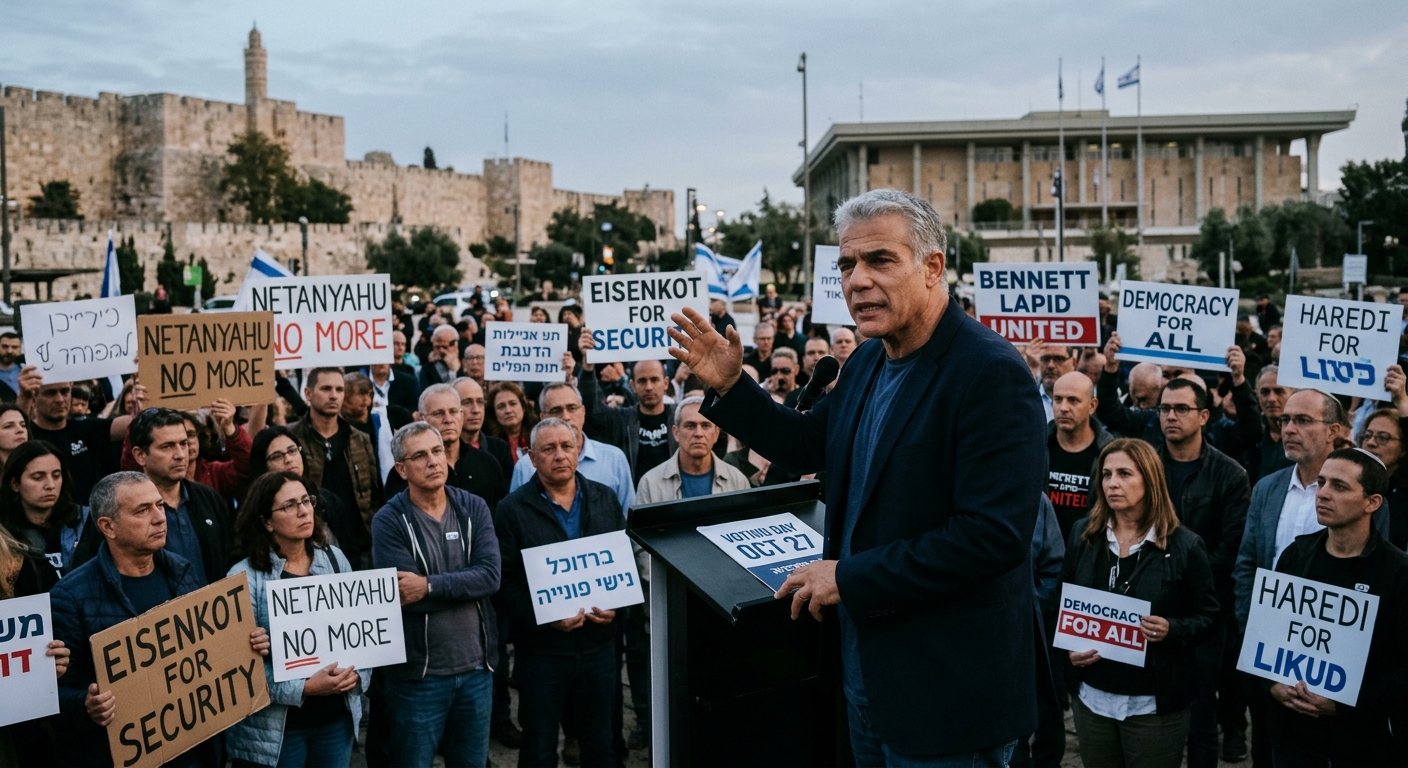
Israel faces its first national election since the October 7 attacks, with Prime Minister Benjamin Netanyahu fighting for political survival amidst a corruption trial and waning public support. Polls suggest his far-right coalition may not survive, as former military chief Gadi Eisenkot emerges as a key challenger, alongside other contenders like Naftali Bennett, Yair Lapid, and the surging far-right figure Itamar Ben-Gvir, all vying for power in a deeply fragmented political landscape.
Israel is gearing up for its first national elections on October 27 since the devastating October 7 attacks and subsequent Gaza war. Prime Minister Benjamin Netanyahu, Israel's longest-serving leader, is battling for his political life, facing a long-running corruption trial, renewed scrutiny over pre-October 7 warnings, and an International Criminal Court arrest warrant. Recent polls indicate his religious-nationalist bloc, including Likud and Haredi parties, is projected to secure only 50-54 of the Knesset's 120 seats, falling short of the 61 needed for a majority. Many Israelis are calling for new leadership to heal and rebuild. Challenging Netanyahu is Gadi Eisenkot, a former military chief and relative newcomer who lost a son in Gaza. Eisenkot presents himself as a political outsider and security hawk, contrasting with Netanyahu's decades in office. His bloc is currently polling slightly ahead with 52 seats. Like Netanyahu and most other Jewish-led parties, Eisenkot opposes a two-state solution, advocating for Israel's ultimate security control over all territory between the Jordan River and Mediterranean Sea and insisting Hamas be disarmed. He vows to replace Hamas's administration within 18 months. Other significant challengers include the 'Together' alliance formed by former prime ministers Naftali Bennett and Yair Lapid, aiming to oust Netanyahu. This alliance holds a strong right-wing stance on security but more liberal views on domestic issues. Additionally, Itamar Ben-Gvir, Netanyahu's far-right national security minister, has seen a surge in support for his Jewish Power party, attracting younger voters with his inflammatory rhetoric and extreme policies. His party is forecast to win eight or more seats. The fragmented political landscape means any winner will likely need to form a broad, potentially unstable, coalition, with the Democratic party being the only prominent Jewish-led party supporting a two-state solution, setting the stage for potential internal conflicts.