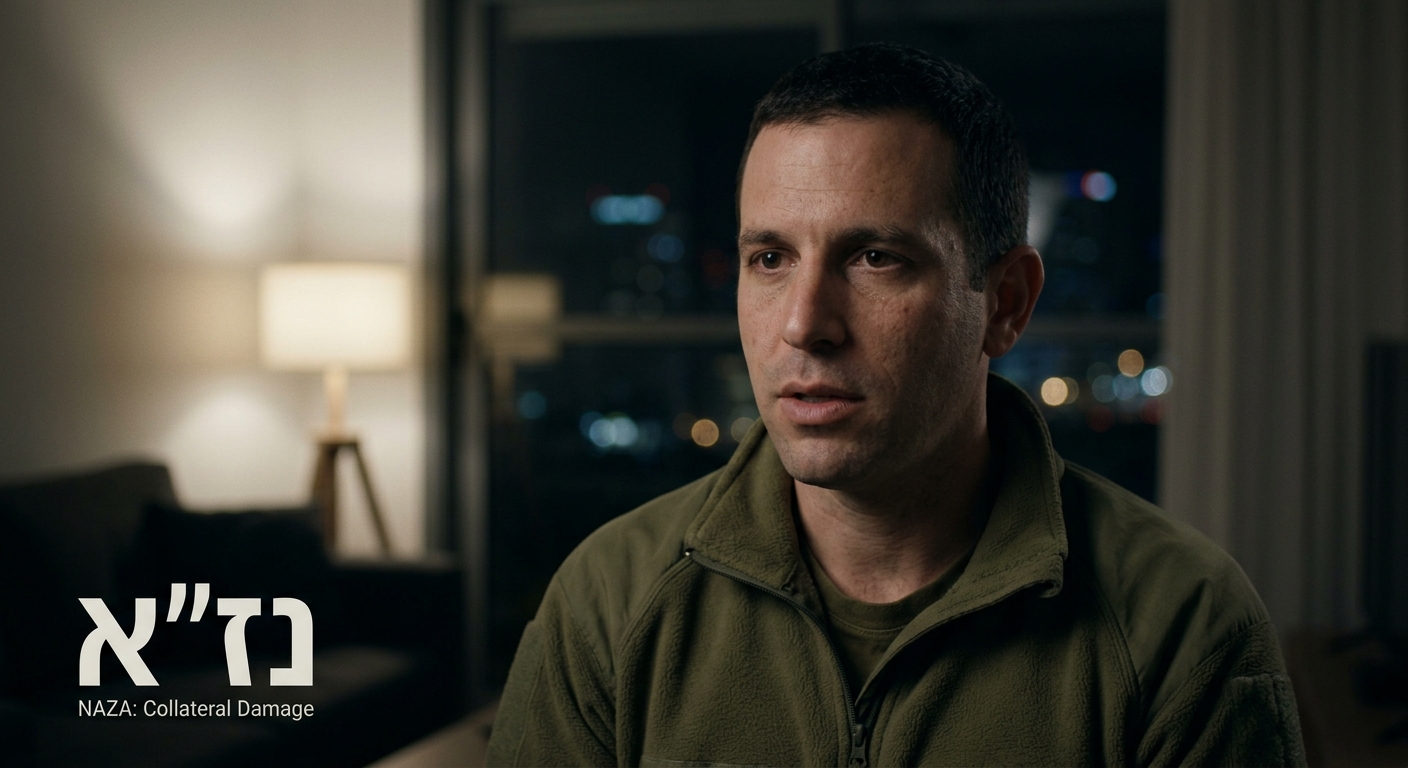
A new film, 'NAZA,' exposes how Israeli soldiers and intelligence officers rationalize mass killings in Gaza with dispassionate, technical language, drawing parallels to Nazi technocrats and the 'banality of evil.'
The article discusses the film 'NAZA,' a documentary featuring interviews with 24 Israeli soldiers and intelligence officers who describe their involvement in killing people in Gaza. The author, Omer Bartov, a professor of Holocaust and genocide studies, draws a chilling parallel between the interviewees' dispassionate, technical tone and the mindset of Nazi technocrats like Werner Best, who advocated destroying the enemy 'without hating him.' Bartov notes the familiar setting of the interviews in Tel Aviv and the recognizable speech patterns of the soldiers, making their cold descriptions of violence even more jarring. The film highlights how modern societies engage in extreme violence through 'cold planners' and 'technocrats' who operate at a distance, rather than just 'brutes.' 'NAZA,' a Hebrew acronym for 'collateral damage,' is presented as a euphemism that further distances operatives from the human cost. While much of the information was previously known through investigative journalism, hearing it directly from the intelligence personnel provides a crucial, rarely seen perspective. The film reveals moments where the operatives grapple with the scale of killing, admitting that the approved 'NAZA' (collateral damage) could reach hundreds of innocent civilians per target, leading to the concession that 'you end up with all of Gaza.' One operative explicitly states that Israel committed 'genocide' in Gaza, describing his work on airstrikes as 'insanely fun' and providing 'a sense of meaning,' despite not thinking about the victims. The interviewees are often elite, upper-middle-class individuals, not typical extremists, but professionals completing a mission. The article explores explanations for their actions, including Hannah Arendt's 'banality of evil' and Stanley Milgram's obedience to authority, where individuals 'trust the system' and follow orders, even if they are unlawful. The author commends the 24 individuals for speaking out, offering unique insight into how ordinary people become part of a machinery of death.