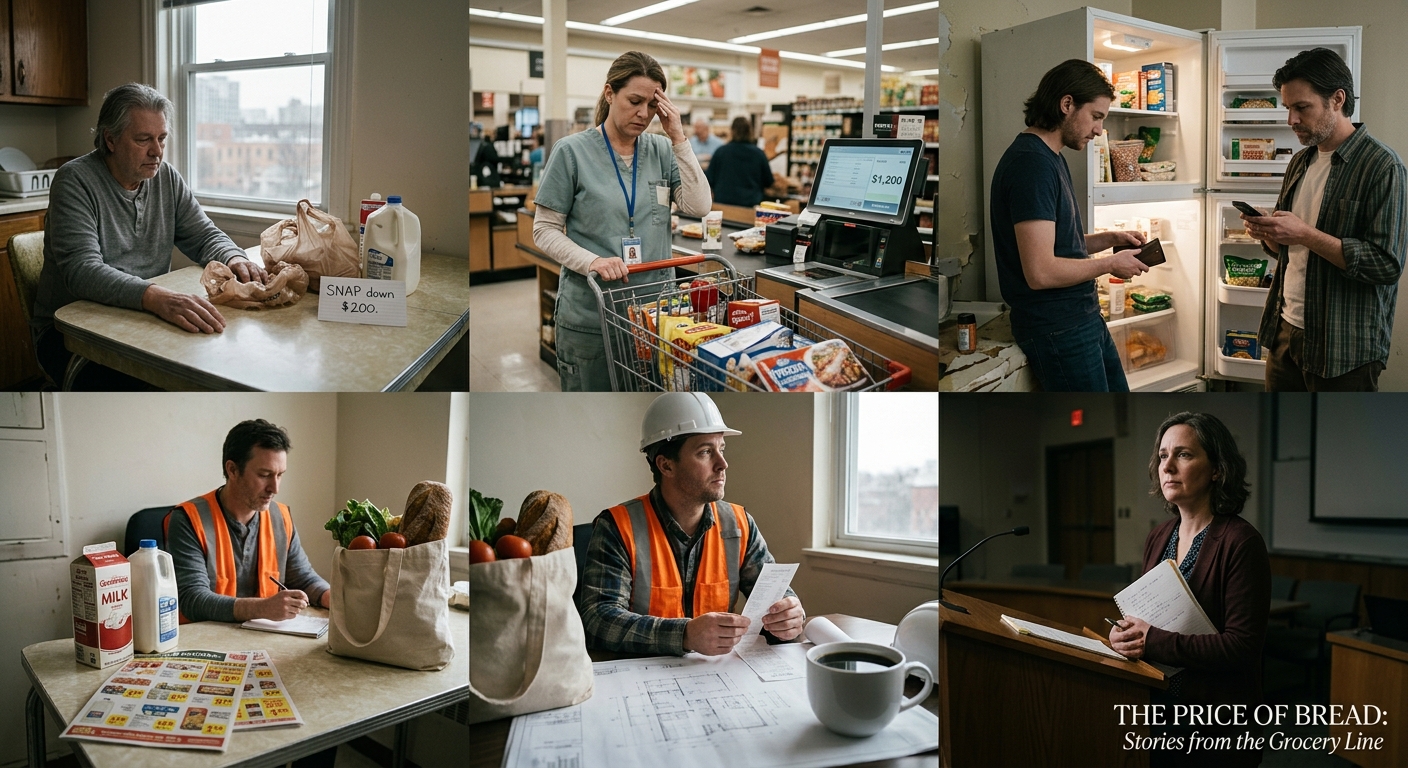
Amidst soaring inflation, supply chain issues, and benefit cuts, over half of Americans are struggling to afford groceries. This article reveals the harsh realities faced by five US households, detailing their monthly food budgets and the drastic changes they've made to cope with escalating costs.
Despite political promises to lower prices, US grocery costs continue to climb, leaving more than half of Americans struggling to afford food. Factors contributing to this crisis include supply chain disruptions, geopolitical conflicts, significant cuts to SNAP benefits, and the climate crisis. The article features five Guardian readers who share their personal experiences with rising food budgets. An unemployed, disabled individual with an annual income of $15,600 spends $300 (75% of their budget) monthly on groceries, often dealing with spoiled items due to online ordering challenges and the loss of $200 in monthly SNAP benefits. They resort to eating minimally, feeling sad, depressed, and anxious about the situation. A laboratory worker supporting a household of seven on $123,000 annually spends $1,200 on groceries and $300-$400 on dining out. They've cut back on expensive beef, organic vegetables, name-brand snacks, and even a 'garage fridge,' prioritizing convenience but feeling 'irresponsible' due to the growing food expenditure, alongside rising mortgage and electric bills. A contract worker in a three-adult household with a $100,000 income allocates $500-$600 (34% of their budget) to groceries and $60 for limited dining out (McDonald's $5 meal deals). Having lost food stamps, they've reduced meat consumption, relying on beans, tofu, eggs, and fish, and switched to frozen produce. They often skip meals or endure stomachaches due to the inability to afford necessary gluten-free and lactose-free items, with nearly half their paycheck going to healthcare costs and no money left for savings. A construction project manager, part of a two-adult household earning $110,000, spends $1,800 (17%-20% of their budget) on groceries and $200-$300 on dining out. While not actively seeking deals, they've increased home cooking, reduced alcohol, and eliminated snack foods, questioning the high cost of quality food in the US compared to other countries. Finally, a college professor with a $95,000 income supporting a family of three spends $1,000-$1,100 (30% of their budget) on groceries and only $70 on dining out/takeout, which has become largely unaffordable. They feel the costs are 'ridiculous' and make them nervous, noting a significant shift in how they socialize due to the expense of sharing meals.