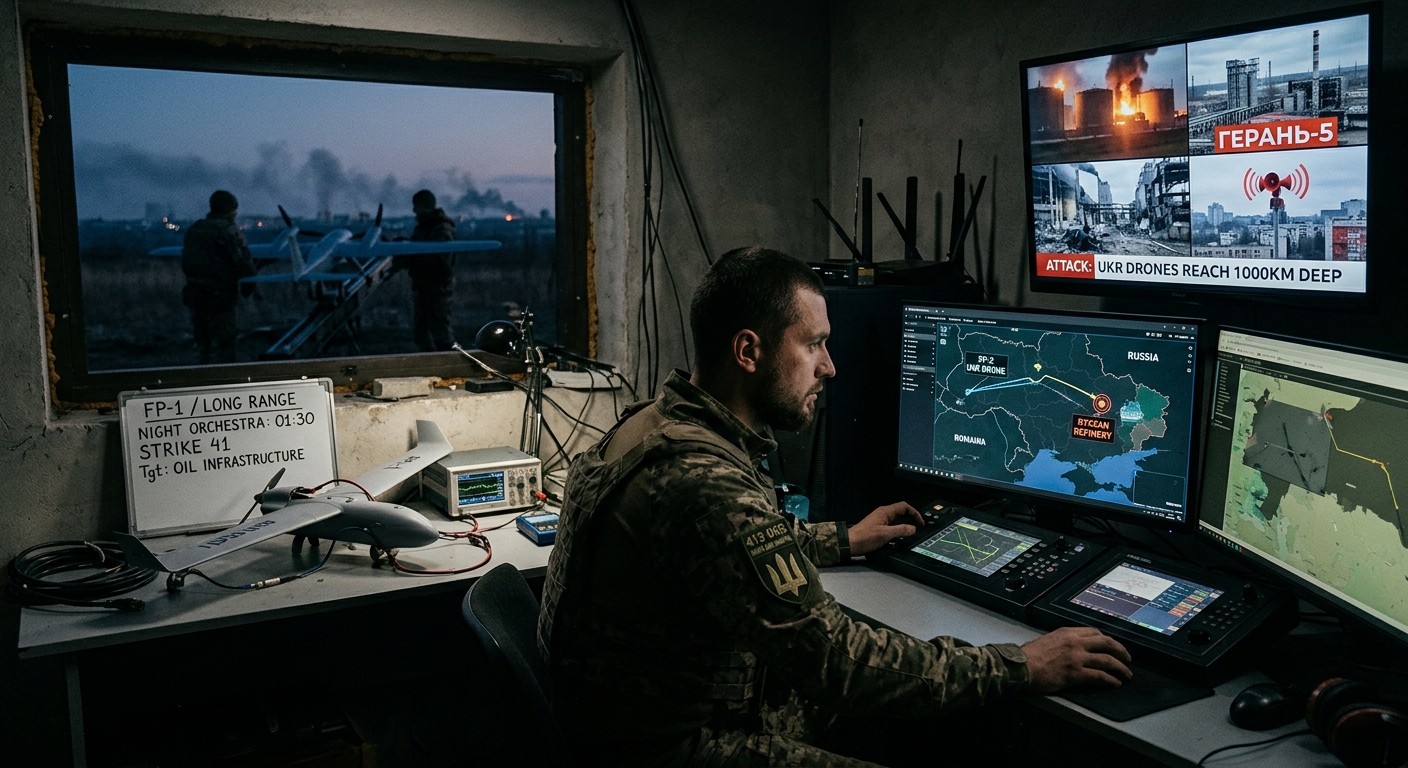
The conflict in Ukraine has rapidly transformed into a high-stakes long-range drone war, with both Ukraine and Russia significantly advancing their drone capabilities. This technological arms race is escalating destruction far beyond frontlines, impacting military, economic, and civilian targets, and driving up casualties.
The war between Ukraine and Russia has entered a new phase, characterized by an escalating long-range drone conflict where both nations are rapidly developing and deploying advanced unmanned aerial systems. Ukrainian units, such as the 413 Raid regiment, are operating indigenously designed FP-2 and FP-1 drones, capable of striking targets hundreds to thousands of miles deep into Russian territory. These missions, which have increased tenfold, aim to disrupt Russian logistics, military, and economic infrastructure, leading to measurable economic effects like a drop in crude oil production. Ukraine plans to launch up to 1,000 drones a night in coordinated 'orchestra' attacks. However, Russia has countered with its own 'jet-powered revolution' in drone technology. After initially relying on Iranian Shahed (Geran-2) drones, Moscow has introduced faster, jet-engined variants like the Geran-4 and Geran-5, along with new cruise missiles like the Banderol and Dan-T, with plans for massive production by 2027. These new Russian drones, powered by Chinese-made engines, are significantly faster than Ukrainian interceptors, reducing effective interception rates from over 90% to 60%. This has enabled more effective strikes on Ukrainian cities, ammunition dumps, and critical civilian infrastructure, including markets, warehouses, and power systems. The intensified drone warfare is leading to climbing civilian casualties on both sides and significant economic pressure, particularly for Ukraine, which faces an overspent war budget. While the technological arms race is escalating the conflict's intensity and reach, neither side is reported to be close to defeat, with the upcoming winter and potential Russian mobilization posing further tests. Soldiers on both sides acknowledge the extreme danger of this unseen enemy, emphasizing resilience as the key to survival.